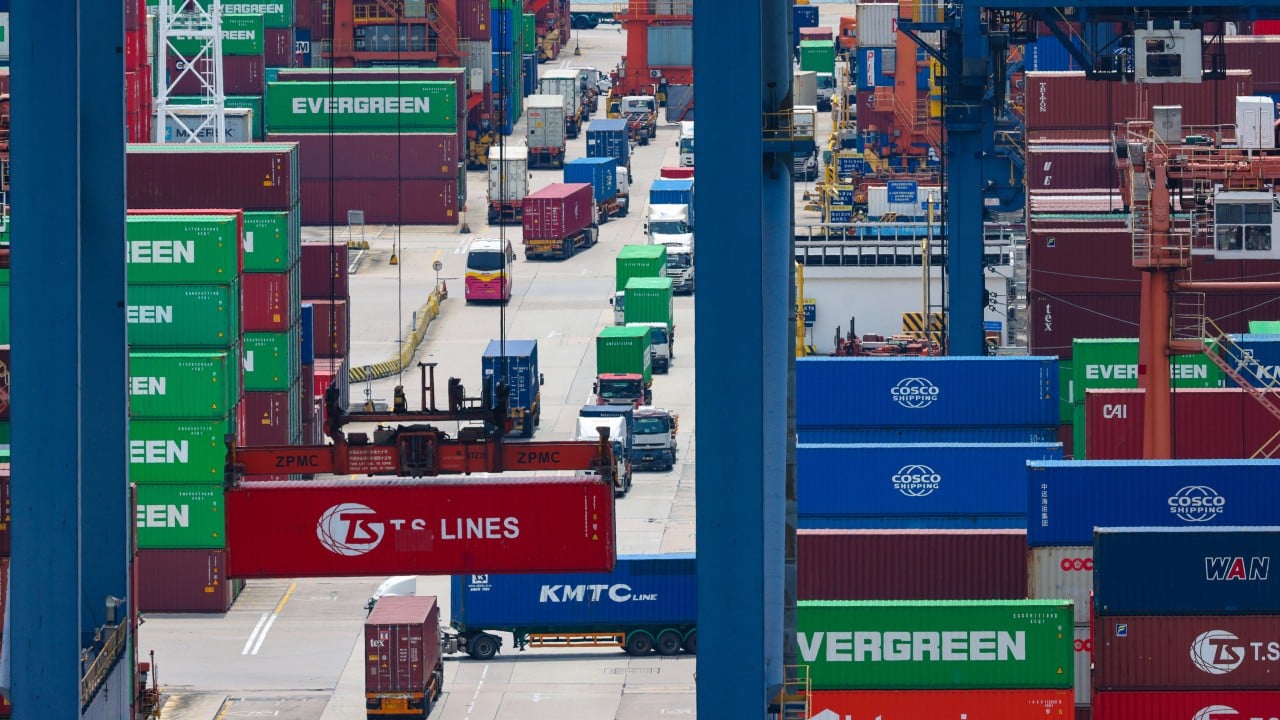
Everyone loves a neat narrative. For two decades, the lazy consensus in corporate boardrooms and financial media was simple: China makes the cheap plastic widgets while the West designs them. Then, the script flipped in the pundit class. Suddenly, the narrative became that China had evolved past the assembly line, transforming entirely into the global headquarters for high-tech innovation, intellectual property generation, and corporate command-and-control.
It is a clean story. It is also entirely wrong.
I have watched executives blow millions trying to treat Beijing and Shenzhen like Palo Alto or London, mistaking scale for conceptual autonomy. China is not the global headquarters. It remains the most efficient, deeply entrenched, and irreplaceable industrial engine the world has ever constructed. Conflating manufacturing dominance with global corporate headquartership is a category error that costs companies billions in misallocated capital and stolen intellectual property.
The Geography of Command
Let us define terms immediately because corporate geography has grown sloppy. A headquarters is not where things are built. A headquarters is where ultimate risk is absorbed, where the legal domicile of intellectual property resides, where capital allocation decisions are bound by a predictable rule of law, and where global strategic direction is set without state-sanctioned vetoes.
By that definition, calling China a global HQ is laughable.
When a multinational corporation sets up its regional hub in Shanghai, what are they actually doing? They are running an exceptionally sophisticated localized operation designed to service a massive domestic market and manage an adjacent supply chain. They are not steering the global ship. The legal entities holding the core patents are still anchored in Delaware, Zurich, or Tokyo. The ultimate board oversight remains tethered to Western or allied jurisdictions because global capital demands predictable enforcement of contracts.
To call China an HQ because it houses gleaming skyscrapers in Pudong is like calling a construction foreman the architect because he stands inside the building he is erecting.
The Anatomy of Sticky Manufacturing
The lazy consensus assumes that moving up the value chain means abandoning the factory floor. This is a profound misunderstanding of modern industrial economics.
China did not stop being the world’s factory to become the world’s brain; it absorbed the factory and built an ecosystem so dense, so terrifyingly efficient, and so tightly clustered that no other nation can pry it apart. When Apple designs a titanium frame in Cupertino, the actual engineering breakthrough happens on the factory floor in Shenzhen when a Chinese manufacturing engineer figures out how to machine ten million units with zero defect variance overnight.
That is not "headquarters" work. That is advanced industrial craftsmanship. It is the invisible backbone of hardware production.
Companies that try to untangle themselves from this ecosystem in the name of "de-risking" quickly discover a brutal reality. I have seen procurement chiefs attempt to shift production to Southeast Asia or near-shore to Mexico, only to find out that while you can build a assembly plant in Vietnam, you cannot easily replicate a supply chain that puts a screw manufacturer, a chemical treatment plant, and a microchip packaging facility within a forty-minute truck ride.
China’s supremacy is not rooted in cheap labor anymore. That era ended a decade ago. Its supremacy is rooted in industrial agglomeration. It is a massive, interconnected machine where proximity equals speed, and speed is the only currency that matters in modern commerce.
The Compliance Straitjacket
Here is the downside to the contrarian approach I am advocating: acknowledging this reality makes life uncomfortable for compliance officers.
If you treat China as an extension of your Western corporate headquarters, you will inevitably run headfirst into a brick wall of state capitalism. In a true global headquarters, capital flows freely, data crosses borders without friction, and corporate governance answers primarily to shareholders. In China, the Communist Party maintains golden shares in major private tech firms, data localization laws dictate where your telemetry goes, and national security trumps quarterly earnings every single time.
You cannot run a global enterprise from a jurisdiction where the local government can alter your business model with a single regulatory decree. That is not a headquarters. That is a gilded fiefdom.
When local executives in Shanghai claim they are directing global strategy, they are performing a necessary diplomatic dance to satisfy domestic regulators while managing the anxieties of foreign boards. Beneath the surface, the separation between domestic operations and global oversight is as stark as it has ever been.
Stop Chasing Ghosts
The prescription flowing from this misconception is disastrous. Companies spend billions trying to localize their global R and D into independent Chinese silos, only to find their proprietary algorithms absorbed into the local tech stack or rendered useless by shifting export controls.
Stop trying to turn your Chinese operations into a decentralized global command center. Accept what the geography actually is: the most formidable, high-speed industrial execution engine on planet Earth. Treat it as such. Protect your intellectual property at the perimeter, rely on local partners for execution velocity, but keep the brain where the law protects your ownership.
If you mistake the factory floor for the boardroom, do not be surprised when someone else owns the keys to the building.