Most commercial drones force a frustrating compromise. You either get decent payload capacity or you get flight time, but rarely both for very long. Batteries die too fast, and heavy gear drains power grids before a standard mission even reaches its halfway point.
That limitation just shattered.
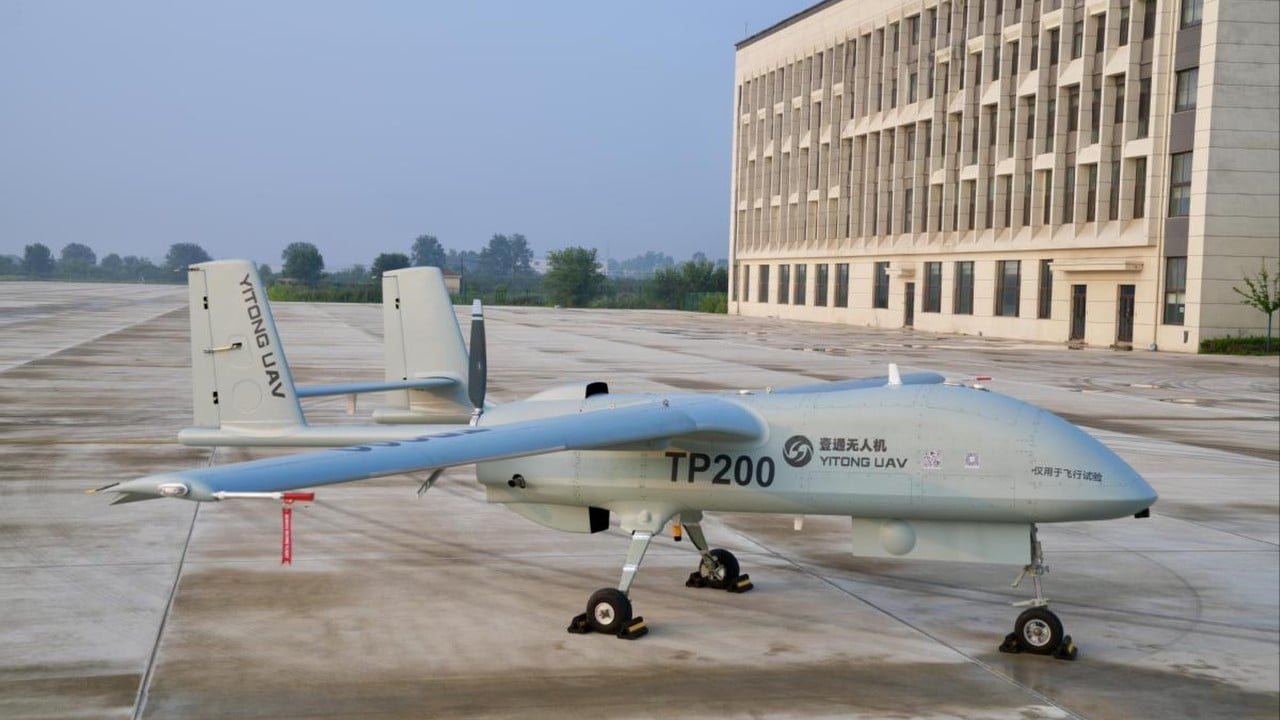
China's newly tested TP200 drone changes the math entirely. Developed by Yi-Tong UAV System Co., this multi-functional aircraft recently completed its maiden flight in Yantai, Shandong Province. It isn't a military prototype built under classified wraps. It is a civilian heavy-lifter designed to stay airborne for more than twenty-four hours straight while carrying a full payload.
Let's look at why this specific aircraft matters so much right now.
Breaking the Endurance Barrier
For years, commercial drone operators faced a stubborn bottleneck. If you wanted to monitor a massive wildfire, map a vast stretch of coastline, or survey remote maritime borders, you had to swap aircraft constantly. Traditional civilian drones max out at a few hours of flight time. Once you load them up with heavy meteorological sensors, emergency relief supplies, or high-end mapping cameras, that window shrinks even further.
The TP200 tackles this head-on. Designed for high-altitude, long-endurance operations, it clears a 3000-kilometer operational range while maintaining a stable flight profile.
Keeping a large aircraft aloft for an entire day with a maximum load requires precise engineering. During its test flight in Shandong, the drone maintained a fully controllable attitude with climb altitudes and cruising speeds hitting every design target right on schedule.
Why Modular Design Fixes Industry Waste
You can't talk about modern aviation economics without talking about waste. Historically, municipal and commercial buyers bought expensive, single-use drones. One aircraft did mapping. Another handled weather monitoring. If you needed to switch tasks, you often bought an entirely new machine.
The TP200 uses a modular, multi-configuration design. Operators can swap mission payloads quickly depending on what the day requires.
This flexibility solves a massive headache for government procurement officers and commercial fleet managers:
- Low equipment reuse rates disappear because one airframe serves multiple departments.
- Poor versatility becomes a non-issue when payloads swap out in hours.
- Sky-high maintenance and procurement budgets drop when you aren't maintaining a fleet of specialized single-task aircraft.
By building the aircraft to strict airworthiness standards, the developers are positioning it for heavy commercial adoption rather than niche experimentation.
Real World Scenarios That Demand 24 Hour Flight
Think about what happens during a major natural disaster. Earthquakes or severe flooding often knock out local infrastructure, isolating mountain villages or coastal islands. Helicopters are expensive to run and put pilots at risk during severe weather.
With a 24-hour endurance window and a heavy payload capacity, the TP200 can drop emergency supplies directly into cut-off zones, run continuous search and rescue grids over choppy offshore waters, and keep communication relay nodes active while ground crews mobilize.
Beyond emergencies, day-long persistence opens up massive opportunities for routine tasks. Coastline monitoring requires eyes in the sky for hours at a time. Ecological monitoring, agricultural rain enhancement, and forest fire prevention patrols all benefit from an aircraft that doesn't need to land every hundred minutes to refuel or recharge.
What This Means for the Global Low Altitude Economy
The low altitude economy is shifting from a buzzword into a brutal manufacturing and operational race. While Western markets obsess over small urban delivery drones dropping packages into suburban backyards, industrial nations are scaling up massive platforms meant for regional logistics and public infrastructure.
A civilian drone that can fly for an entire day fully loaded blurs the line between traditional aviation and unmanned flight. It forces regulators to rethink air traffic management, insurance models, and long-range remote piloting protocols.
If you're tracking where heavy logistics are heading, keep an eye on how quickly these long-endurance platforms transition from test phases into everyday government service. The twenty-four-hour commercial flight barrier is officially gone.