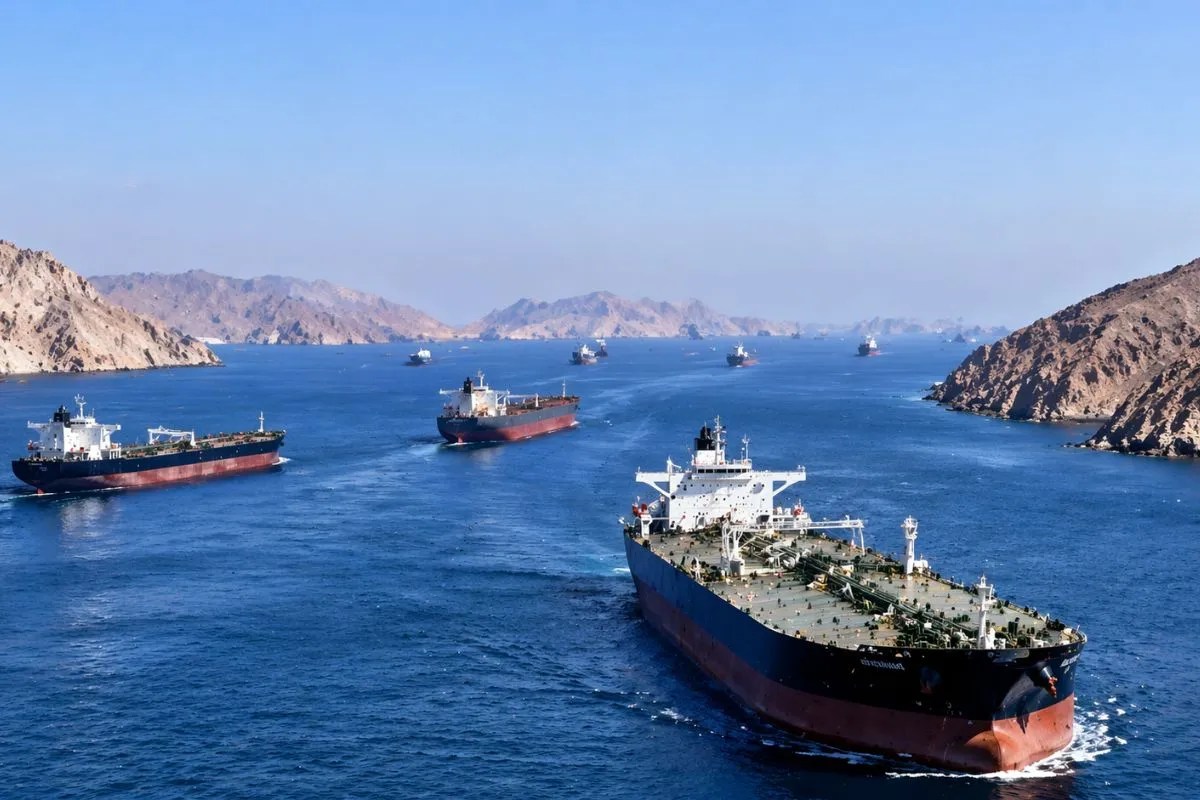
A single drop of oil in the Strait of Hormuz does not just float on the water. It ripples through the life of a truck driver in Nebraska, a factory worker in Guangzhou, and a mother checking the price of milk in a Mumbai suburb. The geography is simple: a narrow strip of water, barely twenty-one miles wide at its tightest squeeze. But the stakes are anything but simple. This is the world’s jugular vein. If it narrows, the global pulse slows. If it closes, the world shudders.
Lately, the air around this waterway has grown heavy. You can feel the static electricity in the diplomatic cables flying between Washington and Tehran. Iran has floated what they call a "Peace Plan," a proposal aimed at de-escalating the tension that has turned these turquoise waters into a minefield of geopolitical ego. They want the world to believe the door is open for a new era of maritime security. But in the halls of the White House and the Pentagon, the response has been a cold, measured skepticism. The Americans aren't just reading the words on the page; they are looking at the missiles lined up on the coast.
The Ghost of Twenty-One Miles
To understand why a few miles of water can dictate the price of your morning commute, you have to look at the math of survival. Roughly one-fifth of the world’s total oil consumption passes through this strait. It is a funnel. Everything produced in the rich fields of Kuwait, Saudi Arabia, and the UAE must squeeze through this gap.
Imagine a hypothetical merchant captain named Elias. He has spent thirty years on the deck of VLCCs (Very Large Crude Carriers). For Elias, the Strait of Hormuz isn't a headline or a "geopolitical flashpoint." It is a series of hours where he doesn't sleep. He knows that beneath his feet sits two million barrels of crude—a floating city of energy. He also knows that on the rocky cliffs of the Musandam Peninsula, eyes are watching. He can see the fast-attack boats of the Iranian Revolutionary Guard skimming the waves like dragonflies. They are small, nimble, and packed with enough explosives to turn his ship into a funeral pyre.
When Iran talks about a peace plan, Elias doesn't look at the diplomatic phrasing. He looks at whether the fast-boats stay in their docks. The American perspective is equally pragmatic. For decades, the U.S. Fifth Fleet has acted as the self-appointed sheriff of these waters. They argue that freedom of navigation is a global right, not a regional gift. When Tehran offers a plan that suggests regional powers should handle security—effectively asking the U.S. to pack up and leave—the Americans see a trap. They see a future where the "peace" is entirely on Iran's terms.
The Price of a Promise
The skepticism from the West isn't born of a desire for conflict. It is born of a long memory. Every time tensions spike, the threat to close the Strait is brandished like a jagged knife. The "Peace Plan" is being marketed by Tehran as a way to "Hormuz Peace Endeavor" (HOPE). It sounds poetic. It promises cooperation, non-aggression, and a hands-off approach from outside powers.
But there is a glaring contradiction.
How do you trust a peace plan from a hand that is simultaneously tightening its grip on the throat of global trade? The U.S. position is that any plan excluding international oversight is merely a mechanism for Iranian hegemony. They pointedly remark that "actions speak louder than proposals." While the diplomats at the UN talk about maritime corridors, the reality on the water remains a game of cat and mouse.
Consider the ripple effect of a single day’s closure. If a tanker is seized or a mine is detected, the insurance premiums for every ship in the region skyrocket instantly. Those costs don't vanish. They are passed down the line. They become the extra fifty cents on a gallon of gas. They become the reason a small business owner decides not to hire an extra employee this month because the cost of shipping goods just became unpredictable. The Strait of Hormuz is the world's most expensive toll booth, and right now, the operators are arguing over who holds the keys.
The Invisible Stakes
We often treat these news stories as if they are happening on another planet. We see the grainy footage of gray warships and read the dry quotes from State Department spokespeople. But the human element is everywhere.
Think about the sailors from the Philippines, India, and Ukraine who man these tankers. They are the invisible workforce of the global economy. For them, a "Peace Plan" isn't about regional influence or nuclear enrichment rights. It’s about whether they get to finish their contract and go home to their families. When a drone strike hits a vessel, or when a "warning shot" is fired, these are the people in the crosshairs.
Iran’s proposal suggests that if the U.S. lifts sanctions and stops the "maximum pressure" campaign, the Strait will remain a sanctuary of commerce. It is a high-stakes poker game. Iran is using the world’s energy security as their "hole card." The U.S., meanwhile, is trying to call the bluff without starting a fire that no one can put out.
The tension isn't just about oil anymore. It’s about the transition to new energies, too. Even as the world looks toward green hydrogen and solar, the infrastructure of today runs on the black liquid flowing through Hormuz. A disruption there doesn't just hurt the "old" economy; it starves the capital needed to build the "new" one. Everything is connected.
The Weight of the Silence
There is a specific kind of silence that happens on a ship's bridge when it enters the Strait. The radio chatter is constant—English, Farsi, Arabic—but the atmosphere is taut. Every blip on the radar is scrutinized. Is that a fishing dhow? Or is it something else?
This is the environment Iran claims they want to "settle" with their new initiative. The U.S. response, however, has been a masterclass in diplomatic "no." They aren't rejecting the idea of peace; they are rejecting the idea that Iran can be the sole guarantor of it. To the Americans, giving Iran total control over the security of the Strait is like asking a fox to design a more "efficient" security system for a hothouse.
But the pressure is mounting. China, the world’s largest oil importer, is watching with growing impatience. Europe, still reeling from energy shocks, cannot afford another crisis. The world is exhausted by the brinkmanship. There is a desperate hunger for a solution, any solution, that keeps the tankers moving.
Iran knows this. They are betting that the world’s fear of a price spike will eventually force the U.S. to the table. They are using the "Peace Plan" as a velvet glove over a mailed fist. It is a brilliant, terrifying piece of theater.
The tragedy of the Strait of Hormuz is that it is a masterpiece of nature turned into a cage of human making. Twenty-one miles. It’s the distance of a long morning run. It’s the width of the English Channel at its narrowest point. Yet, within that small space, the fate of the global economy is being weighed.
We wait. We watch the tankers move through the haze of the Persian Gulf, heavy and slow, carrying the lifeblood of modern civilization. Each one is a gamble. Each one is a prayer. The diplomats will continue to trade barbs and the "Peace Plans" will continue to be drafted on expensive stationery, but the truth remains written in the salt and the oil.
Peace isn't a document. It isn't a proposal whispered in a boardroom in Tehran or a press briefing in D.C. Peace is the moment Elias can look at the horizon and see nothing but the sun reflecting off the water, without wondering if the next wave carries a shadow he cannot escape. Until that day, the Strait remains a bridge made of glass, and the whole world is walking on it in heavy boots.