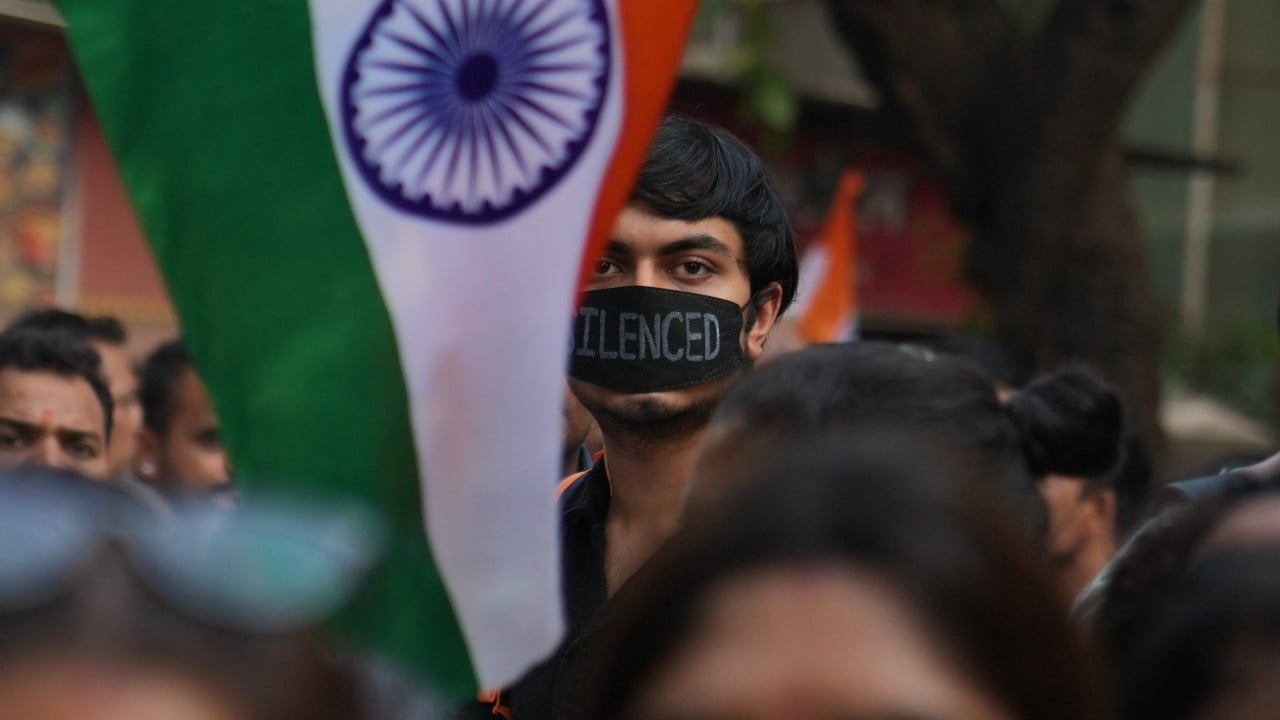
Standard entertainment reporting treats a celebrity deportation notice as a jarring clash between fame and bureaucracy, missing the structural mismatch between formal nationality and lived civic identity. When US-born actor Imran Khan received a departure order from Mumbai authorities following an October 10, 2026 protest over electoral roll revision and Chief Election Commissioner Gyanesh Kumar, the episode exposed how statutory residency rules collide with public dissent. A rigorous analysis breaks the event down into four components: the baseline facts versus contested claims, the legal mechanics of Overseas Citizen of India (OCI) status, the incentives driving political escalation, and the operational trade-offs faced by foreign-born public figures.
Deconstructing the Competitor Narrative and Baseline Facts
Typical coverage anchored on the headline "US-born Bollywood actor Imran Khan told to leave India over political protest: local media" compresses a multi-step administrative and political sequence into a single cause-and-effect line. It highlights the surprise of a familiar screen figure facing an exit deadline—reportedly set for October 28, 2026—without separating police crowd-control actions, political complaints, and statutory immigration notices. For another look, check out: this related article.
To evaluate the situation accurately, separate verified public reporting from unresolved legal claims:
- Known facts from reporting: Actor Imran Khan—a US citizen who holds an OCI card and acted in Hindi films between 2008 and 2015 before returning to screen work—joined a protest at Mumbai's August Kranti Maidan on October 10, 2026, alongside partner Lekha Washington and cousin Zayne Marie Khan. Mumbai Police detained demonstrators during the rally—which authorities noted took place at a location not designated as a protest venue under a Bombay High Court order—and later released them. Following a complaint by Bharatiya Janata Party (BJP) leader Kirit Somaiya and referral to the Foreigners Regional Registration Office (FRRO), authorities issued a notice directing him to leave India by October 28, 2026, citing immigration and foreigners provisions, with reports indicating Khan planned to challenge the order in court.
- Educated hypotheses and open questions: Whether mere attendance at a peaceful rally independently satisfies statutory grounds for cancelling OCI registration or ordering removal remains a contested legal question rather than a settled judicial finding. It is also an analytical inference—rather than a documented official admission—that high-profile celebrity participation increases the political payoff for critics seeking to frame domestic dissent as external interference.
http://googleusercontent.com/lmdx_content/KerDDZZxTcpPXHHbsJHhhWXovNbMJFDslzNrQTiodCjTjeJCMJmhzBKFfEhDLWCCUPRcAVgJCNLUtdmjFsqOgnKuOLkIQiJlyOVJxnxmGOWkQSrSyWimkLdsXEfxbmPxdPfRrZRSFiwxlQeVvkiMCBqGNiHIrwTSMgcYyPwFyVXBNLGFzSimFGRuQfTImAAncswFoCSHSJDfRd105277 Similar reporting on this matter has been shared by The Washington Post.
The Three Pillars of OCI Legal Asymmetry
The central analytical error in casual commentary is treating an OCI card as equivalent to dual citizenship or unconditional permanent residence. India does not allow dual citizenship, and the OCI framework operates as a hybrid legal status with sharp statutory boundaries.
1. Access Rights Versus Political Entitlements
Under the Citizenship Act framework governing OCI cardholders, foreign citizens of Indian origin receive practical mobility and economic privileges—such as long-term entry and specified residency or work flexibility—without acquiring political membership. They cannot vote in Indian elections or run for public office, and they do not hold the full suite of constitutional rights reserved strictly for citizens, including citizen-specific guarantees under Article 19 and eligibility for certain constitutional offices. In political theory, this creates asymmetrical stakeholding: an individual can live, earn income, and build social ties inside a polity while lacking formal electoral standing.
2. Venue Rules Versus Status Violations
A second analytical distinction that shallow reporting blurs is the difference between time, place, and manner rules and foreigner-specific immigration offenses. Police in Mumbai indicated that August Kranti Maidan was not a designated protest site under a Bombay High Court directive and cited public order management during the detentions. When a foreign national participates in an unpermitted or restricted demonstration, enforcement can unfold along two parallel tracks: general public-order policing applicable to any participant, and immigration scrutiny tied to nationality and visa or OCI conditions. Conflating the two makes every crowd detention look like an automatic deportation ruling when administrative notice and judicial review are distinct stages.
3. Statutory Thresholds and Procedural Safeguards
Cancellation of OCI registration under Section 7D of the Citizenship Act turns on defined statutory triggers—such as obtaining registration by fraud, showing disaffection toward the Constitution, criminal conviction, or matters touching sovereignty, security, friendly foreign relations, or public interest—paired with procedural fairness, including an opportunity to be heard. At the same time, immigration and foreigners powers give authorities administrative levers to regulate the presence and departure of non-citizens. The tension at the heart of the dispute lies in how broadly administrative authorities interpret political activity by a non-citizen versus how narrowly courts construe statutory removal and cancellation standards.
Cause-and-Effect Dynamics in Celebrity Dissent
Competitor summaries rarely map the escalation cost function that turns an ordinary street protest into a national headline. In standard political mobilization, an individual protester faces low marginal visibility and localized policing risk. Adding a recognizable entertainment figure changes the math across four variables:
- Attention amplification: A known name converts a local protest over administrative or electoral procedures into cross-sector media coverage spanning politics, law, and entertainment.
- Framing leverage: Opponents of the protest gain a clear legal hook—foreign citizenship—to argue that a non-citizen is intervening in domestic governance.
- Counter-framing by participants: Supporters and commentators flip the narrative by emphasizing residence, cultural belonging, and civic concern, turning a single person's notice into a broader debate over free expression and belonging.
- Administrative cascade: Once a formal complaint reaches enforcement and immigration offices, bureaucratic inertia takes over, generating deadlines and legal filings that outlast the street protest itself.
This mechanism explains a common People Also Ask question: Why would a non-citizen join a protest over domestic electoral rolls if they cannot vote? From an actor's or resident's perspective, perceived harm to civic institutions or fellow residents can motivate participation even without ballot access. From a state compliance perspective, however, acting on public grievances carries higher legal friction for an OCI holder than for a citizen.
Tactical Framework for Non-Citizen Public Figures and Legal Teams
For foreign nationals or OCI cardholders operating in high-visibility media or advocacy roles, managing regulatory risk requires treating public appearances as structured compliance events rather than spontaneous gestures.
- Audit status and conditions before participating: Confirm exact citizenship, visa or OCI terms, and any prior administrative notices before joining public demonstrations.
- Verify venue legality and protest permits: Check whether the gathering site is legally authorized for demonstrations under local police or court orders, as unauthorized venues raise immediate detention risk for every attendee regardless of nationality.
- Separate civic commentary from organizing: Understand the legal boundary between expressing views in interviews or essays and organizing, leading, or escalating street agitations, while recognizing that even peaceful attendance can draw scrutiny.
- Prepare rapid legal and communications protocols: Maintain pre-vetted counsel familiar with foreigners and citizenship law before attending sensitive events, and ensure public statements stick strictly to verifiable facts rather than legal conclusions.
Real-World Limitations and Trade-Offs
No compliance checklist eliminates risk entirely. Administrative authorities exercise broad discretion in public-order and immigration matters, and court challenges take time while departure deadlines create immediate practical pressure. Conversely, avoiding all public expression carries reputational and personal costs for individuals who view a country as their home, and renouncing foreign citizenship to seek naturalization involves major tax, travel, and family trade-offs. Legal strategy can lower avoidable exposure, but it cannot erase the structural gap between residency and citizenship.
Strategic Play for Observers and Stakeholders
Treat the Imran Khan notice not as an isolated celebrity twist, but as a test case of how administrative immigration enforcement intersects with domestic political dissent among long-term non-citizen residents. Anyone tracking this story—whether a legal analyst, media strategist, or OCI cardholder—should watch the judicial review and administrative record closely rather than relying on initial protest headlines, using court rulings on statutory notice and OCI protections as the primary signal of where the boundary between permissible civic presence and sanctionable conduct actually sits.
Actor Imran Khan asked to leave India, days after protesting in Mumbai against CEC Gyanesh Kumar provides concise broadcast context on the Mumbai protest against Chief Election Commissioner Gyanesh Kumar and the resulting departure notice.