The traditional insurance model relies on the assumption of independent risks—the idea that a house fire in San Diego has no statistical correlation with a flood in Sacramento. California Senate Bill 1460 (SB 1460) represents a fundamental regulatory attempt to codify the opposite: that systemic climate risks are the direct externalities of fossil fuel production. By proposing a "Climate Pollution Fee" on major emitters to subsidize rising insurance premiums, the bill seeks to internalize the costs of carbon-driven volatility. This is not merely a tax; it is an attempt to re-engineer the risk-transfer value chain.
The Triad of Insurance Destabilization
To understand why California is targeting fossil fuel companies, one must first map the three structural failures currently breaking the state's insurance market. If you enjoyed this article, you might want to look at: this related article.
- The Loss Ratio Compression: Standard actuarial models are failing because historical data no longer predicts future frequency. In the last decade, wildfire-related insured losses in California have exceeded the previous forty years combined. When losses consistently outpace premiums, the primary insurer’s capital reserves are depleted, leading to the current "non-renewal" crisis.
- The Reinsurance Feedback Loop: Global reinsurers—the companies that insure the insurers—have increased their rates by 30% to 50% for California-exposed portfolios. Since California law historically limited how much of these reinsurance costs could be passed to consumers, primary carriers like State Farm and Allstate have opted for market exit rather than insolvency.
- The Involuntary Market Bloat: The "FAIR Plan" (Fair Access to Insurance Requirements), California's insurer of last resort, was designed as a safety valve for 1% of the market. It is now a critical point of systemic failure. As primary insurers flee, the FAIR Plan’s exposure has grown into a multi-billion dollar liability. If a "mega-fire" hits, the state’s remaining solvent insurers will be assessed for the FAIR Plan's shortfall, potentially triggering a secondary wave of bankruptcies.
The Mechanism of SB 1460 The Liability Transfer
SB 1460 operates as a corrective mechanism for the "Tragedy of the Commons" in the insurance sector. It targets "major fossil fuel companies"—defined as entities whose cumulative historical emissions exceed 1 billion metric tons of CO2 equivalent—and requires them to pay an annual assessment.
The Two-Track Fund Allocation
The bill directs these fees into a newly created Climate Impact Insurance Fund. The logic of the fund is partitioned into two distinct financial functions: For another look on this event, refer to the latest update from The Motley Fool.
- Reinsurance Rate Subsidization: The fund aims to offset the "reinsurance surcharge" that insurers currently face. By subsidizing these global reinsurance costs, the state hopes to incentivize private carriers to resume writing policies in high-risk zones.
- FAIR Plan Liquidity: A portion of the assessment is earmarked to bolster the FAIR Plan’s reserves. This reduces the "contingent liability" on the state’s remaining private insurers, effectively lowering the barrier to entry for smaller, more specialized risk-takers.
The Externalities of Carbon Production Quantifying the Causality
The central analytical challenge of SB 1460 is "attribution science." For the bill to survive inevitable legal challenges, the state must prove a direct causal link between the emissions of a specific company and the specific increase in insurance premiums in a specific ZIP code.
The Scientific Attribution Model
- Thermodynamic Loading: Higher global temperatures (driven by GHG emissions) increase the vapor pressure deficit in the atmosphere. This turns California's forests into fuel, making small ignitions transform into "conflagrations" (fires larger than 100,000 acres).
- Fractional Risk Attribution: Scientific models can now estimate the percentage of increased burn area that is directly attributable to anthropogenic climate change versus natural variability.
- Actuarial Mapping: These increased burn areas are mapped against property density to calculate the "Climate Risk Premium"—the exact dollar amount by which a policy has increased due to carbon-driven systemic risk.
The Strategic Bottlenecks of the Climate Fee Model
While SB 1460 is logically sound from an externality-pricing perspective, its implementation faces three severe strategic bottlenecks.
1. The Jurisdiction Arbitrage
Major fossil fuel companies are global entities. A California-only fee risks creating a "regulatory island." If the cost of the assessment exceeds the profit margin of doing business in California, these companies may divest from state-level operations, shifting their emissions (and their profits) to states with more lenient frameworks. This does nothing to mitigate global climate risk but significantly harms the state’s internal energy economy.
2. The Actuarial Lag Time
Insurance premiums are set based on a "look-back" period of several years. Even if the Climate Impact Insurance Fund were capitalized tomorrow, the impact on consumer premiums would not be immediate. There is a multi-year lag between capital injection and the repricing of risk at the household level. During this gap, the political will for the bill may erode as consumers see no immediate relief.
3. The "Moral Hazard" of Subsidized Risk
By subsidizing insurance in high-risk zones (WUI—Wildland-Urban Interface), the state may inadvertently encourage continued development in areas that should naturally be "de-risked" through market exit. If fossil fuel fees artificially lower premiums in fire-prone canyons, people will continue to build there, leading to even larger catastrophic losses in the future.
The Economic Impact on the Energy Sector
The proposed fee represents a move from "Voluntary Corporate Social Responsibility" to "Mandatory Regulatory Liability." For a major oil producer, this fee is not a fixed tax but a variable cost linked to their historical and current carbon footprint.
The Valuation Impact
- EBITDA Compression: The annual assessment will act as a direct hit to EBITDA (Earnings Before Interest, Taxes, Depreciation, and Amortization). This will lead to a downward revision of stock valuations for California-exposed energy firms.
- Cost of Capital: If this model is replicated in other states (New York and Vermont have considered similar "Climate Superfund" bills), the global cost of capital for fossil fuel projects will rise significantly as lenders price in these perpetual liability assessments.
- The Pass-Through Effect: Economically, a fee on producers often acts as a consumption tax. Unless the bill includes strict price-gouging protections, the "Climate Pollution Fee" will likely be passed through to the consumer at the pump, potentially neutralizing the political benefit of lowering insurance premiums.
The Structural Alternative Managed Retreat and Hardening
The alternative to SB 1460 is not the status quo, which is a failing market. The alternative is a two-pronged strategy of Managed Retreat and Systemic Hardening.
- Zoning-Based Risk Pricing: Instead of subsidizing premiums, the state could allow premiums to reach their market-clearing price. This would naturally drive residents away from the most dangerous zones.
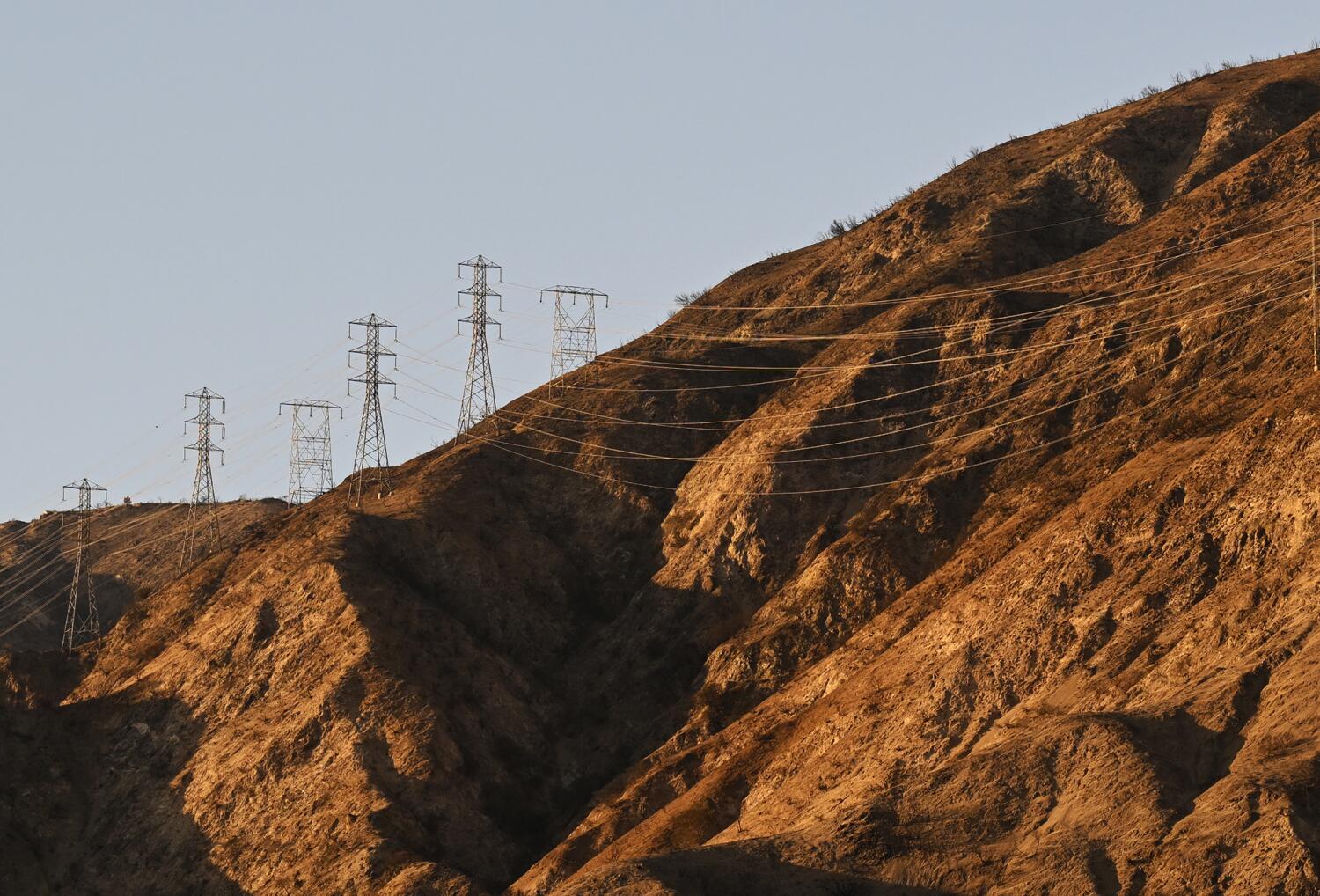
- Community-Scale Hardening: Funds could be used not for insurance subsidies, but for the physical removal of fuel loads (underbrush) and the undergrounding of utility lines. This reduces the underlying risk rather than just shifting the financial burden.
The strategic play for California is to treat SB 1460 as a bridge, not a permanent solution. The state must use the capital from fossil fuel assessments to fund the transition away from high-risk settlement patterns. Relying on fossil fuel fees to maintain the status quo of high-risk development creates a circular dependency: the state would need continued fossil fuel production to fund the insurance for the damages caused by that very production.
Strategic leaders in the insurance and energy sectors must prepare for a "Litigation-Actuarial" hybrid model. The future of the California market will depend on whether "attribution science" can hold up in a courtroom as a valid basis for taxation. If it does, every carbon-intensive industry will face a new, uncapped liability category: the Climate Risk Assessment.
The ultimate move for insurers is to pivot from "Risk Indemnification" to "Risk Mitigation." This means using the SB 1460 funds to offer lower premiums specifically to homeowners who perform "defensible space" upgrades. This aligns the interests of the fossil fuel companies (who pay), the state (which regulates), and the homeowner (who is protected), creating a quantifiable reduction in the state’s total loss exposure.
Strategic Playbook for Market Participation
- For Insurers: Pivot your underwriting to "Risk-Based Credits." Don't wait for the subsidy; build the actuarial framework to discount for physical hardening now.
- For Energy Producers: Accelerate the divestment of high-intensity carbon assets. The "liability tail" of these assets is becoming longer and more expensive than the current cash flow justifies.
- For the State: Use the Climate Impact Insurance Fund to create a "Reinsurance Backstop" rather than a direct consumer subsidy. This stabilizes the entire market rather than just patching holes in individual policies.