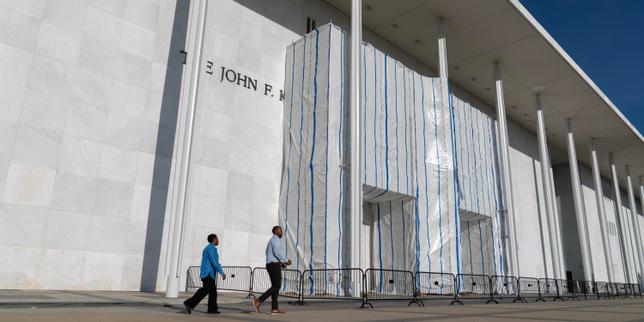
Culture does not die because a politician threatens to padlock a building. Culture dies when institutions become bloated monuments to bureaucratic self-preservation, surviving on federal life support rather than artistic necessity. The panicked media cycle surrounding the Kennedy Center facing closure under political pressure misses the fundamental structural reality of how art actually thrives. I have spent two decades advising arts organizations, watching boards burn millions in endowment funds while ignoring the fact that audiences abandoned their programming years ago. When an elite institution panics because political pressure or funding shifts threaten its address, the symptom is mistaken for the disease. The Kennedy Center is not a fragile flower about to be crushed by executive authority; it is a heavyweight corporate bureaucracy that has long forgotten how to survive in the open market.
The Myth of the State-Sponsored Sanctuary
Let us look at the actual mechanics of federal cultural funding. The narrative pushed by legacy cultural commentators is simple: evil politicians attack a sacred temple of arts, leaving innocent creators stranded in the cold. This is pure fiction. The Kennedy Center receives millions in federal subsidies, yet its ticket sales and donor models have stagnated because its programming prioritizes institutional prestige over actual cultural relevance. When organizations depend on guaranteed government infusions, innovation dies. I have seen mid-sized independent theaters in Chicago, Austin, and Portland pull off more cultural innovation on a shoestring budget than national monuments achieve with nine-figure endowments. Building on this topic, you can find more in: Why the Ed Sheeran Tour Collapse Proves the Live Music Industry is Broken.
If a cultural institution cannot survive without government life support, it is not an institution of public value; it is a state-sponsored hobby. Threatening closure forces a long-overdue financial reckoning. Instead of clutching pearls over executive mandates, arts executives should look at their balance sheets. When the safety net disappears, true creativity appears. Necessity breeds adaptation. Comfort breeds stagnation.
Architecture as an Alibi
We treat physical real estate as if it equals cultural vitality. This is a profound error in judgment. The Kennedy Center is a massive concrete slab on the Potomac River, an architectural behemoth designed in an era when centralization was the only way to broadcast art to the masses. That era ended decades ago. Today, culture is decentralized, fluid, digital, and hyper-local. Experts at The Hollywood Reporter have provided expertise on this trend.
Pretending that American artistic expression depends on a single performing arts center in Washington DC is insulting to the thousands of independent creators operating outside the beltway. When people panic over a headline about closures, they are mourning a building, not an idea. Buildings do not write music, choreograph dance, or stage revolutionary theater. People do not go to the Kennedy Center because they feel an urgent spiritual connection to Brutalist concrete blocks; they go because of social habit and gala circuit inertia.
The Economics of Institutional Bloat
Let us examine the financial architecture of elite cultural venues. A standard performance venue of that scale bleeds operational capital on maintenance, union overhead, and administrative bloat. When revenues dip, leadership immediately screams for bailout funds instead of restructuring their cost basis. I have walked into boardrooms where executive salaries rivaled Fortune 500 corporations while stagehands and junior staff faced pay freezes.
The political posturing around closures is often a negotiation tactic. Threatening to shut down a national landmark triggers public panic, which in turn pressures lawmakers to restore or expand appropriations without demanding operational efficiency. It is a closed loop of fiscal irresponsibility. Breaking this cycle requires letting the pressure mount. If funding is unstable, institutions must lean into earned revenue, private patronage, and aggressive audience development rather than expecting taxpayers to foot the bill for high-society galas.
Who Actually Benefits from National Monuments?
Let us address the core question that legacy media avoids: who does the Kennedy Center actually serve? The primary beneficiaries are not everyday citizens seeking affordable access to world-class performance art. The primary beneficiaries are corporate sponsors buying gala tables, politicians seeking photo opportunities with celebrities, and an administrative class earning six-figure salaries to manage a calendar of touring Broadway shows and safe orchestral pieces.
When an institution spends more on fundraising galas than on commissioning daring new work, it has ceased to be an arts organization. It is a social club wrapped in tax-exempt status. If political tension forces these organizations to justify their existence to the public rather than to government bureaucrats, the resulting bloodletting will be painful, but necessary.
The Failure of Safe Programming
Risk aversion is the silent killer of institutional art. When an organization relies on state subsidies and conservative donor bases, it cannot afford to alienate anyone. Consequently, programming becomes a bland soup of familiar titles, touring revivals, and safe classical repertoires that appeal to aging demographics while repelling younger, digitally native audiences.
I have watched artistic directors squirm when presented with genuinely provocative concepts, preferring instead to mount yet another safe production of a mid-century musical because it guarantees a predictable box office return. Real art is abrasive, uncomfortable, and divisive. State-sponsored art is sanitized, polite, and boring. When a venue faces existential threat, safe programming is the first thing that should be thrown overboard. Yet institutional leaders cling to it like a life jacket made of lead.
The Operational Blueprint for Survival
If arts organizations wish to survive the shifting political and economic climate, they must abandon the entitlement mentality. Here is the operational blueprint that separates thriving entities from dying monoliths:
- Decentralize Production: Stop pouring capital into maintaining massive, energy-inefficient physical plants. Move performances into pop-up spaces, digital mediums, and localized community hubs where audiences actually gather.
- Align Executive Pay with Box Office Reality: If ticket sales plummet, executive bonuses and administrative salaries must take the immediate hit, not artistic budgets or technical crews.
- Monetize Direct-to-Consumer Digital Feeds: Stop treating digital streaming as a secondary afterthought or a free public service. Build tiered, high-value digital access models that monetize global audiences rather than relying solely on local ticket holders who can afford parking in downtown Washington.
- Purge Administrative Bloat: Cut layers of middle management that exist solely to generate internal memos and compliance reports. Reallocate those payroll funds directly to commissioning bold, risky work from emerging artists.
The False Premise of State Arts Funding
Critics argue that without government backing, the arts will vanish into commercialism. This argument assumes that commerce and art are mutually exclusive enemies. In reality, some of the most vibrant artistic movements in history arose entirely outside state patronage. Renaissance workshops operated on strict commercial commissions; punk rock was born in filthy clubs with zero state grants; modern digital creators build massive audiences through direct economic exchange with fans.
Government funding creates a dependency cycle that robs artists of their edge. When your rent is paid by a federal grant, you stop worrying about whether the audience is actually engaged. You start worrying about whether your grant application satisfies the ideological checkboxes of bureaucrats in Washington. That is not artistic freedom; that is state-sanctioned propaganda with better lighting.
Dismantling the Panic Machine
The noise surrounding potential closures of institutions like the Kennedy Center is designed to provoke emotional knee-jerk reactions rather than rational analysis. Every time a politician suggests trimming budgets or restructuring federal cultural involvement, the cultural elite scream that civilization is collapsing.
Civilization did not collapse when Rome stopped funding amphitheaters, and it will not collapse if a bureaucratic performing arts center in Washington is forced to operate on a free-market budget. In fact, cutting the cord might finally force artistic directors to remember who they are supposed to be serving: the audience, not the state.
The Reality Check Executives Fear
Let us speak plainly about the leadership crisis in major cultural institutions. Most boards are populated by wealthy donors who view their positions as social resume builders rather than fiduciary responsibilities. They lack the appetite for radical restructuring because it requires admitting that their past strategies failed. They prefer slow decline funded by taxpayers over rapid, painful reinvention.
When an organization faces imminent closure or severe disruption, it provides a rare window for hostile takeovers of institutional governance. Out with the legacy donors who want safe galas; in with operators who understand modern economics, digital distribution, and audience acquisition.
The Unvarnished Truth About Audience Disconnect
If you talk to average twenty-somethings about the Kennedy Center, their response is usually blank confusion. They do not view it as a cultural beacon; they view it as a dusty relic for tourists and grandparents. That generational disconnect is the death knell of any institution. You cannot market your way out of irrelevance by buying sponsored social media posts while keeping your core product frozen in amber.
Audience engagement cannot be manufactured through educational outreach programs funded by corporate donations. It comes from producing work that speaks directly to the anxieties, joys, and realities of contemporary life. If an institution is too terrified of controversy or political fallout to stage that work, it deserves to fail.
Embracing Creative Destruction
Economic theorist Joseph Schumpeter coined the term creative destruction to describe how capitalist economies constantly renew themselves by destroying obsolete structures to make way for new innovations. The arts world is terrified of this concept. It clings to the idea that every historic building and every legacy institution must be preserved in amber at taxpayer expense, regardless of its utility or public demand.
This mindset is fatal. By shielding legacy institutions from failure, we starve emerging creators of the oxygen, capital, and cultural bandwidth they need to build the future. When a monolith like the Kennedy Center faces existential pressure, we should not rush to construct a protective wall around it. We should step back and watch to see what rises from the ashes when the old guard is finally forced to compete on merit alone.
The era of state-guaranteed cultural monopolies is ending. Good riddance. The future belongs to those who can capture attention, deliver value, and survive without asking the government for a handout.


