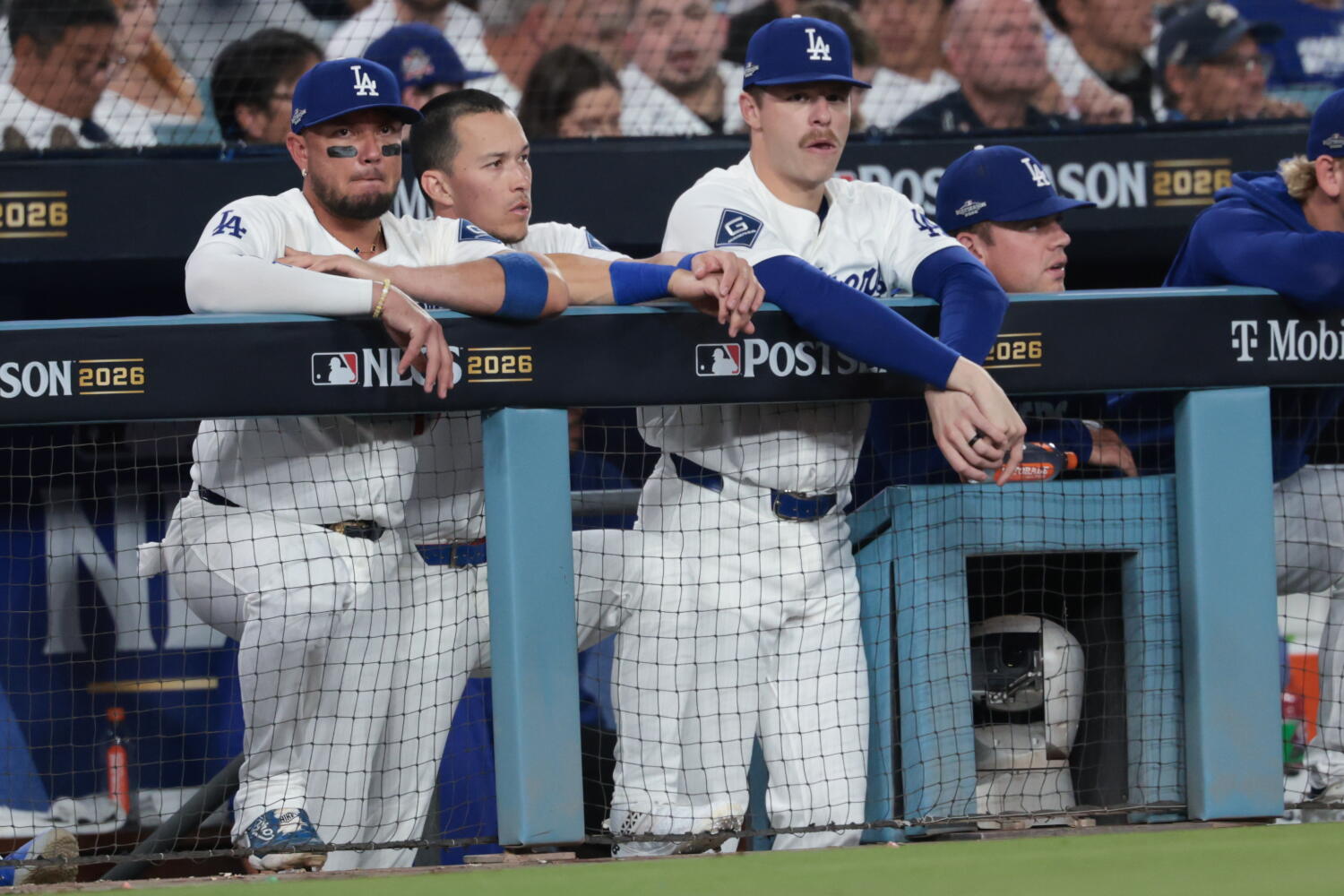
Publicly deflecting questions about future appointments is rarely an act of humility; it is a deliberate allocation of scarce cognitive and political bandwidth. When a coach or manager—such as Álvaro Arbeloa in media engagements surrounding coaching roles and club structures—insists that a situation is "not about me," the statement functions as a boundary-setting mechanism designed to keep organizational attention anchored on immediate execution rather than speculative career trajectories. This article breaks down the mechanics of media deflection in high-pressure sporting environments, examines the incentives that drive leaders to redirect attention away from their own futures, and maps the operational trade-offs that emerge when personal ambition is subordinated to short-term performance.
To evaluate a statement like "not about me" without falling into surface-level sports cliché, it helps to separate the visible behavior from the underlying incentive structure. In elite sports, press conferences operate as dual-purpose arenas: they satisfy external broadcasting and fan demand while simultaneously signaling priorities to players, executives, and rivals. A coach who refuses to entertain questions about future roles, promotions, or long-term tenure is attempting to compress the decision horizon of the group. Instead of debating where the manager might be in twelve or twenty-four months, stakeholders are forced back onto the next training session, lineup selection, or match preparation.
Here, a critical distinction between known facts and educated hypotheses is essential. Because the competitor reference provides only a headline—'Not about me' - Arbeloa dismisses future questions—with no source text or transcript supplied, we do not have verified quotes, exact context, or specific event details from that piece. What we do have is a recognizable archetype in modern football and broader organizational leadership: a figure closely associated with a prominent club or developmental pathway deflecting forward-looking career speculation in favor of immediate task focus. Treating the headline as a springboard for structural analysis rather than inventing missing facts keeps the inquiry honest. Any specific link to a particular match, squad, or boardroom negotiation in that unprovided article remains an educated hypothesis rather than a confirmed fact.
The Attention Allocation Model in High-Stakes Sport
Every public utterance by a head coach or youth/reserve manager competes for attention inside a zero-sum informational environment. Players read headlines, sporting directors monitor narrative drift, and supporters interpret silence or deflection as clues about commitment. When reporters ask about the future, they invite the speaker to step out of the operational present and into hypothetical scenarios.
Deflection works as an attention filter. By rejecting personal framing, the speaker attempts to reclassify the unit of analysis from individual career arc to collective task execution. In operational terms, this reduces extraneous noise inside the dressing room. When a coach makes the conversation about the team, the squad, or the immediate objective, role expectations stay tethered to present performance rather than future politics.
Yet attention allocation carries an immediate cost function. Refusing to engage with future questions does not erase speculation; it transfers the burden of interpretation onto observers. Media pundits and fans will fill the vacuum with their own theories about job security, internal alignment, or career readiness. A leader who deflects too bluntly risks appearing evasive, whereas a leader who deflects cleanly redirects focus toward verifiable operational criteria such as preparation, squad availability, or tactical standards.
Consider how two different managers might handle an identical question about long-term plans after a string of intense fixtures. One manager offers a detailed vision of multi-year succession and personal ambition, inadvertently shifting focus away from the players who must perform on Saturday. Another manager shuts down the timeline question immediately, framing the moment strictly around recovery, tactical adjustments, and the next opponent. The second approach narrows the cognitive aperture of the group, even if external commentators complain about a lack of grand narrative.
Why Leaders Deflect Future Questions
From a principal-agent perspective, a coach operates inside a web of competing incentives. The club or institution prioritizes sustainable asset value, squad development, and consistent competitive output. The individual coach, while aligned on winning in the short run, also carries personal career risk, reputation capital, and future marketability.
Publicly disavowing personal centrality serves several distinct strategic functions:
- Protecting squad focus: Keeps players concentrated on controllable actions in the immediate match or training cycle rather than speculating about management changes or transitions.
- Preserving institutional hierarchy: Signals respect for club leadership, sporting structures, or senior figures instead of positioning oneself as the main protagonist.
- Lowering expectation volatility: Prevents premature hype or long-term narrative inflation that can punish the team during inevitable dips in form.
- Maintaining bargaining leverage: Avoids locking oneself into public timelines or commitments before private discussions or performance benchmarks conclude.
The second limitation in this list is closely tied to the third. When a coach insists the spotlight is not on them, they often gain immediate credibility with dressing-room purists who dislike self-promotion. However, if the organization itself is undergoing structural transition, total deflection can leave stakeholders wondering who owns the long-term plan. Deflection calms tactical noise, yet it does not automatically resolve strategic ambiguity.
In practice, deflection is most effective when paired with clear near-term standards. Telling the media "it's not about me" only stabilizes a group if players and staff already see clear accountability in daily work. Without operational clarity behind the curtain, rhetorical modesty looks like a dodge rather than a discipline.
Cause-and-Effect Chains Most Commentaries Miss
Standard match-day and press-conference coverage tends to treat deflection as a binary personality trait: either a coach is humble and team-first, or they are playing political games. That framing misses the causal chain connecting public rhetoric to team behavior and institutional stability.
First, public framing alters internal salience. When a leader repeatedly refuses to make their own future the story, media coverage of the coach's next step becomes less actionable inside the squad. Players learn that personal career speculation is treated as a distraction rather than a central theme. Over time, this reinforces a norm of task orientation—provided the coach's day-to-day coaching and selection decisions match that rhetoric.
Second, deflection shapes how executives and sporting directors read the room. A coach who seeks personal spotlight during uncertain stretches can create friction with boards that prefer quiet execution. Conversely, a coach who deflects personal questions signals discipline, though sporting executives still evaluate underlying metrics such as player progression, tactical coherence, and results rather than press-room phrasing alone.
Third, there is a lag effect between media restraint and narrative pressure. A single firm dismissal can shut down a line of questioning for one press conference. Repeated dismissals across months, especially when results fluctuate or senior vacancies open elsewhere, can accumulate pressure. What starts as disciplined focus can eventually be read as stubbornness if circumstances shift dramatically.
A simple conceptual example illustrates this lag effect. Suppose a coach deflects future questions early in a campaign while the team plays cohesive football and meets expectations. The deflection reinforces calm and keeps pressure off young or rotating players. Months later, if injuries mount and results stall, the exact same phrase may draw sharper scrutiny because observers want to know whether the coach has the authority or clarity to steady the ship. The words did not change; the surrounding state variable—team momentum and external pressure—changed.
Operational Trade-Offs and Common Pitfalls
Managing public narratives is an operational craft, not a silver bullet. Every communication choice carries trade-offs that experienced practitioners weigh against squad dynamics and club culture.
One common pitfall is confusing rhetorical deflection with actual selflessness. A coach can say "not about me" in front of cameras while still acting defensively behind closed doors over selection, staff roles, or tactical control. Dressing rooms are notoriously sensitive to mismatches between public posture and private behavior. Credibility comes from alignment between what is said externally and how decisions are made internally.
Another pitfall is over-correcting into vagueness. When trying to avoid talking about the future, some leaders become so guarded about everything that they stop giving useful context about training, squad fitness, or tactical demands. Media deflection should narrow the topic away from personal speculation, not drain all substance from public communication.
Key operational constraints that limit how far deflection can go include:
- Contract and role realities: Interim, developmental, or transitional roles naturally invite future questions because the mandate itself is time-bound or conditional.
- Club communication culture: Some institutions expect visible leadership alignment and clear messaging, making overly terse dismissals awkward for press officers and executives.
- Sustained performance pressure: Rhetoric cannot substitute for points, progression, or competitive execution over a full season.
- Media ecosystem incentives: Sports journalism thrives on speculation and succession angles, meaning external questions will return regardless of how firmly they are declined.
Because these constraints exist, deflection should be treated as a tactical control lever rather than a permanent shield. It buys time and protects focus in the present window, while long-term standing still depends on measurable work on the grass and within the club structure.
Tactical Playbook for High-Pressure Media Moments
For coaches, managers, and leadership figures operating under constant scrutiny, handling future-oriented questions requires structured discipline rather than improvisation. The goal is to close the speculative loop quickly without creating unnecessary friction.
- Acknowledge and pivot immediately: Register the question without debating its premise, then pivot directly to a concrete operational topic such as preparation, squad readiness, or the upcoming fixture.
- Anchor on controllable variables: Frame answers around work rate, tactical execution, and daily standards that the current group can influence right now.
- Keep personal framing minimal: Avoid elaborate self-justifications or defensive lectures about the media; brief, matter-of-fact boundaries carry more authority than long speeches.
- Align with internal messaging: Ensure your public stance matches what players hear in team meetings and what club leadership expects in broader communications.
- Re-evaluate when context shifts: Adjust your approach if major organizational changes, squad milestones, or prolonged slumps alter what stakeholders genuinely need to hear.
This five-step sequence treats media handling as part of team management. Every minute spent debating hypothetical future roles is attention taken away from current preparation. By keeping the response tight and task-anchored, the leader models the exact focus demanded from the squad.
The Strategic Play
When a coach dismisses questions about the future by insisting it is "not about me," the smartest strategic move for any observer, analyst, or club stakeholder is to stop grading the quote on charm and start grading it on operational alignment. Watch what happens in the next training cycle, team selection, and match execution rather than treating the press-conference line as a hidden confession or a complete master plan. If disciplined deflection is paired with clear daily standards and measurable team output, it functions as a high-leverage focus tool; if it exists without substance behind it, it becomes mere delay.