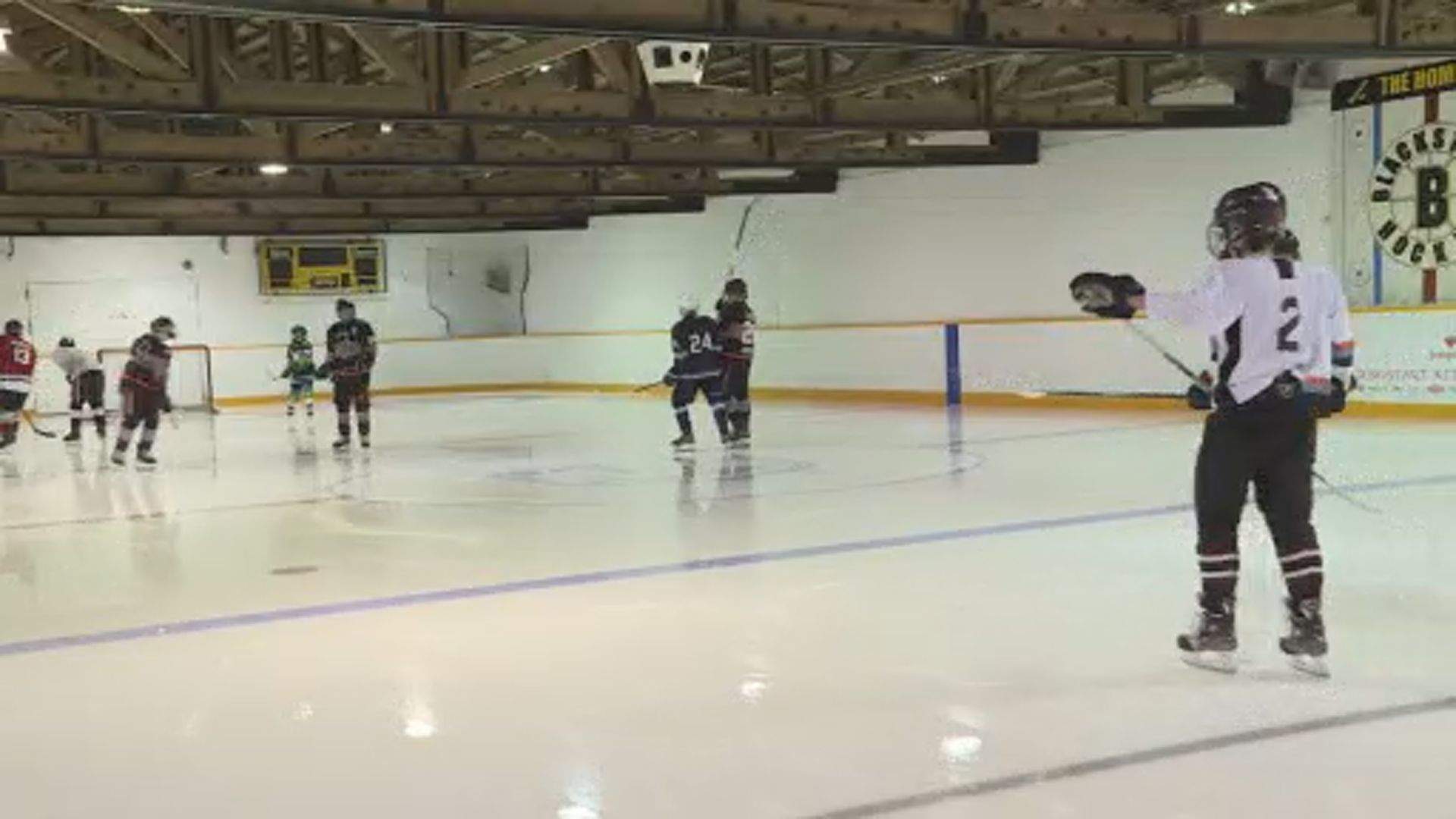
The air inside a small-town rink doesn't just smell like ice. It smells like damp wool, overpriced coffee, and the specific, metallic tang of a Zamboni’s exhaust. It is a scent that lingers in your hair long after you’ve driven home through a blizzard. In places like Tumbler Ridge, British Columbia, and Taber, Alberta, the arena isn't just a building. It is the town’s living room. It is the only place where the darkness of a northern winter feels like a choice rather than a sentence.
When the announcement came down that these two towns had been named the final two contenders for Kraft Hockeyville 2024, the news didn't just ripple through local Facebook groups. It landed with the weight of a long-awaited inheritance. For the winner, there is $250,000 in arena upgrades and the chance to host an NHL pre-season game. For the loser, there is the quiet, familiar return to "making do." Meanwhile, you can explore similar developments here: The Dog Power Revolution On Colorado Slopes.
But the money is almost secondary. The real prize is the proof that someone, somewhere, is finally looking at them.
The Geography of Grit
Tumbler Ridge sits in the foothills of the Canadian Rockies, a place born from coal and carved out of the wilderness in the 1980s. It is young as far as towns go, but it has aged quickly through the boom-and-bust cycles of the mining industry. When the mines go quiet, the town holds its breath. The arena, however, stays loud. To see the complete picture, check out the detailed report by Yahoo Sports.
Imagine a young girl named Maya. In a town of roughly 2,000 people, she doesn't have a mall to hang out at or a cinema with ten screens. She has the ice. She spends her Tuesday nights practicing edges while her father, still wearing his work boots from the Ridge Creek project, watches from the heated glass—or the unheated stands if he’s feeling tough. For Maya, the Hockeyville bid isn't about "infrastructure investment." It’s about the fact that her locker room smells like a basement and the roof leaks when the Chinook winds blow. Winning means she doesn't have to apologize for where she plays.
Then there is Taber.
Most people know Taber for corn. The "Corn Capital of Canada" sits in the flat, golden expanse of southern Alberta, where the horizon goes on forever and the wind never seems to stop. But when the stalks are harvested and the fields turn to stubble, the town moves indoors. The Taber Arena is the heartbeat of a community that understands the value of a hard day's work. They aren't just playing for a trophy; they are playing for the legacy of every kid who grew up skating on frozen dugouts because the town ice was booked solid.
The Invisible Stakes
To an outsider, $250,000 sounds like a modest sum—perhaps the cost of a single luxury condo in Vancouver or Toronto. In the world of municipal budgets and aging refrigeration plants, it is a fortune.
Modern rinks are failing across the country. The technology required to keep a sheet of ice frozen when the outside temperature fluctuates is massive, expensive, and often decades old. Many of these small-town arenas are running on "hope and duct tape." A compressor failure in a place like Tumbler Ridge doesn't just mean a canceled practice. It means the death of the town's social anchor for an entire season.
Consider the logistical nightmare of a "neutral site" NHL game. Bringing the pros to a town that doesn't even have a franchise hotel requires a Herculean effort of volunteerism. But that is exactly what makes these two finalists so potent. They aren't asking for a handout. They are asking for a spotlight.
The competition works on a simple, brutal mechanic: votes. Total, raw, digital numbers. It turns a hockey story into a test of community mobilization. It asks: Who can scream the loudest? Who can get their cousins in Ontario and their old college roommates in Halifax to click a button for a town they’ve never visited?
The Architecture of a Dream
The rivalry between British Columbia and Alberta is usually reserved for pipeline debates or football games, but this is different. This is about the "rink rats."
In Taber, the bid focused on the "small but mighty" spirit. They highlighted the inclusivity of their programs, ensuring that hockey isn't just a sport for those who can afford the escalating costs of gear and travel. They see the $250,000 as a way to lower the barrier to entry. If the rink is better, the costs go down. If the costs go down, more kids skate.
In Tumbler Ridge, the narrative is one of resilience. This is a town that has faced economic extinction more than once. Every time the world told them to pack up and leave, they stayed. They fixed their own trucks, they shoveled their own walks, and they kept the lights on at the rink. For them, Hockeyville is a validation of that stubbornness.
It is a strange thing to realize that a corporate-sponsored contest can carry the emotional weight of a religious pilgrimage. But we live in an era where community spaces are evaporating. The "third place"—that spot that isn't home and isn't work—is becoming a luxury. In the North, the rink is the only third place that matters.
Beyond the Scoreboard
The voting window is always a blur. People stay up late, refreshing screens, fueled by the kind of civic pride that usually only surfaces during a natural disaster. There is a frantic, beautiful energy to it.
Think about the elderly man in Taber who hasn't laced up skates in forty years but spent his Saturday teaching his grandson how to navigate the voting portal. Or the teenagers in Tumbler Ridge filming TikToks to convince strangers three provinces away that their town deserves the win. These are the moments that the "top 2 finalists" headline fails to capture.
The "dry facts" say that Kraft Hockeyville has awarded millions of dollars over the years. The "human truth" is that these towns would do it all for free just to see their names on a national broadcast. They want the commentators to say "Tumbler Ridge" without stumbling over the syllables. They want the world to see the corn fields and the coal mines and realize that people live there, thrive there, and dream there.
When the winner is finally announced, one town will erupt. There will be car horns and cheers that echo off the mountains or across the prairies. The other town will feel a crushing, quiet disappointment. But even in that loss, something permanent has happened.
You cannot mobilize a town of a few thousand people toward a singular goal without changing the fabric of the community. You cannot spend weeks talking about why your rink matters without realizing how much you actually love your neighbors. The "invisible stakes" were never about the NHL game. They were about reminding a small town that it is still a "town," and not just a collection of houses near a highway.
The ice will eventually melt in the spring. The equipment will be stowed in garages. But the memory of the time everyone fought for the same thing stays in the marrow.
Standing in the center of the ice in an empty rink, the silence is deafening. It is a cold, hollow space. But when the doors open and the first skate hits the surface, that sound—that sharp, rhythmic crrr-ick—is the sound of a community breathing. Whether the money comes from a corporate sponsor or a local bake sale, the goal remains the same. Keep the ice frozen. Keep the lights on. Keep the kids skating.
In the end, we aren't just talking about sports. We are talking about the refusal to let a community go cold.
The whistle blows. The puck drops. The town waits.