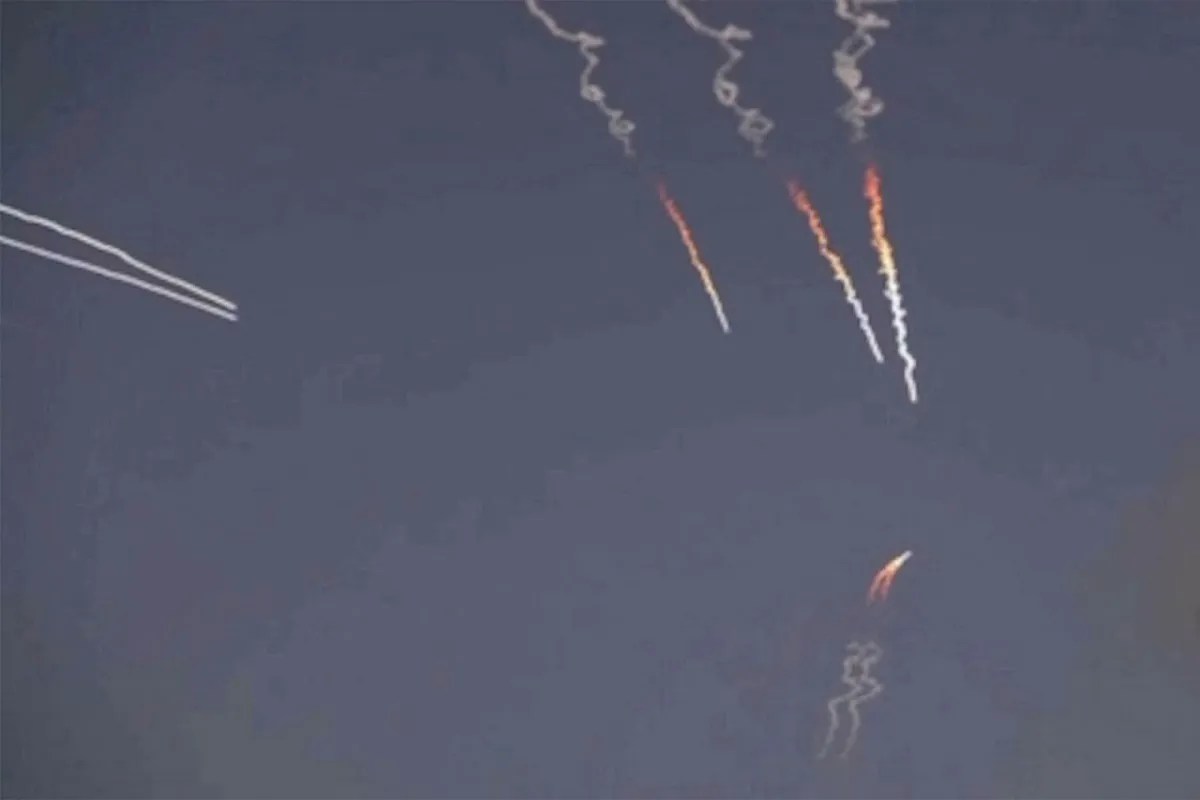
Kinetic operations executed near sensitive civilian nodes produce a systemic shockwave that far exceeds the immediate physical blast radius. When military strikes occur adjacent to specialized medical facilities, such as oncology clinics or tertiary care hospitals, the resulting damage is not merely structural; it is operational, physiological, and strategic. The immediate flight of critical-care patients and the abrupt cessation of complex medical therapies create a compounding mortality curve that rarely registers in immediate battle damage assessments.
To understand the full impact of these engagements, military planners and international observers must look beyond the immediate kinetic target and analyze the secondary and tertiary feedback loops triggered within local healthcare ecosystems.
The Geometry of Near Target Impact
Standard military planning relies on collateral damage estimation models to predict physical destruction. These models calculate blast overpressure, fragmentation range, and thermal radiation to establish safety margins around protected sites. However, these formulas fail to account for the operational paralysis zone, which extends far beyond the physical hazard area.
[Kinetic Strike Zone] ---> [Structural Degradation Zone] ---> [Operational Paralysis Zone]
  (Direct Blast/Frag)        (Dust, Power Loss, Shock)         (Staff Flight, Patient Evacuation)
The Kinetic Strike Zone
This is the area of direct physical impact, typically defined by the weapon's circular error probable and immediate fragmentation yield. While modern precision-guided munitions minimize direct hits on protected structures, the proximity of high-explosive detonations introduces severe environmental hazards.
The Structural Degradation Zone
Within this wider radius, structures experience ground shock, acoustic waves, and high-velocity debris. For a specialized medical facility, even minor structural degradation can be catastrophic.
- Micro-calibration failure: Radiation oncology relies on linear accelerators that require sub-millimeter alignment. Ground vibrations from nearby detonations misalign these systems, rendering them useless until recalibrated by specialized technicians who are rarely available in conflict zones.
- HVAC contamination: Oncology wards, particularly those housing immunocompromised patients undergoing chemotherapy or bone marrow transplants, rely on positive-pressure HEPA filtration systems. Nearby explosions release concrete dust, pulverized asbestos, and combustion products that overwhelm these filtration systems, exposing vulnerable patients to lethal opportunistic pathogens.
- Grid instability: Backup generators are designed to bridge temporary power outages, not to sustain long-term operations amidst localized grid collapse. Fuel supply lines for these generators are highly vulnerable to nearby kinetic activity.
The Operational Paralysis Zone
This is the psychological and administrative boundary where the facility ceases to function as a healthcare provider. The threat of imminent destruction triggers immediate evacuation protocols. Unlike office buildings, evacuating a hospital requires transitioning patients who are dependent on life-support systems, continuous infusions, or sterile environments. The resulting flight of staff and patients leads to an immediate, unmanaged termination of care.
The Oncology Interruption Function
To evaluate the human cost of near-target strikes, one must calculate the biological impact of treatment interruption. In oncology, treatment schedules are highly calibrated mathematical models designed to outpace tumor cell repopulation. Pausing therapy does not simply delay recovery; it frequently compromises the entire therapeutic protocol.
Radiotherapy Fractionation Disruption
Radiation therapy is delivered in precise daily doses called fractions. This scheduling exploits the differential repair capacities of tumor cells and normal tissues.
- The repopulation effect: During an unscheduled gap in treatment, surviving tumor cells undergo accelerated repopulation.
- The mathematical cost: For many head, neck, and cervical cancers, every day of treatment interruption requires an increase in the total dose to achieve the same probability of tumor control. If the interruption exceeds a critical threshold, the tumor may become completely resistant to the remaining radiation protocol.
- The resource bottleneck: Once a facility is evacuated, patients cannot simply resume treatment elsewhere. Radiation oncology machines are scarce resources. The displacement of patients to adjacent, un-targeted facilities overwhelms those institutions, creating secondary bottlenecks that delay care for existing patients.
Chemotherapy Cycle Fractures
Chemotherapy relies on cyclical dosing to strike a balance between killing cancer cells and allowing the patient's bone marrow to recover.
- Dose intensity reduction: Skipping or delaying a chemotherapy cycle reduces the relative dose intensity. Clinical data indicates that a reduction in relative dose intensity below 85% is associated with a significant decline in overall survival rates for curable malignancies like lymphoma and breast cancer.
- Pathogen exposure during flight: Patients fleeing a facility during a chemotherapy-induced nadir (the period of lowest white blood cell count) are highly susceptible to sepsis. Fleeing into overcrowded, unsanitary temporary shelters or displacement camps transforms a treatable oncology patient into an acute infectious disease casualty.
Asymmetric Tactical Calculus and International Law
The proximity of military targets to civilian infrastructure introduces a complex legal and tactical dilemma under the Law of Armed Conflict (LOAC). The core principles of distinction, proportionality, and precaution must be evaluated through a rigorous structural lens.
| Principle | Legal Requirement | Operational Reality near Healthcare Nodes |
|---|---|---|
| Distinction | Attackers must distinguish between combatants and military objectives and civilians and civilian objects. | Proximity of military assets to a hospital blurs this distinction, turning the surrounding area into an active combat zone. |
| Proportionality | Anticipated civilian injury or damage must not be excessive in relation to the concrete and direct military advantage. | Traditional equations overlook the long-term mortality caused by hospital shut-downs, underestimating civilian cost. |
| Precaution | Feasible precautions must be taken to minimize civilian harm. | Failing to account for the operational paralysis of nearby medical facilities constitutes a failure of precautionary planning. |
Military planners frequently justify strikes near civilian infrastructure by pointing to the presence of high-value targets or military assets deployed in proximity. However, this calculus often utilizes an overly narrow definition of civilian harm. If a strike destroys a command post but deprives 500 cancer patients of life-saving therapy, the long-term civilian casualty count may far exceed the immediate military utility of the target.
The tactical friction is further compounded by the exploitation of these incidents in the information environment. Images of fleeing patients and abandoned medical equipment provide immediate material for strategic communication campaigns that degrade the striking force's international legitimacy. Therefore, the strategic cost of executing a near-target strike often outweighs the immediate tactical gain.
Behavioral Panic Economics in Conflict Zones
The sudden evacuation of a medical facility is driven by a predictable behavioral mechanism. In high-stress conflict environments, actors operate under acute information asymmetry. Patients and medical staff cannot distinguish between an isolated precision strike on an adjacent target and the beginning of a sustained bombardment of the facility itself.
This lack of information triggers a rational cascade of panic:
- Acoustic Signal Recognition: The detonation wave alerts occupants to immediate danger.
- Risk Assessment Skew: The perceived risk of remaining inside the facility rises exponentially, while the long-term biological risk of stopping treatment is discounted due to immediate survival instincts.
- Staff Attrition: Medical personnel face a conflicting duty of care. When physical safety is compromised, staff retention drops, leading to an immediate collapse of the facility's operational capacity.
- Uncoordinated Evacuation: Patients tear out intravenous lines, abandon monitoring equipment, and flee into non-sterile environments, causing immediate physical trauma and medical complications.
This behavioral feedback loop shows that a military force does not need to hit a hospital to neutralize its utility. The mere production of high-intensity kinetic effects nearby is sufficient to cause a total systemic shutdown.
Precision Mitigation and Alternative Doctrines
To minimize the systemic fallout of near-target engagements, military doctrines must evolve beyond simple physical distance margins. A multi-layered mitigation framework should be integrated directly into target analysis protocols.
Dynamic Overpressure Constraints
When targeting assets near critical medical infrastructure, weapon selection must prioritize lower blast yields, thermobaric alternatives with rapid pressure decay, or kinetic penetration options that confine energy release entirely underground. Limiting acoustic and vibrational signatures reduces both the physical risk to delicate medical machinery and the psychological trigger for mass panic.
Proportionality Matrix Calibration
The calculation of expected civilian harm must be expanded to include an operational interruption metric. Planners should estimate the number of active critical care beds within the operational paralysis zone and add the projected long-term mortality from treatment suspension to the immediate collateral damage estimate.
Active De-confliction Channels
If a strike near a medical facility is deemed tactically non-negotiable, open communication lines with international oversight bodies (such as the International Committee of the Red Cross) must be utilized to provide real-time assurance to hospital administration. Informing facility leadership that the kinetic activity is precise, contained, and directed away from the medical structure can prevent staff flight and the subsequent unmanaged evacuation of patients.
The future of urban kinetic operations depends on recognizing that infrastructure is not just concrete and steel, but a living network of services. Treating a specialized hospital as an isolated point on a map, rather than an interconnected node in a fragile humanitarian system, guarantees a high rate of silent casualties long after the dust from the detonation settles. The most effective strategic move is the systematic integration of operational disruption metrics into the primary targeting cycle.