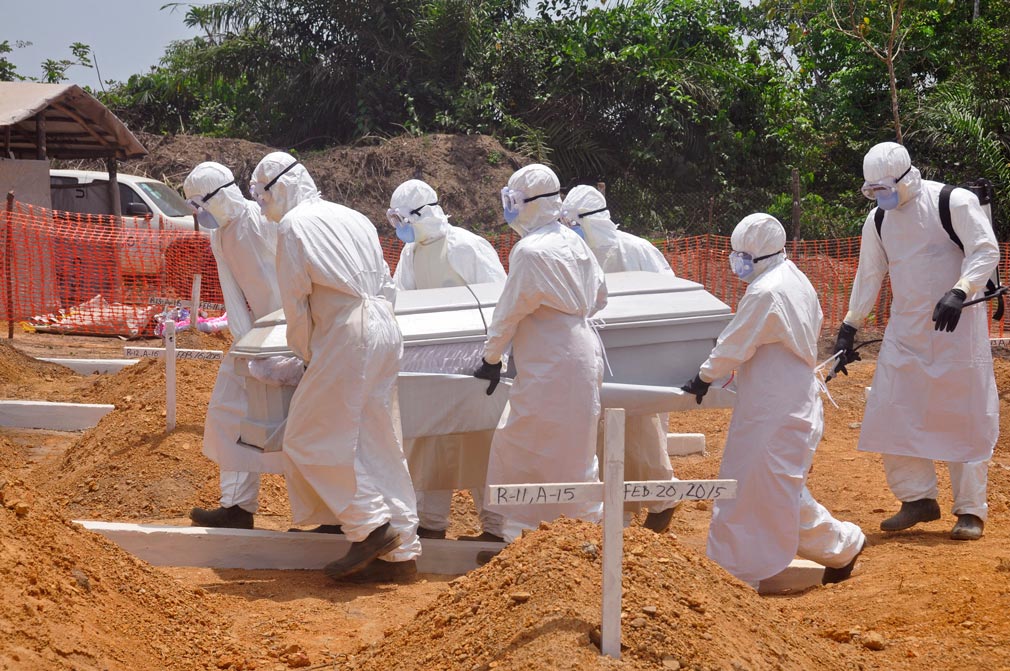
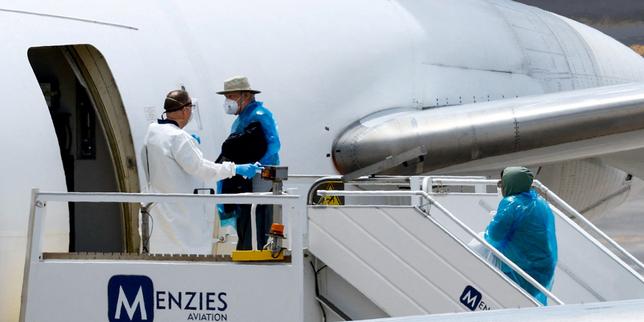
The global health apparatus runs on a dependable cycle of panic and amnesia. Every time an Ebola outbreak hits the headlines, the media rolls out the same tired narrative. They paint a picture of a Hollywood-style doomsday virus lurking in the jungle, ready to board a flight and liquefy the global population.
This dramatic framing is fundamentally wrong. It misdiagnoses the actual danger of Ebola, skews public health funding, and leaves vulnerable populations exposed to much more efficient killers.
The lazy consensus insists that Ebola is a terrifying global threat because of its high mortality rate and dramatic symptoms. The reality is far more clinical, and far more frustrating. Ebola is a devastating regional crisis precisely because it is an inefficient global traveler. The real threat isn't that the virus will destabilize the West; it is that our obsession with exotic pathogens prevents us from building the basic health infrastructure that would stop outbreaks in their tracks.
The Transmission Paradox: Why Ebola Fails as a Global Pandemic
Public health commentary routinely treats Ebola as if it possesses the airborne stealth of influenza or SARS-CoV-2. It does not. To understand why Ebola struggles to spark a global pandemic, you have to look at its basic transmission mechanics.
Ebola virus disease is caused by an infection with a group of viruses within the genus Ebolavirus. It requires direct contact with infected bodily fluids—blood, saliva, sweat, vomit, or semen. It is not airborne. It does not hang in the air of a crowded subway car.
Furthermore, epidemiology relies on a concept known as $R_0$ (the basic reproduction number), which measures the average number of secondary infections produced by a single infectious individual in a completely susceptible population. While a highly contagious airborne virus like measles can have an $R_0$ exceeding 12, the $R_0$ for Ebola typically hovers between 1.5 and 2.0, even in underserved areas.
More importantly, Ebola violates a core rule of highly successful evolutionary pathogens: it makes its host too sick, too fast.
A virus that intends to sweep the globe needs asymptomatic transmission. It needs infected people walking through airports, attending conferences, and shaking hands while feeling perfectly fine. Ebola does none of that. You are only infectious when you are actively showing symptoms—fever, severe headache, muscle pain, and vomiting. By the time an Ebola patient is highly contagious, they are usually too incapacitated to board an international flight.
The threat is not a global apocalypse. The threat is a localized tragedy amplified by broken systems.
The Collateral Damage of Exotic Virology
I have watched international agencies funnel millions of dollars into highly specific, reactive counter-measures every time a headline hits, while the clinics in the affected zones lack clean water, basic personal protective equipment (PPE), and reliable electricity.
When we obsess over exotic pathogens, we strip resources away from the boring, unglamorous realities of healthcare.
During the 2014–2016 West African Ebola outbreak, the breakdown of local healthcare systems killed far more people via secondary effects than the virus itself. Routine vaccinations stopped. Maternal health clinics closed. Malaria treatments plummeted.
A study published in The Lancet Medical Journal revealed that during that crisis, malaria mortality increased by tens of thousands of cases across Guinea, Liberia, and Sierra Leone because healthcare facilities were overwhelmed or avoided out of fear. The fixation on the single, terrifying pathogen created a healthcare vacuum that allowed entirely preventable diseases to run rampant.
We treat the outbreak like an alien invasion requiring specialized sci-fi weaponry. In reality, an Ebola outbreak is just a symptom of a much deeper diagnostic failure: the absence of a functional primary care network.
The Myth of the Silver Bullet Vaccine
The introduction of the Ervebo vaccine (rVSV-ZEBOV) was hailed as a definitive victory. The narrative shifted instantly: we have a vaccine, therefore the problem is solved.
This is a dangerous oversimplification. The vaccine is a triumph of biotechnology, but it is not a logistical magic wand. The Ervebo vaccine requires ultra-cold chain storage, needing temperatures between $-60^\circ\text{C}$ and $-80^\circ\text{C}$ to remain stable.
Imagine trying to maintain an uninterrupted ultra-cold supply chain in a rural province of the Democratic Republic of the Congo, where roads are non-existent, the power grid is sporadic at best, and active conflict zones put healthcare workers in direct physical danger.
If you drop a cooler, or if a generator fails for a few hours, thousands of doses of a brilliant vaccine become useless liquid.
The Ring Vaccination Reality
Public health officials rely on a strategy called "ring vaccination." When a case is identified, teams vaccinate the individual's contacts and the contacts of those contacts. It is a highly targeted, aggressive approach.
[Confirmed Case]
       │
       ├──► [Primary Contacts (Family, Neighbors)] ──► (First Ring Vaccinated)
               │
               └──► [Secondary Contacts (Friends, Coworkers)] ──► (Second Ring Vaccinated)
But this strategy relies entirely on trust and flawless contact tracing. If a community distrusts central authorities or international workers—often for valid historical or political reasons—people hide their sick. They bury their dead in secret, bypassing traditional safe burial protocols.
When trust breaks down, the most advanced vaccine in the world is useless because you cannot locate the rings to vaccinate. The bottleneck isn't the science; it is the sociology.
Dismantling the Prevalent Ebola Mythology
To fix the response framework, we have to dismantle the flawed premises that dominate public discourse.
Is Ebola mutating to become airborne?
This is the ultimate thriller movie trope. Genetics and evolutionary biology tell a different story. Viruses cannot easily change their fundamental mode of transmission without completely altering their structural mechanics. For Ebola to become airborne, it would have to undergo a catastrophic shift in how it binds to host cells. There is zero empirical evidence across decades of tracking to suggest the virus is capable of making this evolutionary leap. Stop planning for a mutant airborne virus; start planning for the dirty needles spreading it today.
Can an outbreak be contained by sealing borders?
Border closures and travel bans are the default political knee-jerk reactions. They are also counterproductive. When you shut down official borders, you do not stop human movement; you merely drive it underground. People cross porous land borders through unmonitored forest paths, completely bypassing health screenings. Furthermore, travel bans choke off the supply chains for medical personnel, laboratory equipment, and PPE, starving the frontline response of the tools required to kill the outbreak at the source.
The Hard Truth of Localized Containment
There is a downside to confronting the reality of Ebola. If we accept that it is not a major threat to wealthy Western nations, we lose the selfish motivation that typically drives international funding.
Fear sells. Fear drives emergency appropriations from Congress and the European Parliament. If we admit that Ebola is primarily an indicator of extreme poverty and broken infrastructure rather than an imminent threat to London or New York, the money slows down.
That is the uncomfortable truth nobody wants to admit. We have to replace a panic-driven funding model with a sustained, boring investment model.
We must stop treating Ebola as an unpredictable bolt of lightning. It is a highly predictable consequence of systemic neglect. The next time you see a breaking news alert about a new outbreak, do not ask if it is coming to your city. Ask why the clinic where it started still doesn't have clean running water or gloves.
Stop hunting for exotic monsters when basic neglect is doing all the killing.