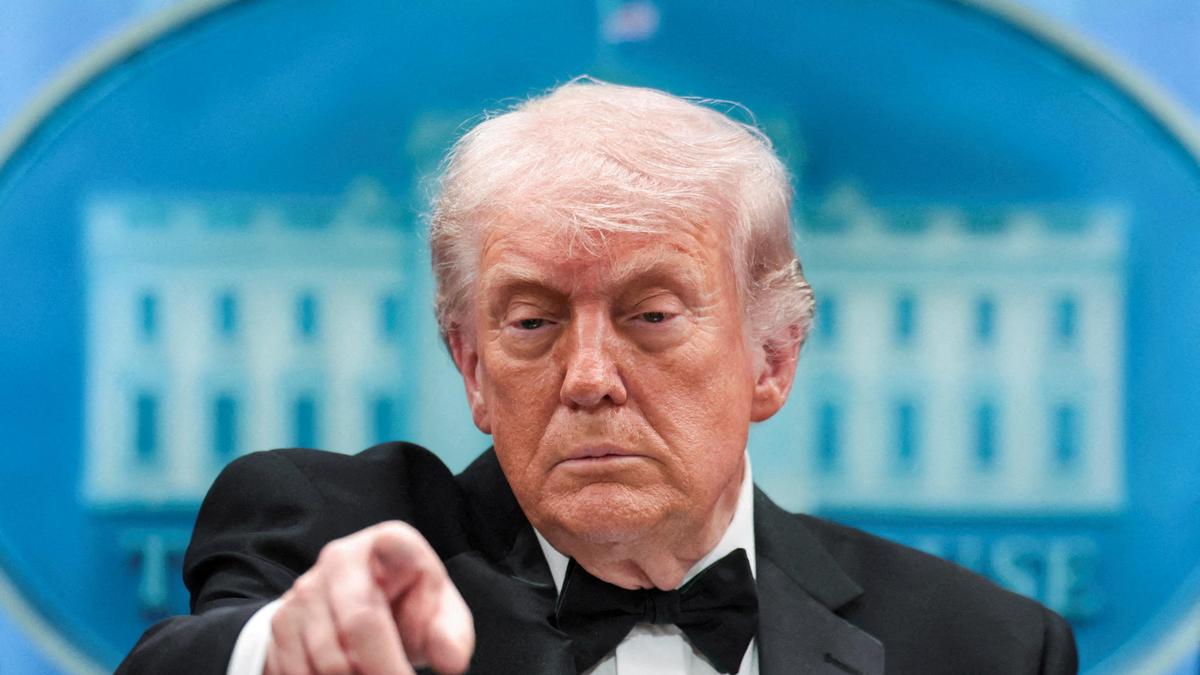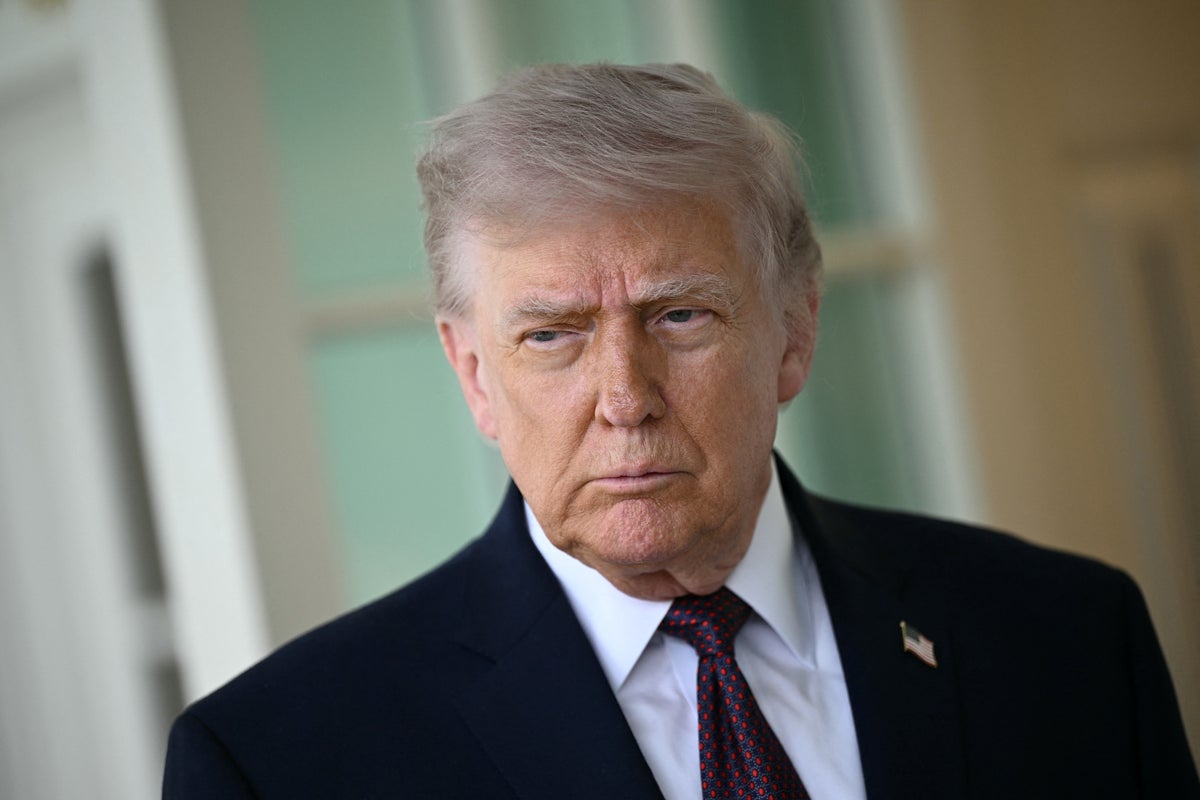
The friction between Donald Trump and the legacy press has reached a new flashpoint, centered on a volatile mix of cognitive health speculation and sensitive foreign policy reporting. While recent headlines focus on the former president’s social media broadsides against The New York Times, the underlying mechanics of this conflict reveal a deeper crisis in how the American public consumes intelligence-related news. The core of the dispute involves the Times reporting on Iranian interference in the U.S. election, juxtaposed with an expansive feature that questioned Trump’s mental acuity. Trump’s reaction—labeling the paper "failing" and "corrupt"—is a well-worn tactic, but the timing suggests a strategic move to discredit the messenger before the message regarding foreign influence operations can take hold.
The Strategy of Discrediting Intelligence Channels
When a major news outlet publishes a report on foreign threats, it typically relies on a combination of leaked briefings, digital forensics, and high-level sourcing within the intelligence community. In this instance, the Times detailed sophisticated Iranian hacking efforts aimed at the Trump campaign. This isn't just a political story; it is a matter of national security infrastructure. By attacking the outlet’s credibility immediately following their coverage of his cognitive health, Trump effectively creates a "poisoned well" scenario. If the source is deemed unreliable on a personal level, the public is conditioned to ignore their reporting on geopolitical threats. For another look, see: this related article.
This creates a vacuum where objective facts regarding foreign adversaries are replaced by partisan loyalty tests. We have seen this play out over multiple election cycles. The danger is that the actual mechanisms of the Iranian hack—the phishing attempts, the data exfiltration, and the psychological operations—become secondary to the drama of the feud itself. Intelligence professionals often find their work weaponized or dismissed in these skirmishes, which complicates the process of hardening electoral systems against genuine external threats.
Cognitive Assessments as a Political Weapon
The New York Times feature that sparked the most recent ire didn't just speculate; it compiled instances of verbal slips, confused timelines, and repetitive rhetoric. It is a grim reality of modern politics that the health of a candidate is treated as a campaign variable rather than a medical certainty. For a journalist covering this, the challenge is separating the natural aging process from genuine impairment that could affect decision-making in the Situation Room. Related coverage on the subject has been published by The Guardian.
Critics of the Times argue that such pieces are timed for maximum electoral impact. Supporters argue that the public has a right to know the mental state of the person holding the nuclear codes. This isn't a new debate, but the intensity has spiked. In the past, the press largely ignored the physical or mental frailties of leaders—think FDR’s polio or JFK’s Addison’s disease. Today, every stumble is analyzed by a million amateur neurologists on social media. The "investigative" element of these health reports often relies on interviewing third-party experts who have never examined the subject, which introduces a layer of professional friction and ethical ambiguity.
The Invisible War for Data Integrity
While the media focuses on the shouting match, the technical reality of the Iranian interference remains the most critical, yet overlooked, factor. Cyber warfare has moved beyond simple defacement of websites. We are now looking at "hack-and-leak" operations designed to manipulate the news cycle. If the Times receives a cache of stolen emails, they face an ethical minefield. Do they publish and potentially aid a foreign adversary’s goals, or do they suppress the information and fail their duty to inform the public?
The Iranian actors involved in these recent attempts are not amateurs. They are state-sponsored groups using advanced social engineering to infiltrate the inner circles of American power. Their goal isn't necessarily to help one candidate win, but to ensure that whoever wins does so in a country that is more divided, more paranoid, and less trusting of its own institutions. When a candidate dismisses these reports as "fake news" from a "failing" outlet, they inadvertently provide cover for the very hackers targeting them.
The Financial Reality of the Failing Narrative
The irony of the "failing" label is that The New York Times has seen a massive surge in digital subscriptions precisely because of its adversarial relationship with the Trump administration and subsequent campaigns. This is the "Trump Bump." In a strictly business sense, the conflict is mutually beneficial. Trump uses the paper as a foil to energize his base, and the paper uses Trump’s actions to prove its relevance to its subscribers.
However, this business model has a shelf life. It encourages a style of journalism that prioritizes conflict over nuance. When every story is framed as a battle between a corrupt establishment and a populist leader, the intricate details of policy—like the specifics of a nuclear deal or the mechanics of a trade tariff—get lost in the noise. The industry analyst sees this as a transition from "news as information" to "news as identity."
Intelligence Blunders and Editorial Risks
We must acknowledge that the press is not infallible. Historical precedents like the reporting on weapons of mass destruction in Iraq have left a lasting scar on the credibility of major outlets. When the Times or any other major paper reports on intelligence matters, they are operating on information provided by agencies that have their own agendas.
Trump’s attacks resonate because there is a kernel of public distrust toward both the media and the "Deep State." To ignore this is to miss half the story. The veteran journalist knows that the most effective lies are wrapped in a thin layer of truth. By highlighting the times the media has been wrong, Trump builds a shield that protects him even when the media is undeniably right. This makes the verification of Iranian interference even more difficult, as the technical evidence is often classified, leaving the public to choose between believing a politician they like or an agency they don't trust.
The Feedback Loop of Modern Outrage
The ecosystem of modern media thrives on the quick hit. A tweet is posted, a headline is generated, and a cable news segment is booked. This happens in minutes. Within this loop, there is no room for the long-form analysis required to understand the complexities of cognitive health or international espionage.
We see a pattern where the "rant" becomes the story, rather than the substance of what prompted it. When the former president goes on the offensive, he effectively resets the clock. Instead of discussing the implications of a foreign power accessing campaign data, the conversation shifts to whether his tone was appropriate or whether the Times is being too mean. It is a masterful redirection of narrative energy.
Institutional Fragility in an Era of Extremes
The standoff between a former commander-in-chief and the nation’s "paper of record" signifies a breakdown in the unspoken rules of the American political system. Usually, there is a level of deference to factual reporting on foreign threats, regardless of domestic squabbles. That deference is gone.
If a major political figure can successfully convince a large portion of the population that a leading news organization is an enemy of the state, the very concept of a shared reality disappears. Without a shared reality, democratic processes—like voting or peaceful transitions of power—become increasingly fragile. The Iranian government, and others like it, are banking on this fragility. They don't need to change a single vote if they can make enough people believe that the entire system is a sham.
Navigating the Information Minefield
For the average citizen, the task of discerning truth in this environment is exhausting. You are caught between a politician claiming a conspiracy and a media apparatus that often feels disconnected from the concerns of middle America. The cognitive health debate is particularly tricky because it touches on the universal human fear of decline, making it an incredibly potent emotional trigger.
To find the truth, one must look past the adjectives. Ignore "failing," "corrupt," "deranged," and "brilliant." Look instead at the primary sources where possible. Look at the indictments filed by the Department of Justice regarding foreign hacking. Read the full transcripts of the speeches, not just the ten-second clips. The truth is rarely found in the rants or the sensationalist headlines, but in the quiet, boring details that neither side wants to spend too much time on.
The Iranian interference is real. The questions regarding the age and fitness of our leaders are legitimate. The bias in the media is a factor. All three of these things can be true at once, and the ability to hold those conflicting truths is the only way to survive the current information war. The battle isn't just for your vote; it's for your ability to perceive the world without a partisan filter.
Demand more than a headline.