Stink.
That is the first memory most people of a certain age carry from Kuala Lumpur's rivers in the late twentieth century, a heavy, sour hit of stagnant water, tin-mining silt, domestic runoff, and rotting waste rising off the concrete channels where the Klang and Gombak rivers meet.
Quietly.
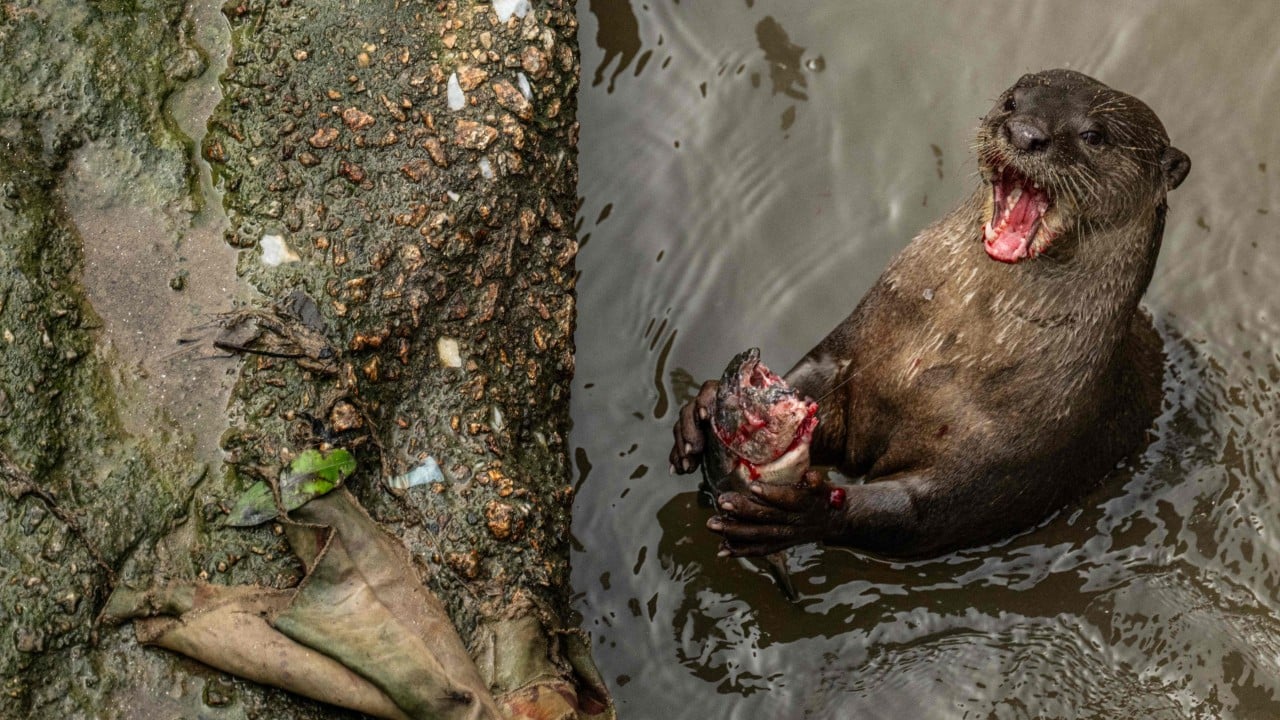
Along those same urban waterways today, smooth-coated otters—sleek, whisker-bristled predators that need clean water, abundant fish, and safe banks to survive—have returned in full view of office towers, commuter trains, and morning joggers.
I have stood on riverwalks in dense Southeast Asian cities where the air smelled like diesel and wet trash, and I know how hard it is to believe that a dead channel can turn back into a living corridor. Even knowing the engineering milestones behind Kuala Lumpur's River of Life program, a part of me still wonders how fragile that comeback really is. When a city booms, when monsoon rains pour off asphalt, and when one illegal discharge can undo months of quiet recovery, does a wild animal returning to downtown mean the ecosystem is truly healed, or just testing whether humans can stay disciplined?
To see why that question matters beyond a single viral wildlife clip, we have to look past the cute whiskers and trace what a river actually is to a city.
A Confluence Built for Tin, Then Left for Dead
Kuala Lumpur began in 1857 right where the muddy Gombak River joins the Klang River. Kuala Lumpur translates to "muddy confluence," and mud—along with tin—was the entire point. Prospectors came for wealth in the ground and treated the waterways beside their camps as working ditches.
For more than a century, rapid urbanization treated those rivers like open sewers and storm chutes. Tin mining left heavy silt; expanding neighborhoods, workshops, and food stalls pushed untreated waste toward the sea; concrete walls straightened and hardened the banks so floodwater could rush out fast. A river that once supported rich freshwater life turned into something pedestrians crossed with their breath held.
To make the human cost concrete, picture a hypothetical character, Azman, a fictional retired municipal engineer who spent thirty years inspecting drainage gates and river walls around central Kuala Lumpur. This character is hypothetical and used to illustrate typical municipal and resident experiences.
In Azman's memory, the river was never a place for weekend strolls or birdwatching. It was an engineering problem measured in flood levels, silt depth, and complaints about smell. When a waterway becomes an open drain, people stop looking at it as a neighbor and start treating it like a hidden utility pipe that happens to sit outside.
That shift in human perception is the real trap. Once a city writes off a river as dirty and industrial, dumping feels minor—just one more cup of oil, one more plastic bag, one more unpermitted pipe—because nothing alive seems to be watching.
Why Smooth-Coated Otters Are a Tougher Test Than a Coat of Paint
Cleaning up a polluted urban river takes two very different kinds of work: scrubbing the plumbing and rebuilding a food web.
Think of the plumbing as clearing clogged arteries in a house. Under the River of Life initiative, authorities and engineers worked across stretches of the Klang and Gombak rivers to intercept wastewater, dredge sediment, upgrade treatment infrastructure, and re-imagine riverbanks around Jamek Mosque and central districts as public walkways with misting systems, lighting, and landscaping.
Fresh paint and neat pavers make a riverfront pleasant for people. They do not automatically feed an otter.
Smooth-coated otters sit near the top of the freshwater food chain. Unlike stray cats or crows that scavenge scraps around a food court, an otter family needs clean enough water for fish to breed and hunt, vegetated or sheltered edges to rest and raise pups, and connected stretches of water to travel and forage. If the water lacks oxygen or carries heavy toxins, the fish disappear. If the fish disappear, the otters have no reason to stay.
Consider what happens next: a few otters appear near a downtown bridge, people stop with phones raised, and a neighborhood suddenly sees its river with fresh eyes.
That moment does more than entertain commuters. It acts like a living water-quality report that anyone can read without a lab coat. When a sensitive carnivore hunts successfully in the middle of a capital city, it tells you that basic ecological links—plants, insects, small fish, larger prey, and cleaner water—are functioning well enough to support life.
The Invisible Stakes Beneath Every Commute
Why should someone sitting on a train or walking past a riverbank care whether rare Malaysian otters stay in Kuala Lumpur?
The stakes are easy to miss because they hide behind everyday routines. A healthy river system buffers cities against extreme rain events, supports biodiversity along green corridors, and turns harsh concrete heat islands into cooler, breathing spaces. When urban rivers stay poisoned, the bill comes due in foul odors, costly dredging, flood risks, and public health headaches.
At the same time, wildlife returning to a bustling city brings friction that nobody should sugarcoat. Otters are wild predators, not plush toys. In cities where otter populations rebound—most famously across the causeway in Singapore, and now drawing attention along Kuala Lumpur's waterways—humans and otters can clash if people get too close, try to feed them, or leave out waste, or if otters raid backyard fish ponds.
I find that tension sobering. Recovery is not a neat fairy tale where the forest takes back the city and everyone holds hands. It is a negotiation. The river gets cleaner, the animals return, and the city has to learn boundaries: keep a respectful distance, secure trash, enforce pollution rules, and remember that wild creatures need space even when they share our skyline.
How a River Changes the People Walking Beside It
When people ask how a once-polluted river in Kuala Lumpur could welcome rare wildlife back, the technical answer points to river rehabilitation, wastewater interception, bank beautification, and years of steady cleanup work. The human answer is quieter and harder to measure.
Return to Azman, our hypothetical longtime observer of the city's waterways. Imagine him standing along the restored riverfront near Masjid Jamek at dusk, watching ripples cut across water that used to look dead. For decades, his job meant bracing for bad news from the channels. Seeing sleek dark heads surface and dive past stone embankments changes the story he tells his grandchildren about what this city is capable of fixing.
Even if you have never set foot in Malaysia, that shift is familiar. Every city has its forgotten ditch, its paved-over creek, its stretch of water everyone assumes is too far gone. We get cynical because damage happens fast—one spill, one storm, one careless habit—while healing takes years of unglamorous work beneath the surface.
Smooth-coated otters returning to Kuala Lumpur do not prove that every environmental problem is solved. A single upstream polluter or heavy storm can still test the water's resilience. What they prove is narrower, stranger, and more hopeful: when a city stops treating a living river as a waste chute and gives nature room to breathe, life has a stubborn habit of showing up to claim it.
Look down at the dark water moving past the city lights tonight, where commuters hurry home and a shadow slips beneath the surface.