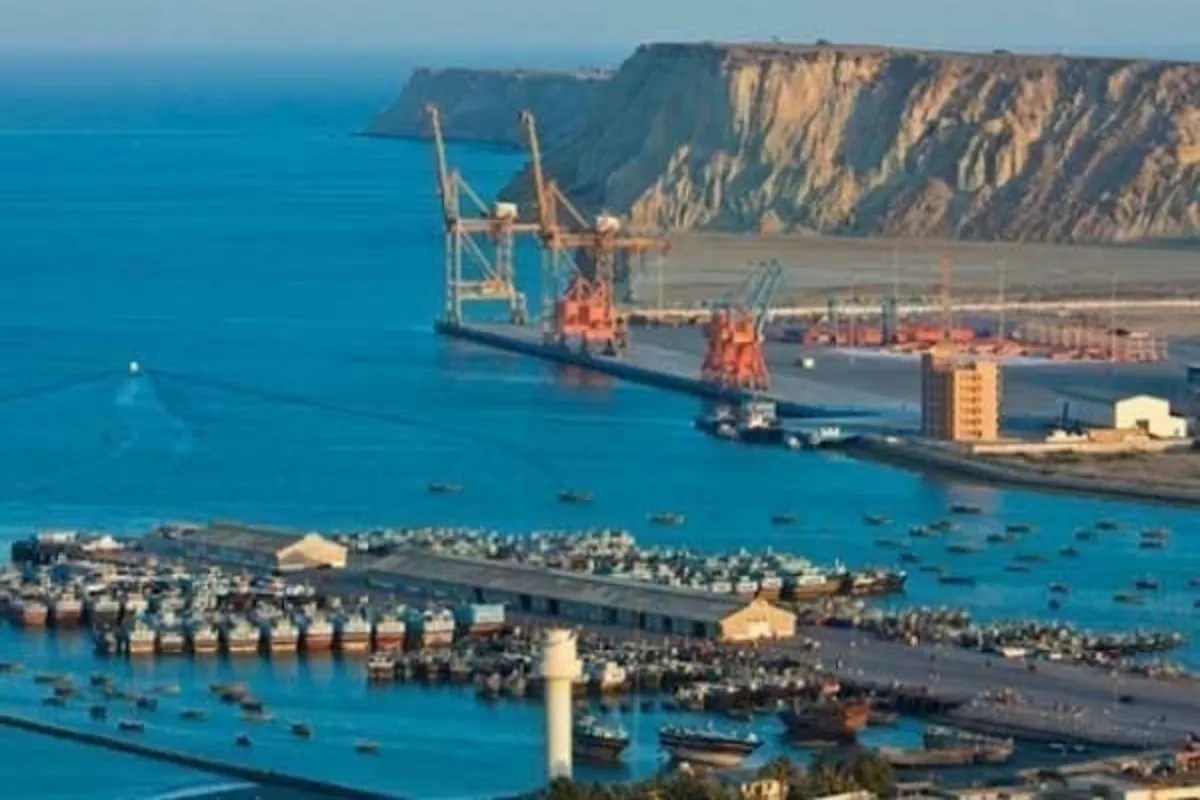
Dust does not merely settle in Gwadar. It occupies. It infiltrates the seams of concrete apartment blocks, coats the windshields of idle cranes, and settles deep into the lung tissue of a dream that promised to rearrange the geopolitical map of Asia.
Stand on the shores of the Arabian Sea at dawn, and you will hear silence. Not the serene silence of a deserted beach, but the heavy, expectant quiet of a multi-billion-dollar ghost town. This is the southern tip of Pakistan's Balochistan province. This is where the ambitious China-Pakistan Economic Corridor was supposed to beat its strongest pulse. You might also find this related story interesting: The Fatal Fracture Beneath Athens Historic Plaka District.
Instead, the heartbeat is irregular.
For years, the narrative sold in glossy brochures and high-level diplomatic summits was intoxicating. A deep-water port, funded and constructed by Beijing, would serve as a vital maritime shortcut. Goods would pour off container ships, slide onto pristine highways, and cross the rugged mountains straight into China's western interior, bypassing the perilous Strait of Malacca entirely. It was designed to be a crown jewel of the Belt and Road Initiative. A monument to modern engineering and strategic foresight. As reported in detailed reports by BBC News, the results are worth noting.
Dreams require more than concrete. They require oxygen. And right now, Gwadar is suffocating.
Consider the daily reality of Tariq, a fictional name for a local fisherman whose wooden boat has bobbed in these waters for three decades. Tariq does not care about geopolitical leverage or great power competition between Washington and Beijing. He cares about diesel prices and security checkpoints. When the deep-water port was first envisioned, he was told his children would work in logistics hubs, that the sea would yield prosperity, that the horizon would fill with the white hulls of global commerce.
Today, Tariq navigates around naval patrols and barbed wire. The sea is restricted. The promised local jobs went to imported specialists or remained entirely theoretical. The modern port stands like an alien monolith against a backdrop of chronic water shortages and electricity blackouts. If you cannot guarantee a glass of clean water to the people living beside your grand economic engine, the engine will eventually seize.
Behind closed doors in Beijing and Islamabad, the calculus is shifting. The grand vision is colliding with a brutal, unyielding reality: security costs.
Building a port is an act of engineering. Protecting a port is an act of endurance. Balochistan has long been a theater of low-intensity insurgency, marked by local resentment over resource extraction and a lack of local sovereignty. Separatist groups view foreign-backed megaprojects not as development, but as occupation. When Chinese engineers and workers become targets—when convoys require armored escorts just to traverse a few miles of arid landscape—the balance sheet changes.
Risk management does not care about political prestige.
Financial spreadsheets are cold things. When maintenance costs, security overhead, and persistent delays outpace projected return on investment, corporate logic takes over. Rumors and diplomatic whispers about China potentially scaling back its direct footprint or slowing down future capital injections into Gwadar do not stem from a sudden lack of ambition. They stem from fatigue. The patience of international capital is finite.
Listen closely to the wind whistling through the empty warehouses of the free zone. It tells a story of overreach. It whispers of a time when strategists drew lines on maps without consulting the ground beneath them.
Yet, to simply label Gwadar a failure is to misunderstand the nature of modern empire-building. Empires do not abandon projects cleanly; they adapt, they pivot, they retreat into shadows. Even if Beijing cools its ardor for the port's immediate commercial scaling, the geostrategic value of a warm-water outlet facing the Persian Gulf remains a persistent temptation. The chess board is too valuable to clear completely, even if the pieces are currently locked in place.
What happens next will not be decided by grand announcements or sudden policy reversals. It will be decided in the quiet corridors of risk assessment firms, in the guarded conversations between military planners, and in the daily struggle of ordinary people who wake up in a boomtown that never actually boomed.
The sun climbs higher over the Arabian Sea, casting long, sharp shadows across the idle cranes. The dust stirs, dances for a moment in the glare, and falls back to earth.