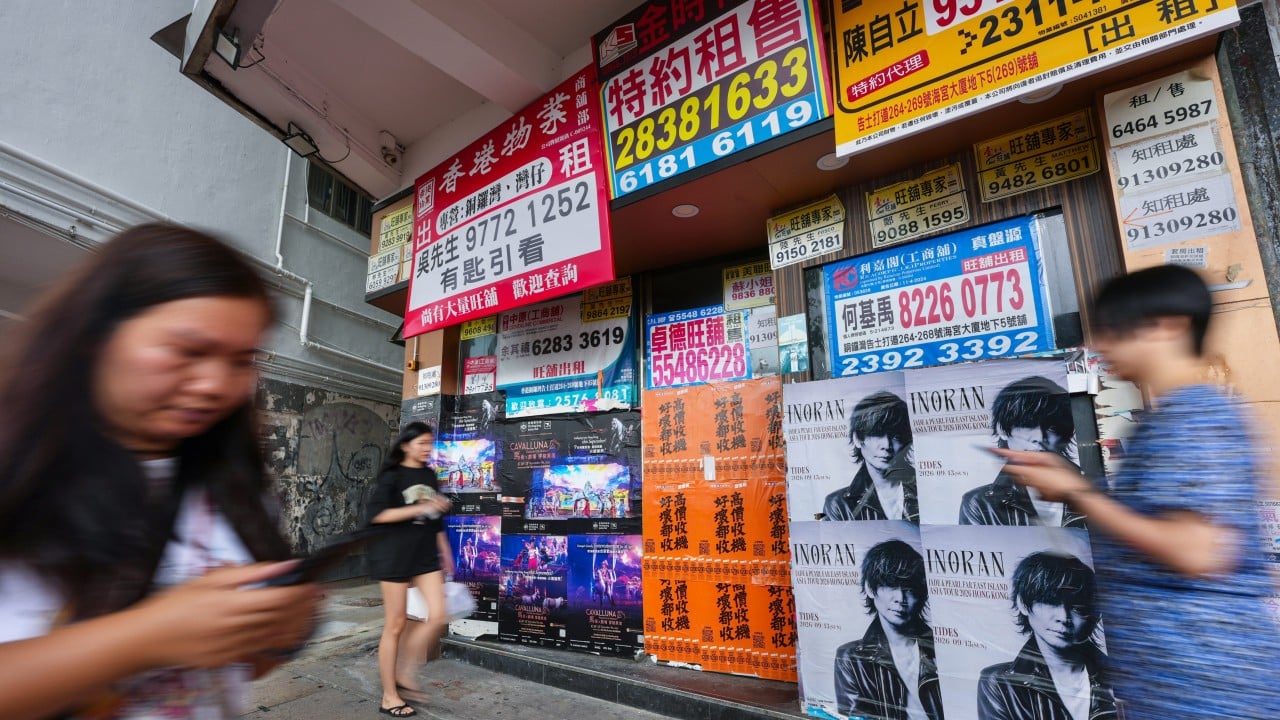
Walk down Russell Street in Causeway Bay after dark. The neon still bleeds pink and electric blue into the damp air, casting long shadows against the towering glass facades. Once, you could barely move for the elbows and shopping bags. Now, your boots echo. Down the block, behind a scrim of dust-coated butcher paper taped to the inside of a massive plate-glass window, a metal security shutter sits half-drawn. Inside lies a tomb of empty shelving and bare concrete.
Multiply that silence by a thousand. That is the true state of retail on the streets of Hong Kong.
For months, the conventional diagnosis of the high street slump pointed only downward at the consumer. We were told that Hongkongers were simply packing their bags for weekend getaways across the border in Shenzhen, trading local cha chaan tengs for cheap hotpot and massive malls on the mainland. We were told that tourists had changed their habits, spending less on luxury watches and more on wandering the historic alleys of Sheung Wan with a camera. Those things are true. They are also only half the story.
Step inside a dimly lit meeting room on the upper floors of a Central skyscraper, and you will find the other culprit sitting quietly across a mahogany table.
Let me introduce you to Arthur. He is not a real person, but a composite of dozens of commercial landlords whose family portfolios have weathered decades of typhoons, property booms, and financial crashes. Arthur owns three prime retail shops in Tsim Sha Tsui. Ten years ago, his phone rang constantly with prospective tenants bidding against one another. Today, his phone rings with only one sound: silence.
Arthur wants to drop his asking rent. He knows the market has shifted. He knows that the tenant who wants to open an independent ceramic studio or a specialty coffee house cannot afford the exorbitant numbers written into leases signed back in the heady days of the mid-2010s. But Arthur has a problem that does not show up on the glossy brochures of real estate agencies.
His mortgages are held by local banks.
When Arthur walks into his bank to renegotiate the valuation of his properties—valuations that have plummeted twenty, thirty, sometimes forty percent from their historical peaks—the conversation takes a chilling turn. The loan officers across the desk are staring at their own risk models. Burned by past exposures and gripped by a sudden, systemic paralysis, the banks are pulling back their credit lines. They are tightening the screws.
If Arthur drops his rental price by half to fill that empty shop with a living, breathing business, the appraised value of his entire building drops with it. The bank sees that lower valuation and panics. Suddenly, the bank demands an immediate loan repayment to bridge the gap in the loan-to-value ratio—a margin call disguised as risk management.
So Arthur faces an impossible choice. He can slash the rent, attract a tenant, and trigger a devastating cash crunch from his lender. Or he can keep the shop dark, keep the paper on the windows, and pretend on paper that the asset is still worth what it was five years ago.
He keeps it dark.
This is the hidden gear of the retail crisis. It is not just about empty storefronts; it is about financial rigidity. Banks, terrified of a domino effect in the commercial real estate sector, are inadvertently starving the very ecosystem they need to survive. By refusing to show flexibility on existing debt when property values correct, they are forcing landlords into a corner where vacancy becomes the safer financial bet than occupancy.
Consider what happens next in this chain reaction.
Without flexible lending, landlords cannot restructure. Without restructured rents, new concepts cannot afford to launch. Without new concepts, the streets lose their pulse. The foot traffic drops further. The tourists find nothing new to see. The cycle tightens like a tourniquet.
We have seen this movie before. In financial distress, institutions instinctively circle the wagons. They hoard liquidity. They demand perfection from imperfect assets. But real estate is not a row of numbers on a spreadsheet; it is organic. It breathes. When you choke the oxygen out of the ground floor, the upper floors eventually suffocate too.
The remedy requires a leap of institutional courage that is currently in desperately short supply. Banks must look past the immediate drop in collateral value and recognize that a tenant paying reduced rent is infinitely more valuable to the broader economy—and ultimately to the long-term health of the loan—than a locked door and a fading neon sign. They need to work with landlords to absorb the correction, rather than fighting gravity.
Until that shift happens, the silence on Russell Street will remain. The dust on the butcher paper will thicken. And the city will keep waiting for a recovery that cannot begin until the people holding the keys and the people holding the purse strings finally decide to step out of the dark.