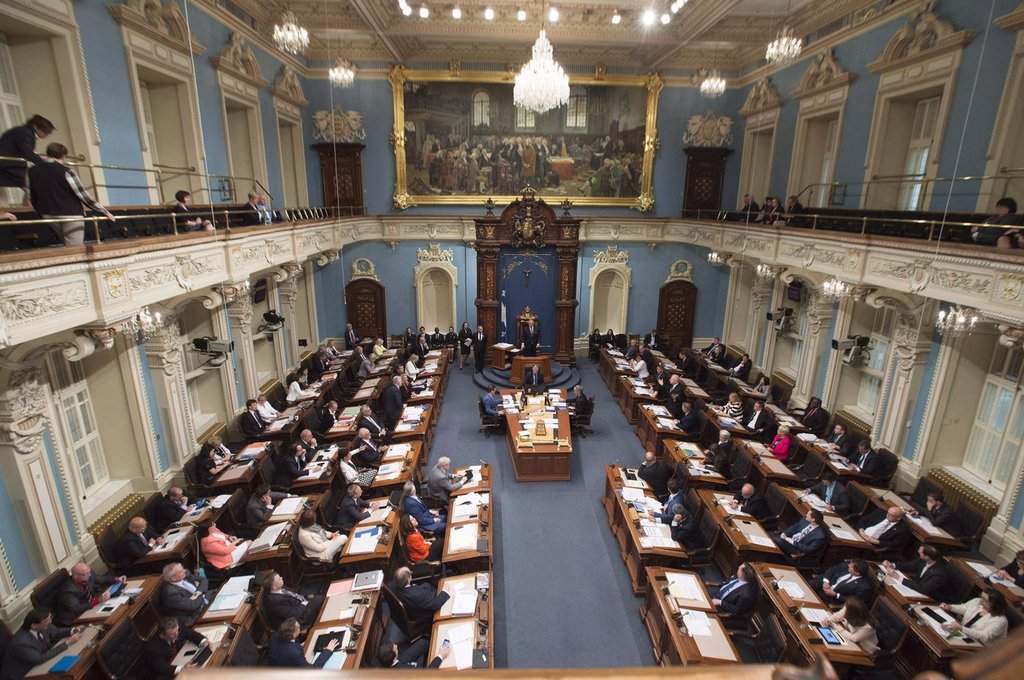
The judicial suspension of Quebec’s legislation eliminating the mandatory oath of allegiance to the British monarch exposes a structural fault line in Canadian constitutional architecture. At its core, the dispute is not a symbolic clash over royal heritage, but a precise jurisdictional test regarding the amending formulas of the Constitution Act, 1982. When a provincial legislature attempts to unilaterally alter a requirement embedded in the Constitution Act, 1867, the judicial system must evaluate whether the measure constitutes an internal housekeeping adjustment or an unauthorized amendment to the office of the Sovereign.
To understand the mechanics of this suspension, one must isolate the competing legal instruments. In late 2022, the National Assembly of Quebec passed Bill 4, titled An Act respecting the French language and the oath of office of Members of the National Assembly, which purported to amend the Constitution Act, 1867 by adding a clause stating that Section 128—the provision requiring members of provincial legislatures to swear allegiance to the monarch—does not apply to Quebec. Subsequent legal challenges, including a decisive injunction request, forced the Quebec Superior Court to examine the validity of this unilateral modification. The resulting suspension freezes the operational effect of the provincial statute pending a full constitutional hearing on the merits, preserving the status quo under Section 128.
The Structural Architecture of Section 128
Section 128 of the Constitution Act, 1867 establishes a hard prerequisite for legislative participation across Canada. Every member of the Senate, the House of Commons, and any provincial legislative assembly must take and subscribe to the Oath of Allegiance before taking their seat. The text is explicit and leaves zero discretionary margin for individual legislators or provincial speakers.
The legal friction arises from how the Canadian federation divides constitutional amending powers under Part V of the Constitution Act, 1982. Provincial legislatures possess exclusive authority under Section 45 to amend the "constitution of the province." However, Section 41(a) reserves any amendment in relation to "the office of the Queen, the Governor General and the Lieutenant Governor of a province" exclusively to the unanimity procedure, which requires resolutions from the Senate, the House of Commons, and the legislative assemblies of every single province.
Quebec’s legislative strategy relied on the theory that the oath taken by its own Members of the National Assembly (MNAs) falls strictly within the internal constitution of the province under Section 45. Opponents of the legislation argue the inverse: because the Oath of Allegiance directly defines the relationship between the legislative branch and the Crown, removing it alters the constitutional function and status of the office of the King and the Lieutenant Governor, thereby triggering the Section 41 unanimity lock.
The Three Pillars of Constitutional Analysis
When evaluating a stay or suspension of legislation—an extraordinary judicial remedy—courts apply the tripartite test established in RJR-MacDonald Inc. v. Canada (Attorney General). In the context of the Quebec oath dispute, this framework operates through three distinct filters:
- Serious Issue to be Tried: The threshold here is low, requiring only that the constitutional challenge is neither frivolous nor vexatious. The tension between Section 45 (provincial autonomy) and Section 41(a) (Crown protection) immediately satisfies this criterion. Because the Supreme Court of Canada has historically interpreted Section 41(a) broadly to protect the institutional integrity of the Crown, any unilateral provincial carve-out presents a substantial justiciable question.
- Irreparable Harm: The applicant must demonstrate that refusing the suspension will cause harm that cannot be quantified or cured by damages later. In constitutional litigation, allowing an allegedly ultra vires (beyond the powers) statute to remain in force damages the rule of law itself. If MNAs take their seats and pass legislation without fulfilling a mandatory constitutional prerequisite, every law enacted by that assembly becomes vulnerable to collateral validity challenges.
- Balance of Inconvenience: The court weighs the public interest in maintaining validly enacted legislation against the public interest in upholding the supreme law of the Constitution. While a democratically elected legislature enjoys a presumption of public interest, that presumption weakens when the legislature attempts to alter the foundational rules governing its own constitution without following the established amending formula.
Operational Mechanics of a Judicial Stay
A judicial suspension does not strike down a law; it pauses its legal effect. In administrative and constitutional practice, this creates an immediate operational divergence between legislative intent and legal reality.
Before the passage of Bill 4, the procedural sequence for an incoming MNA was linear: election certification, administration of the dual oaths (one to the King under Section 128, one to the people of Quebec under provincial statute), and admission to the legislative chamber. Following the enactment of Bill 4, the National Assembly operated under the assumption that the Section 128 requirement had been severed. Several members of the Parti Québécois refused the royal oath yet were permitted to sit and vote after the legislature passed the law.
The court’s intervention reverses the legal validity of that operational state. By suspending the application of the provincial amendment, Section 128 snaps back into full force as the governing rule. This creates a sharp institutional bottleneck:
- Retroactive Vulnerability: Legislation passed with the participation of members who did not swear the Section 128 oath faces potential challenges regarding quorum and valid assent, though doctrines such as the de facto officer doctrine often shield third parties from administrative chaos.
- Enforcement Asymmetry: While a Superior Court can declare the legal status of Section 128, enforcing physical exclusion from the legislative chamber collides with parliamentary privilege—the ancient constitutional doctrine granting legislatures exclusive control over their internal proceedings and precincts.
Parliamentary Privilege Versus Constitutional Supremacy
The deepest analytical error in superficial coverage of this dispute is treating it solely as a question of federal versus provincial jurisdiction. The second, equally critical axis is the collision between constitutional supremacy (Section 52 of the Constitution Act, 1982) and parliamentary privilege.
Parliamentary privilege grants the National Assembly the autonomous right to regulate its own internal affairs, including the discipline and seating of its members, free from judicial interference. Proponents of Quebec's unilateral approach argued that once the Assembly decides who may sit within its walls, the courts lack jurisdiction to compel the Speaker to bar a member.
However, Canadian jurisprudence draws a strict boundary between the exercise of an established privilege and the existence or scope of that privilege. Courts retain the authority to determine whether a claimed privilege exists and whether it conforms to the written Constitution. Because Section 128 is an explicit textual mandate of the Constitution Act, 1867, parliamentary privilege cannot be used as a shield to nullify an express constitutional requirement. A legislature cannot invoke internal autonomy to override the very document that creates the legislature and defines its powers.
The Cost Function of Unilateral Constitutionalism
Attempting to bypass Part V of the Constitution Act, 1982 through unilateral provincial legislation carries predictable institutional costs. Rather than resolving a political grievance, the maneuver shifts the decision-making venue from the political arena to the judiciary, imposing specific structural penalties:
- Loss of Narrative Control: In the legislature, the debate centers on democratic legitimacy and modernizing archaic institutions. In the courtroom, the debate narrows strictly to statutory interpretation, the ultra vires doctrine, and the preservation of the constitutional text.
- Precedential Risk: If Quebec loses on the merits, the resulting Supreme Court precedent will solidify a restrictive interpretation of Section 45. This would limit Quebec’s—and every other province’s—ability to make future unilateral adjustments to provincial institutions that touch tangentially upon the Crown or federal structures.
- Administrative Paralysis: Until appellate courts exhaust the review process, the legal status of non-swearing legislators remains suspended in ambiguity, creating an ongoing procedural distraction for the legislative assembly.
Historical Precedents and the Crown Doctrine
To project the trajectory of the substantive ruling, one must examine how Canadian appellate courts have treated the relationship between provincial legislatures and the Crown. In Motard v. Attorney General of Canada, the Quebec Court of Appeal upheld the federal Succession to the Throne Act, 2013, ruling that changes to royal succession rules in the United Kingdom did not require a Canadian constitutional amendment under Section 41(a) because the office of the Queen in Canada remained unchanged—the occupant simply followed British succession law.
Conversely, in the Reference re Senate Reform and the Reference re Supreme Court Act, the Supreme Court of Canada demonstrated a rigid adherence to the text and architecture of Part V. The Court established that neither Parliament nor a provincial legislature can achieve indirectly—through ordinary statutes or narrow self-amendments—what the amending formula requires to be done through formal multilateral consensus.
The distinction is decisive. In Motard, the domestic constitutional architecture remained untouched. In the Quebec oath dispute, the provincial statute explicitly deletes the application of a section of the Constitution Act, 1867. This is not an adaptation to external events; it is a direct textual modification of the foundational statute. Under established Supreme Court doctrine, altering the constitutional oath owed to the Sovereign alters the constitutional link between the legislative branch and the Crown, placing the action squarely within the ambit of Section 41(a).
Strategic Limitations of Judicial Intervention
While the suspension restores textual orthodoxy, judicial rulings cannot resolve the underlying political friction. Courts operate within strict institutional constraints that limit the effectiveness of legal remedies in political-constitutional disputes:
- Non-Justiciability of Political Will: A court can invalidate a unilateral amendment, but it cannot compel a legislature to respect the symbolic value of the oath. Legislators can comply minimally—swearing the oath under protest or treating it as an empty formality—which satisfies Section 128 legally while eroding its institutional weight politically.
- Enforcement Ceilings: If a Speaker of the National Assembly refuses to enforce the exclusion of an unsworn member following an adverse court ruling, the judiciary lacks a direct physical enforcement mechanism inside the legislative chamber without triggering a severe constitutional crisis over the separation of powers.
- Asymmetric Timelines: Constitutional litigation moves across years—from Superior Court to the Court of Appeal, and ultimately to the Supreme Court of Canada. Political cycles move in four-year increments. By the time a final ruling is rendered, the immediate political composition of the legislature may have shifted entirely, rendering the practical remedy moot for the specific individuals involved.
Navigating the Constitutional Bottleneck
For provincial policymakers seeking to remove the royal oath without triggering fatal constitutional invalidation, unilateral statutory deletion is a low-probability strategy. The structural mechanics of Part V dictate that any durable modification requires operating within the amending formula rather than attempting to circumvent it.
The viable path forward relies on Section 43 of the Constitution Act, 1982—the bilateral amending procedure. Section 43 allows amendments to provisions of the Constitution that apply to one or more, but not all, provinces through resolutions of the Senate, the House of Commons, and the legislative assembly of each province to which the amendment applies. By framing the removal of Section 128’s application to Quebec as a bilateral adjustment between Ottawa and Quebec City rather than an alteration of the office of the King under Section 41(a), the provincial government avoids the insurmountable hurdle of securing unanimous consent from all ten provinces.
Achieving this requires shifting from unilateral legislative action to intergovernmental negotiation. Securing a federal resolution under Section 43 demands political capital in Ottawa, yet it remains the only mechanism capable of insulating the removal of the oath from immediate judicial suspension and permanent invalidation. Without federal concurrence via the bilateral amending formula, the judicial suspension will inevitably harden into a permanent declaration of invalidity at the appellate level.