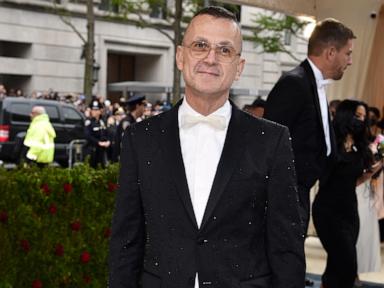
When a high-ranking corporate officer abandons standard security protocols to engage directly with political demonstrators, the organization faces an immediate structural failure that extends far beyond public relations friction. The resignation of a fashion executive days after physical confrontation with animal rights activists at a New York runway presentation provides a textbook case study in governance breakdown. This event exposes a fundamental misalignment between executive authority and risk mitigation. Organizations operating in high-visibility sectors must recognize that physical intervention by leadership creates an unhedged liabilities matrix, transforming a manageable security breach into an existential governance crisis.
To understand why executive intervention in protest scenarios triggers rapid dismissal, one must examine the operational cost function of public-facing corporations. Modern luxury brands derive substantial valuation from intangible assets, specifically brand equity, consumer trust, and institutional alignment with contemporary ethical standards. When a senior executive physically restrains a demonstrator, the action introduces immediate physical and legal hazards. The cost function of this behavior includes potential criminal charges for assault, civil litigation from the injured party, severe reputational damage across digital distribution channels, and an immediate erosion of investor confidence.
The immediate trigger for such executive overreach stems from a failure of perimeter defense architecture. Fashion shows represent concentrated environments characterized by high spatial density, high-profile attendees, and intense media scrutiny. These venues attract advocacy groups seeking maximum visibility for their message. Standard operational procedure dictates that private security personnel, event management teams, and local law enforcement handle perimeter breaches and demonstrations. When an executive steps outside the C-suite role to become an active physical participant, the institutional chain of command fractures completely.
This collapse of operational hierarchy reveals a deeper systemic vulnerability within luxury fashion governance. Many legacy houses maintain organizational structures where founder-led cultures or autocratic executive styles override standard corporate protocols. In these environments, leaders often view operational protection of the brand as a personal, rather than systemic, responsibility. This personal ownership model breeds dangerous blind spots. Instead of delegating threat containment to trained security professionals, the executive acts on impulse, driven by a perceived need to project control over the physical space. That impulse catastrophically miscalculates the asymmetry of modern media ecosystems, where every smartphone camera instantly records and broadcasts the intervention to a global audience.
The legal dimensions of executive physical intervention compound the organizational crisis. Under tort law, physical contact initiated by a corporate officer acting under apparent authority can expose the parent corporation to direct vicarious liability. Plaintiffs' attorneys look for moments where corporate representatives cross the threshold from peaceful management into battery or intentional infliction of emotional distress. By taking physical action, the executive hands opposing legal counsel an indefensible evidentiary record. The board of directors faces an untenable legal exposure if the officer remains in place, forcing a rapid separation to insulate the corporate entity from ongoing litigation fallout.
Beyond legal liability, the structural damage to stakeholder relations accelerates executive displacement. Institutional investors, retail partners, and wholesale buyers operate within strict risk-management frameworks. Environmental, social, and governance criteria increasingly dictate capital allocation decisions. An executive caught on video engaging in physical violence against protesters directly violates institutional ESG mandates. Shareholder advocacy groups and passive index funds evaluate management integrity through behavioral compliance with ethical standards. When a top leader visibly violates social norms of conflict resolution, institutional capital reacts by demanding swift leadership change to preserve portfolio reputation.
Proxy advisory firms and institutional voting blocs monitor executive misconduct closely. When a corporate officer commits a public act of physical aggression, proxy advisors routinely recommend voting against compensation packages or board re-elections associated with deficient oversight. Institutional asset managers face internal pressure from their own limited partners to divest from holdings where management displays volatile behavior. The speed at which capital can reallocate forces boards to act before institutional shareholders initiate formal governance challenges or public campaigns against the firm.
The internal organizational impact within the firm mirrors the external market reaction. Employees, creative teams, and operational staff depend on predictable leadership behavior. When an executive commits an unprovoked physical act during a public showcase, internal morale destabilizes. Creative directors and design teams operate in tension with corporate management under normal conditions; a public scandal caused by executive misconduct alienates the talent pool. Top-tier creative talent seeks associations with stable, forward-thinking organizations, avoiding brands tainted by erratic leadership behavior. The executive resignation becomes an essential institutional mechanism to restore internal operational stability and retain key creative personnel.
Examining the mechanics of the protest itself reveals the strategic error in tactical response. Animal rights organizations deploy predictable disruption tactics designed to provoke emotional overreactions from corporate representatives. The objective of the demonstration is not merely to voice dissent, but to bait the target into a defensive, visible misstep. When an executive takes the physical bait, they validate the protesters' narrative. The narrative shifts instantly from a fringe group's trespass to a powerful corporate titan using physical force against peaceful advocacy. The executive's intervention acts as a force multiplier for the activists, generating exponentially more media coverage and public sympathy for the cause than the initial disruption could have achieved alone.
To prevent similar governance failures, corporations must establish rigid operational firewalls between executive leadership and physical event security. The first step involves codifying protocols that explicitly prohibit executive intervention in security incidents. Governance frameworks must mandate that C-suite personnel remain insulated within designated VIP zones during live events, completely detached from tactical perimeter management. Event security contracts must grant explicit authority to external professionals to neutralize disruptions without executive consultation or interference.
Furthermore, crisis communication protocols require restructuring to handle activist actions with emotional detachment. Modern corporate communications strategy must treat public demonstrations as predictable operational variables rather than personal attacks on executive dignity. When a disruption occurs, the prescribed protocol is institutional silence followed by controlled, legalistic statements issued through official PR channels. Allowing executive ego to dictate physical engagement destroys the carefully calibrated firewall required to protect corporate valuation during high-profile events.
Board oversight mechanisms also require revision in the wake of such incidents. Compensation committees and nominating committees must incorporate behavioral risk assessments into executive performance evaluations. Traditional metrics focus exclusively on revenue growth, margin expansion, and creative direction, ignoring the psychological readiness of leaders to manage high-pressure public environments. Introducing psychological stress-testing and situational crisis simulations into executive onboarding ensures that leaders can maintain composure under intense public provocation.
The timeline of executive departure following such incidents typically follows a predictable trajectory. The initial twenty-four hours involve crisis containment, legal assessment of video footage, and public relations damage control. During the subsequent forty-eight to seventy-two hours, institutional investors and major retail partners signal their displeasure through private channels or public statements. By day four or five, the board convenes emergency sessions to calculate the net present value of retaining the executive versus the catastrophic brand erosion of keeping them. In almost every scenario involving documented physical violence, the calculus favors immediate severance. The resignation is not voluntary in a strategic sense; it is a forced corporate excision designed to cauterize the wound before market share contraction becomes permanent.
Luxury retail economics amplify the speed of this sequence. Unlike commoditized retail sectors where price and convenience dictate consumer choice, luxury purchasing behavior relies heavily on emotional resonance and social signaling. Consumers purchase luxury goods to project sophistication, taste, and alignment with refined cultural values. When a top executive embodies crude physical aggression, the symbolic value of the brand's products collapses. The consumer experiences cognitive dissonance when wearing garments associated with a brand led by an assailant. Consequently, retail sales experience rapid, measurable deceleration following high-profile executive misconduct, forcing the board to act decisively to protect quarterly earnings.
Analyzing the broader regulatory and compliance environment reveals that physical altercations involving corporate officers attract heightened scrutiny from regulatory bodies overseeing public disclosures and corporate governance standards. Stock exchanges and securities regulators require transparent management practices. An executive facing potential criminal liability introduces material unquantified risk that must be disclosed to shareholders. The administrative burden of managing this regulatory exposure swamps the operational value of retaining the individual, making immediate resignation the only rational path for corporate self-preservation.
The structural remedy for organizations vulnerable to public demonstrations involves investing in intelligence-led event planning. Rather than relying on reactive physical security, corporations must map potential activist vectors weeks in advance of major runway shows. Intelligence-led planning identifies high-risk groups, monitors digital chatter, and establishes preemptive dialogue or containment strategies with local law enforcement. By professionalizing the threat-assessment pipeline, organizations eliminate the element of surprise that triggers impulsive executive reactions.
Ultimately, the resignation following the New York runway incident serves as an expensive masterclass in executive accountability. It demonstrates that modern corporate leadership requires emotional regulation and strict adherence to institutional boundaries just as much as financial acumen. Leaders who cannot detach personal ego from corporate asset protection represent a systemic liability. As stakeholder capitalism and digital transparency continue to reshape corporate accountability, boards will maintain zero tolerance for executives who substitute physical force for strategic crisis management.
Deploy a zero-tolerance operational policy that permanently bars executive leadership from engaging with on-site demonstrators, backed by mandatory crisis simulation training for all C-suite personnel before public-facing events.