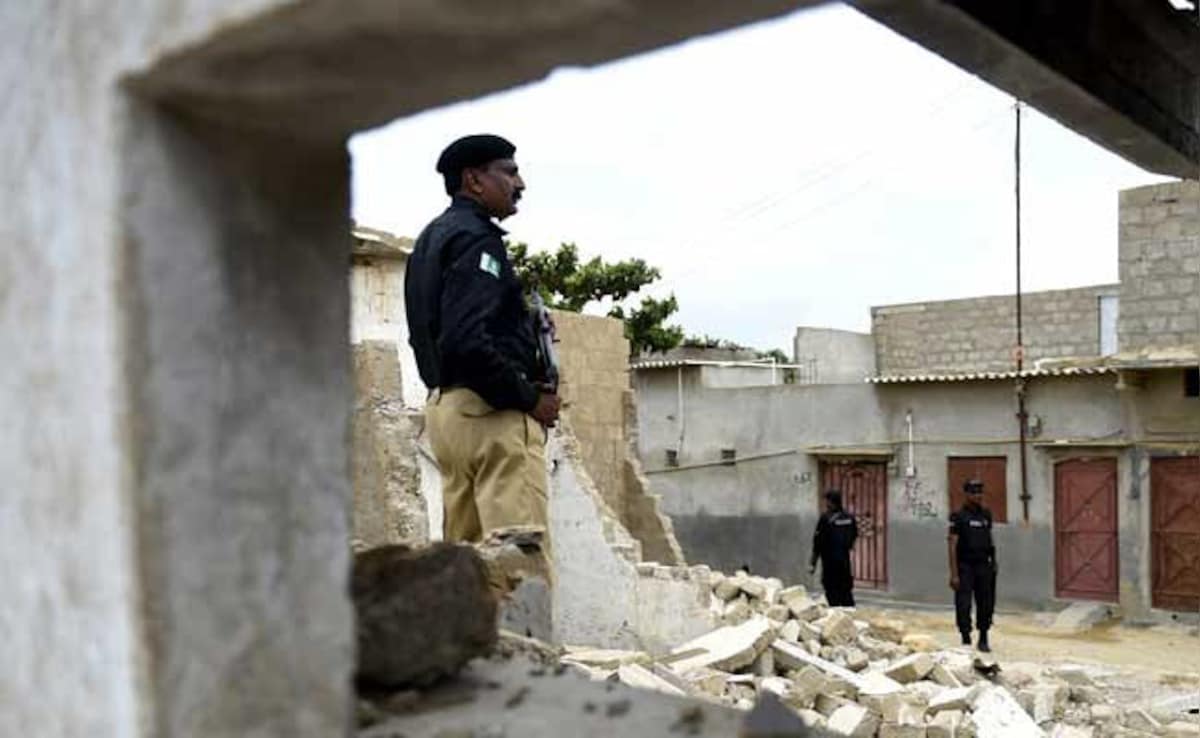
The sound of shattering glass does not leave your mind. For those living in Peshawar or the rugged valleys of Khyber Pakhtunkhwa, that sound has become an intimate, terrifying acquaintance. Within a single week, three separate explosions tore through the region, fracturing the fragile illusion of peace that Pakistan had tried so desperately to maintain.
This is not just a sudden spike in violence. It is a reckoning.
For years, the political and military strategists in Islamabad played a dangerous game of distinction. They operated under the assumption that you could domesticate a fire. By supporting certain militant groups across the border to secure strategic depth in Afghanistan, they believed they could shield their own soil from the sparks.
They were wrong. The fire has spread home.
The Shadow on the Border
Consider the geometry of a borderland. To a strategist in an office, a line on a map is a barrier. To a militant with a rifle and a shared tribal lineage, that same line is invisible. When the Taliban regained control of Kabul, a wave of triumph swept through certain corridors of Pakistani power. The old calculus suggested that a friendly regime in Afghanistan would finally secure Pakistan’s western flank.
Instead, the victory in Kabul acted as a psychological and logistical catalyst for the Tehrik-i-Taliban Pakistan, the domestic militant group known as the TTP.
The relationship between the Afghan Taliban and the TTP is not one of master and servant. It is a brotherhood forged in the same ideological crucible. When Islamabad demanded that the new rulers in Kabul rein in the TTP fighters launching attacks into Pakistan, they met a wall of bureaucratic evasion and quiet defiance. Kabul offered mediation, not eradication.
The consequences of that failure are now playing out in blood on the streets of Pakistan's northwestern frontier. The state's northern policy has collapsed under the weight of its own contradictions.
The Anatomy of Blowback
Societies do not fracture all at once. They erode from the edges inward.
The three bombings in seven days targeted the infrastructure of the state and the civilian spaces that hold communities together. Security checkpoints, crowded marketplaces, places where ordinary people try to carve out a living amidst the geopolitical crosswinds. Each blast sends a specific message to the public: The state cannot protect you.
This strategy is deliberate. By striking repeatedly and with short intervals, the militants aim to induce a state of collective paralysis. The psychological toll outweighs even the physical destruction. When going to the market or sending a child to school becomes an act of courage, the social contract begins to dissolve.
The current escalation represents a dangerous new phase because the TTP is no longer operating as a collection of scattered, desperate insurgent cells. They have consolidated. They have acquired advanced weaponry left behind during the chaotic Western withdrawal from Afghanistan. They are wealthier, better equipped, and deeply emboldened by the ideological victory across the border.
The Illusion of the Border Fence
Pakistan spent years and billions of rupees constructing a massive chain-link and barbed-wire fence along the 2,600-kilometer Durand Line. It was marketed to the public as a definitive solution to cross-border terrorism.
But a fence is only as effective as the political reality on either side of it.
When the ideological infrastructure remains intact, fighters find a way through, under, or around the steel. The TTP utilizes the sanctuary of the Afghan borderlands to plan, rest, and rearm, then slips back across the rugged terrain to execute attacks. The fence has become a monument to a flawed premise: that a deeply rooted, transnational ideological movement can be stopped by physical barriers alone.
The state now faces an agonizing dilemma. To launch a full-scale military offensive in the tribal regions risks displacing hundreds of thousands of civilians, further alienating a population that already feels abandoned by the central government. Yet, to do nothing is to cede territory and authority to an insurgent group that recognizes no law but its own.
The Price of Miscalculation
The true tragedy of the current crisis is its predictability. Decades of prioritizing external geopolitical maneuvering over internal stability have left the country vulnerable to the very forces it once sought to utilize. The distinction between "good" and "bad" militants has proven to be a fatal fallacy.
The explosion that shatters a window in Peshawar is the direct echo of policy decisions made years ago in Islamabad and Rawalpindi.
The state is running out of options. Diplomatic pressure on Kabul has yielded little more than empty assurances. Military operations offer temporary relief but fail to address the underlying socio-economic grievances and ideological networks that allow militancy to regenerate.
The streets of the northwest remain quiet in the aftermath of the latest blasts, but it is the silence of anticipation, not peace. Everyone is waiting for the next sound of breaking glass.


