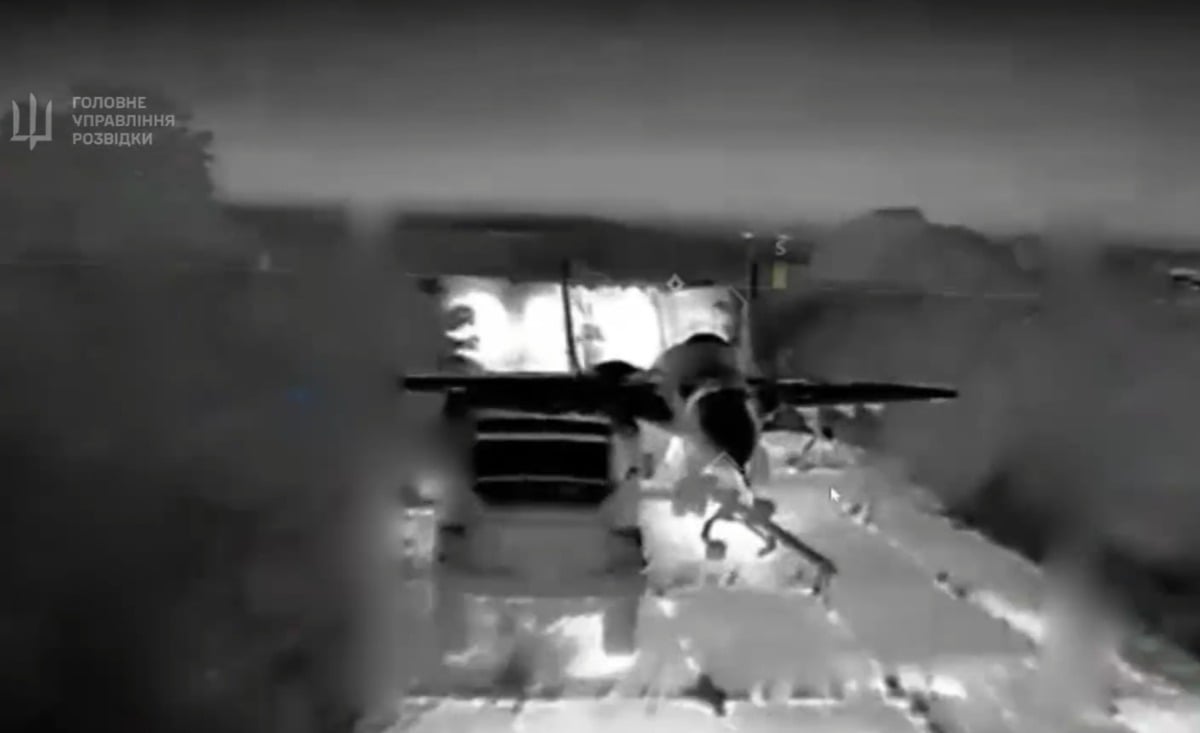
Mainstream defense reporting loves a clean, cinematic narrative. A Ukrainian drone or missile slips through radar, hits a tarmac in Crimea, and leaves a multimillion-dollar Russian MiG-29 in smoking ruins. The headlines practically write themselves, celebrating a high-tech David striking down Goliath’s weaponry.
This hyper-focus on single-aircraft attrition misses the real mechanics of modern attrition warfare. Celebrating the destruction of an isolated, parked fighter jet as a strategic victory is a fundamental misreading of how this conflict is won or lost.
The harsh reality of military logistics tells a different story. Breaking down a single Soviet-era airframe on the ground does not cripple an adversary’s air defense envelope. It merely forces a temporary relocation. If the goal is forcing a strategic retreat from the Crimean peninsula, the current fixation on hunting individual fighter jets is an expensive distraction from the real targets that matter: logistics hubs, early-warning radar arrays, and maintenance supply lines.
The Mirage of Attrition Warfare
Military analysts frequently fall into the trap of counting destroyed assets like pieces on a chessboard. They assign a dollar value to a MiG-29, compare it to the cost of a long-range drone, and declare a massive return on investment.
This calculation is flawed. Russia did not enter this conflict with a finite pool of equipment and no means of replenishment. The Russian defense industry has spent the last few years shifting to a high-tempo wartime economy. They are not merely pulling hulls out of deep storage; they are actively refurbishing, upgrading, and producing airframes at a pace that offsets sporadic airfield strikes.
When an airfield in Crimea gets hit, the immediate tactical impact is clear: one less airframe available for tomorrow's sorties. But the strategic impact is negligible. The remaining fleet simply retreats further inland, out of range of immediate strike options, using longer transit times to project the same power. The air denial capability remains intact because the infrastructure supporting it—the fuel pipelines, the munitions depots, the highly trained maintenance crews—survives untouched.
Focusing on the jet is focusing on the symptom, not the disease.
The High Cost of Tactical Distractions
Every long-range missile or advanced strike drone deployed against a parked aircraft is an asset not being used against a command-and-control node or a logistics bottleneck. The Western intelligence community frequently monitors the expenditure of precision-guided munitions. What they see is a troubling ratio: high-value, limited-stock weapons being used to achieve temporary operational pauses rather than permanent structural damage.
Consider the baseline mechanics of an airfield strike.
- A strike package must penetrate layers of S-400 and Pantsir air defense systems.
- The target is mobile; a jet can be taxied to a hardened shelter in minutes if early warning systems function.
- The runway itself can often be repaired with fast-drying concrete within forty-eight hours.
To truly deny the airspace over Crimea, the target priorities must shift entirely away from the glamorous targets like fighter jets. The real vulnerability lies in the unglamorous, static infrastructure.
Target the Networks, Not the Nodes
Instead of chasing individual MiG or Su-series aircraft across the tarmac, a disruptive strategy prioritizes three specific vulnerabilities that cannot be easily replaced or relocated.
Liquid Logistics: A fighter jet is useless without specialized aviation fuel. The storage farms and distribution pipelines feeding Crimean airbases are massive, fixed targets. Burn the fuel infrastructure, and the jets are effectively grounded, regardless of how many airframes remain pristine on the runway.
Early-Warning and Target Acquisition: The eyes of the air defense network are the real prize. Striking long-range radar installations like the Nebo-M arrays degrades the entire airspace defense grid. Without these systems, even the most advanced fighters are flying blind, unable to intercept incoming threats effectively.
Specialized Maintenance Personnel: Mechanics who can service complex engine components or calibrate advanced avionics take years to train. Equipment can be replaced via rail lines from the Russian interior; decades of accumulated mechanical expertise cannot.
💡 You might also like: The Red Plastic P and the Midnight Maze
The Logistics Blueprint
Defeating a entrenched military force requires systematic strangulation, not flashy PR victories. The focus must shift toward a prolonged interdiction campaign targeting the Kerch Strait Bridge and the northern rail corridors.
If the supply lines carrying ammunition, spare parts, and fuel into Crimea are completely severed, the entire peninsula becomes an unsustainable military outpost. At that point, it does not matter if Russia has ten or one hundred fighter jets parked at Belbek or Saky airfields. Without the logistical tail to support them, those multimillion-dollar assets become nothing more than expensive static targets waiting to be captured or destroyed.
Stop celebrating the single jet on the tarmac. Start cutting the lines that keep it in the air.