Most photo galleries of Latin America reduce a massive, complicated week into a handful of disconnected snapshots. You scroll through a picture of a cheering crowd in Lima, skip past a political shakeup in Paraguay, and glance at a water shortage in Havana without ever understanding how these moments connect.
When Pope Leo XIV stepped off the plane in Peru in November 2026, he wasn't just ticking off another diplomatic stop on an apostolic itinerary. He was coming home.
Born in Chicago, Robert Francis Prevost spent roughly two decades working as an Augustinian missionary and church leader in Peru, eventually earning Peruvian citizenship and serving as Bishop of Chiclayo from 2015 to 2023. Wire services love framing papal trips as grand, untouchable pageantry, yet the real story across Latin America and the Caribbean during that November 2026 window was far grittier, more personal, and politically volatile than standard photo captions let on.
Why Pope Leo XIV's Return to Peru Felt Different Than Any Standard Papal Tour
If you've ever followed Vatican travel logistics, you know papal visits usually run on rigid, ceremonial choreography. Everything is scripted down to the second.
Peru broke that mold immediately.
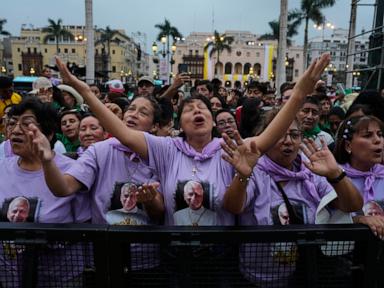
From November 6 to November 17, 2026, Pope Leo XIV traveled across Uruguay, Argentina, and Peru. While crowds packed Plaza de Armas outside the archbishop's residence in Lima on November 12, the emotional center of gravity wasn't the capital. It was Chiclayo. In Callao, residents cheered as workers installed a statue of the pontiff in El Niño park days before he even touched down on Peruvian soil.
That kind of grassroots excitement doesn't happen for a visiting dignitary. It happens for a neighbor who waded through El Niño floodwaters alongside locals back in 2023. When he stepped onto the balcony of St. Peter's Basilica after his election, his very first Spanish shout-out went directly to his "beloved Diocese of Chiclayo".
The Contrast Between Diplomatic Protocol and Street-Level Reality
Before arriving in Lima on November 11—where Peruvian President Keiko Fujimori greeted him at an official Palacio de Gobierno welcome ceremony—the pontiff spent three days in Argentina. There, he met Argentine President Javier Milei and celebrated Mass outside the Basilica of Our Lady of Luján.
Yet the defining visual from Buenos Aires wasn't a state handshake. It was Pope Leo XIV walking through a federal prison complex and embracing inmates.
- In Montevideo, Uruguay (Nov. 6): His arrival kicked off the South American tour with quiet, focused pastoral meetings rather than stadium spectacles.
- In Buenos Aires, Argentina (Nov. 11): Prison visits balanced out high-level diplomatic meetings with President Milei.
- In Lima and Chiclayo, Peru (Nov. 11–16): An estimated 1.5 million people gathered for his concluding Mass at Las Palmas Air Base on November 16, capping off visits to homes run by the Little Sisters of the Abandoned Elderly.
Standard news roundups treat these frames as pretty postcards. In reality, they show a pope deliberately using his personal history in the Global South to anchor his papacy in working-class neighborhoods rather than European palaces.
The Political Turmoil Happening Just Beyond the Papal Crowds
While international cameras tracked the pope's every wave in Lima, neighboring countries were experiencing dramatic political ruptures that barely got two sentences in weekly photo digests.
Take Paraguay. On November 6, 2026—the exact same day Pope Leo XIV landed in Montevideo—Paraguay's Senate removed President Santiago Peña from office following accusations tied to the collapse of Ueno Bank. Hours later, former Vice President Pedro Alliana walked out of Congress alongside his wife, Fabiana Souto, having just been sworn in as Paraguay's new president to finish the term.
Look at how quickly power shifts in South America when financial scandals hit. You have a monumental religious homecoming happening on the Pacific coast while an entire executive administration collapses inland over banking misconduct.
Venezuela and the Ongoing Struggle Over Political Prisoners
Further north, the lens captured a completely different kind of tension. Outside El Rodeo prison in Guatire, Venezuela, opposition leader María Corina Machado stood greeting relatives of political prisoners on November 6.
Photo editors frequently bury images like Machado's between scenic cultural shots, which dulls their urgency. When you examine the visual record of Latin America in late 2026, a clear pattern emerges across borders:
- Institutional accountability is under massive strain, whether through Senate impeachment trials in Asunción or grassroots opposition pressure outside Venezuelan detention centers.
- Economic infrastructure is visibly fraying, highlighted by street-level scenes in Havana, Cuba, where residents scrambled around overflowing water tanks and electric cargo trikes amid persistent utility shortages on November 7.
- Historical memory still drives public life, seen clearly on November 7 in Santa Lucía Milpas Altas, Guatemala, where thousands of Catholics attended the beatification Mass for Franciscan friar Augusto Ramírez Monasterio, murdered during Guatemala's civil war in 1983.
How to Actually Read Photojournalism From Latin America and the Caribbean
If you rely solely on syndicated weekly photo galleries—like the Associated Press roundups curated out of Mexico City—you're only getting half the picture. Wire galleries are designed to showcase single striking frames from photographers like Martín Mejía, Natacha Pisarenko, Jorge Sáenz, and Rodrigo Abd. The photography is world-class, honestly, and the technical composition is unmatched.
The problem isn't the photographers. It's how readers consume the feed.
When you swipe through ten unrelated captions in thirty seconds, your brain flattens a presidential impeachment in Paraguay, a beatification of a civil war martyr in Guatemala, and a water crisis in Havana into generic "regional news".
Three Habits to Get Real Context From News Photography
Next time you browse a major photo essay covering Latin America or any fast-moving region, change how you read the captions:
- Cross-check the dates across countries. Notice how November 6, 2026 saw Pope Leo XIV arrive in Uruguay, Pedro Alliana take the oath of office in Paraguay, and María Corina Machado rally families outside El Rodeo in Venezuela all within the same 24-hour cycle. Tracking simultaneous timelines reveals regional momentum that isolated captions hide.
- Look past the central subject to the background details. In Havana, the story isn't just a man jumping off an electric cargo trike—it's the aging water tank infrastructure and daily scarcity forcing residents to improvise. In Callao, it's the local neighborhood pride behind a community-funded statue in El Niño park.
- Follow the local beat reporters, not just the wire summary. Wire captions give you the who, what, and where in forty words. To understand why 1.5 million Peruvians showed up at Las Palmas Air Base or how Ueno Bank's collapse triggered a constitutional removal in Asunción, pair the visual journalism with regional reporting from outlets on the ground.
Stop treating international photo essays like passive visual entertainment. Look closely at the dates, trace the local history behind the faces in the crowd, and read past the headline event to see the real forces reshaping the region.