When Yemen's Houthi movement claims it launched drones at Dammam Airport in Saudi Arabia, headlines immediately scream about regional escalation. They usually miss the real story.
King Fahd International Airport sits in Saudi Arabia's Eastern Province, over 1,000 kilometers from northern Yemen. It isn't just another regional airstrip. It is the world's largest airport by land area, and it sits right in the heart of the kingdom's oil-producing powerhouse. If you want to understand why a claimed drone strike on Dammam matters way more than a routine border skirmish, you have to look at the geography, the air defense math, and the propaganda war happening behind the scenes.
Why Dammam Airport Is a High-Value Target
Most casual observers look at a map of the Arabian Peninsula and focus on Riyadh or Jeddah. That's a mistake.
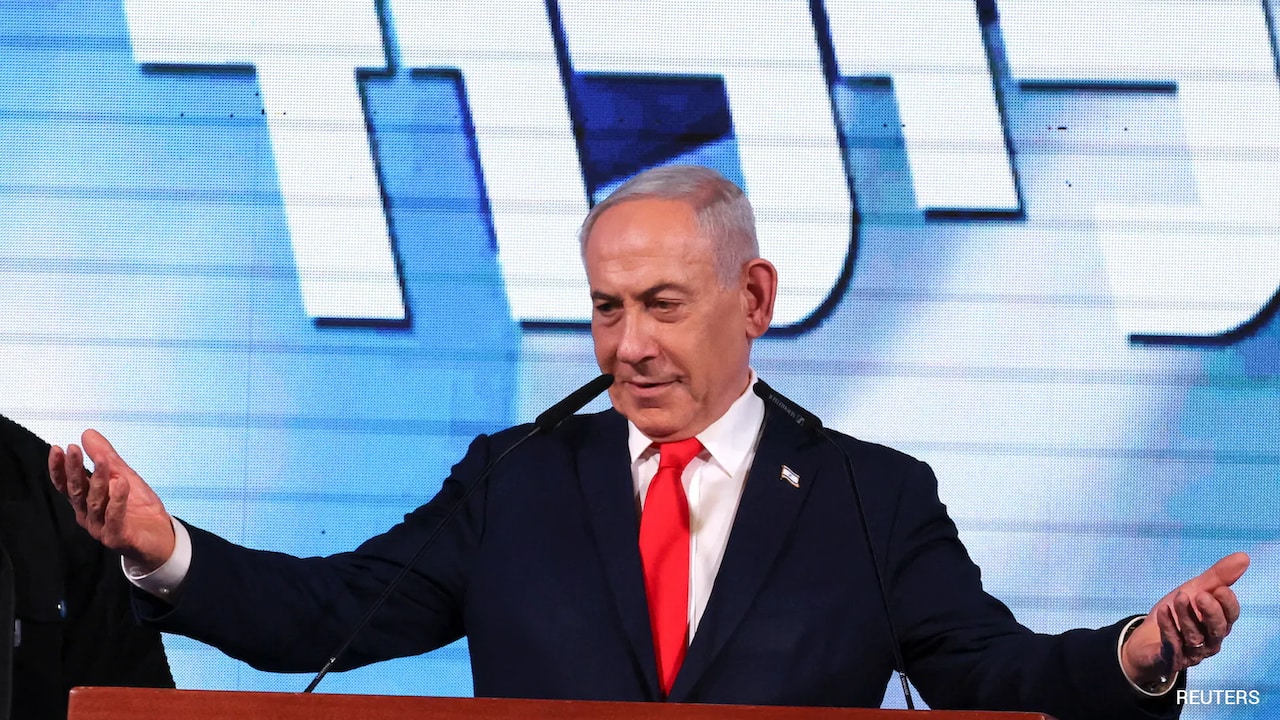
Dammam is the capital of the Eastern Province. This single region holds the vast majority of Saudi Arabia's proven oil reserves and serves as the headquarters for Saudi Aramco in nearby Dhahran. When Houthi military spokesman Yahya Saree steps in front of a camera to announce an operation targeting King Fahd International Airport, he isn't just talking about disrupting commercial flights. He's signaling that critical Saudi energy infrastructure is within reach.
Distance changes everything here. Launching an unmanned aerial vehicle from Saada or Sanaa in Yemen to hit Dammam requires a flight path exceeding 1,100 kilometers across heavily monitored Saudi airspace. That isn't a hobbyist quadcopter crossing a fence. It requires long-range, fixed-wing suicide drones—typically variants of the Iranian-designed Shahed or the Houthi-branded Samad-3—equipped with internal combustion engines, large fuel tanks, and pre-programmed GPS waypoints.
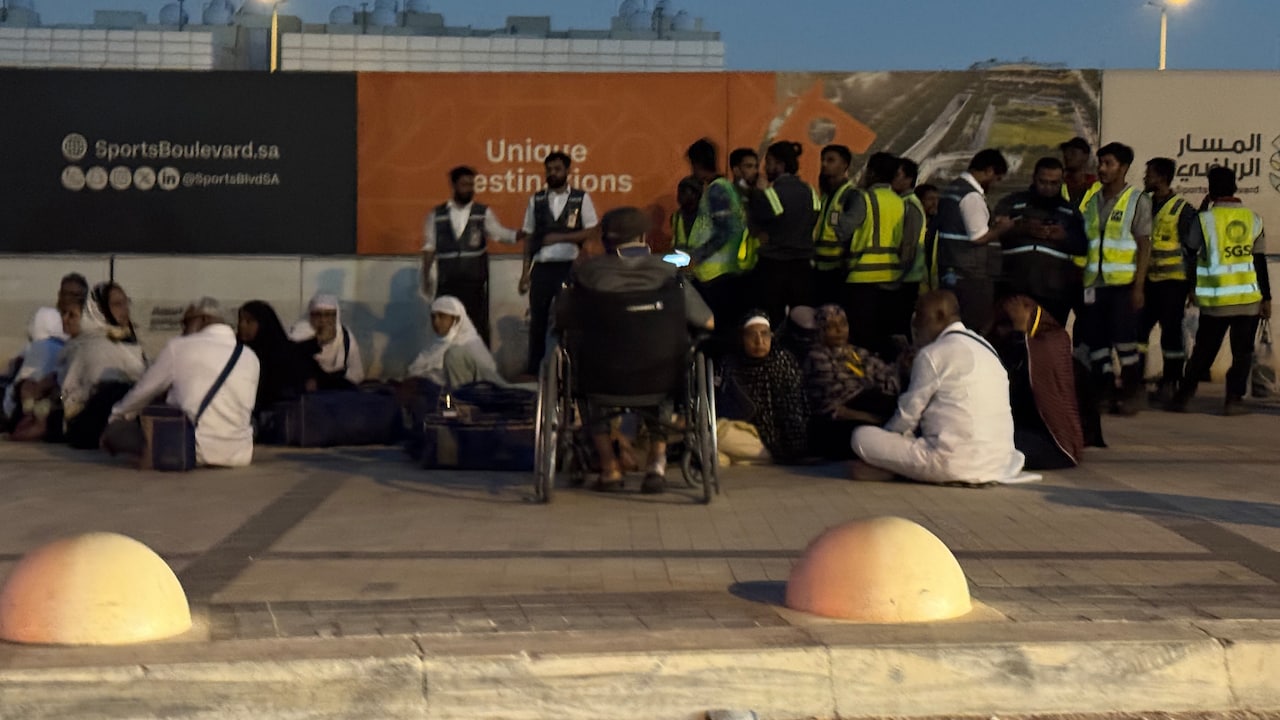
For travelers and aviation analysts, this creates an immediate headache. Even when Saudi air defenses intercept incoming drones, falling debris or sudden airspace closures force commercial carriers to reroute, delay departures, or burn extra fuel holding over the Persian Gulf.
The Gap Between Houthi Claims and Verified Reality
You shouldn't take every military communiqué from Sanaa at face value. Honestly, half the battle in the Yemen conflict is fought on Telegram channels and satellite TV broadcasts.
The Houthis have a well-documented pattern. Whenever diplomatic talks stall, or when they want to project domestic strength, they announce long-range operations deep inside Saudi territory. Often, they claim "direct hits" on sensitive military or aviation sites without releasing a shred of visual proof.
On the flip side, the Saudi-led coalition and Saudi state media frequently downplay incidents or report them purely as successful interceptions. When explosions were reported near Dammam in past flare-ups—such as the September 2021 ballistic missile and drone incidents that injured two children and damaged 14 homes in the city's suburbs—the Saudi Ministry of Defense emphasized interception while saying little about how close the projectiles actually got to strategic targets.
To separate fact from spin when a new claim drops, look for three specific indicators:
- Flight tracking anomalies. Check open-source ADS-B data on platforms like Flightradar24. If commercial flights into DMM suddenly enter holding patterns over Bahrain or divert to Riyadh, something real happened in the airspace.
- Official NOTAMs (Notices to Air Missions). Aviation authorities issue immediate alerts when runways close or military activity spikes. No NOTAM usually means no disruption to airport operations.
- Satellite imagery. Within 24 to 48 hours, commercial satellite providers like Planet Labs or Maxar capture high-resolution passes over the tarmac and surrounding fuel depots. Burn marks don't lie.
If none of these three show up, the "attack" was likely intercepted miles away, crashed in the empty desert of the Rub' al Khali, or never existed outside a press release.
The Brutal Economics of Drone Warfare
Why do the Houthis keep sending drones across a thousand kilometers of desert if most of them get shot down? Because the math works heavily in their favor.
A long-range Samad-type drone costs roughly $10,000 to $20,000 to assemble using commercially available engines, fiberglass airframes, and basic guidance electronics. Compare that to the cost of stopping it.
Saudi Arabia relies on a layered air defense network built around American-made Patriot PAC-2 and PAC-3 batteries, alongside THAAD systems and advanced fighter jets like the F-15SA patrolling the skies. A single Patriot interceptor missile costs anywhere from $3 million to $4 million. Even an AIM-120 AMRAAM fired from a fighter jet runs over $1 million a pop.
Do the math. Spending $3 million to destroy a $15,000 plywood-and-fiberglass drone is a losing financial trade every single time. Even if Saudi defenses achieve a 95% interception rate, the attacker still wins the economic attrition war by forcing the defender to burn through expensive, hard-to-replace munitions.
Low-flying drones also exploit radar blind spots. Ground-based radar systems struggle with the curvature of the Earth when tracking small targets hugging the terrain at 100 meters off the ground. By the time a radar locks onto a low-altitude drone approaching the Persian Gulf coast, defenders have only minutes to react.
How This Affects Regional Aviation and Energy Markets
Every time Dammam enters the news cycle for security reasons, two industries immediately flinch: global aviation and crude oil trading.
Oil traders have grown somewhat numb to Middle Eastern headlines over the years, yet Dammam triggers a specific reflex. Because King Fahd International sits less than 40 kilometers from Dhahran and roughly 60 kilometers from the massive Ras Tanura oil terminal, any threat to Dammam's airspace raises fears of a repeat of the September 2019 Abqaiq-Khurais attack. That single strike temporarily knocked out half of Saudi Arabia's oil production—roughly 5% of the entire world's daily supply—and sent crude prices spiking by nearly 20% in a single morning.
For commercial airlines, the risk is operational rather than financial. Dammam serves as a major hub for Saudia, flynas, and flyadeal, while connecting millions of expatriate workers across the Gulf. Unlike military bases, civilian airports can't easily harden their infrastructure against aerial threats. Fuel farms, glass terminals, and parked wide-body aircraft are inherently soft targets.
Aviation security experts at organizations like the International Air Transport Association (IATA) consistently warn about conflict zones overlapping with busy commercial corridors. When drones fly unannounced through civilian flight paths, the biggest danger isn't necessarily a direct hit on a terminal—it's misidentification in a crowded sky during an active air defense engagement.
What Actually Protects Airports Like Dammam
Relying solely on multi-million-dollar missiles to swat down cheap drones isn't sustainable, and Saudi defense planners know it. Over the last few years, the kingdom has shifted heavily toward specialized counter-UAS (Unmanned Aircraft Systems) defenses around critical infrastructure.
Instead of firing a Patriot missile at every radar blip, modern airport defense relies on a mix of electronic warfare and short-range kinetic systems:
- RF Jammers and GPS Spoofers. Long-range drones rely on satellite navigation to stay on course over featureless desert. By flooding the area around an airport with false GPS signals or jamming command frequencies, defenders can force a drone off course or make it crash harmlessly away from runways.
- Close-In Weapon Systems (CIWS). Automated radar-guided cannons like the Phalanx or Skyguard systems fire thousands of rounds per minute to shred incoming targets during their final approach.
- Directed Energy. Both Saudi Arabia and its Western defense partners have actively tested high-energy laser systems designed to burn through a drone's airframe for pennies per shot, flipping the cost equation back in the defender's favor.
Still, no air defense shield is 100% airtight. Geography favors the defender in Dammam because incoming threats from Yemen must cross the entire width of Saudi Arabia, giving early-warning aircraft like the Boeing E-3 Sentry plenty of time to spot them. Yet asymmetric warfare only requires one drone to slip through to generate global headlines.
How to Verify Breaking News on Gulf Security Incidents
If you're tracking geopolitical risk, managing travel through the Gulf, or watching energy markets, don't react to the first breaking-news tweet you see. Follow a simple verification checklist before making any decisions:
- Cross-check the source. If the sole source is Al-Masirah TV (the Houthi-run outlet) without corroboration from Reuters, the Associated Press, or official Saudi Press Agency (SPA) statements, treat it as an unverified claim.
- Monitor airline status pages directly. Before canceling or rebooking flights through Dammam (DMM), check the live departure boards on the King Fahd International Airport website or contact your carrier. Airlines suspend operations immediately if the Saudi General Authority of Civil Aviation (GACA) flags an active threat.
- Watch Brent crude futures for 30 minutes. Institutional energy desks pay millions for real-time satellite and intelligence feeds. If Brent crude doesn't move within half an hour of a claimed strike near Saudi Arabia's Eastern Province, the market is telling you that oil infrastructure wasn't touched.