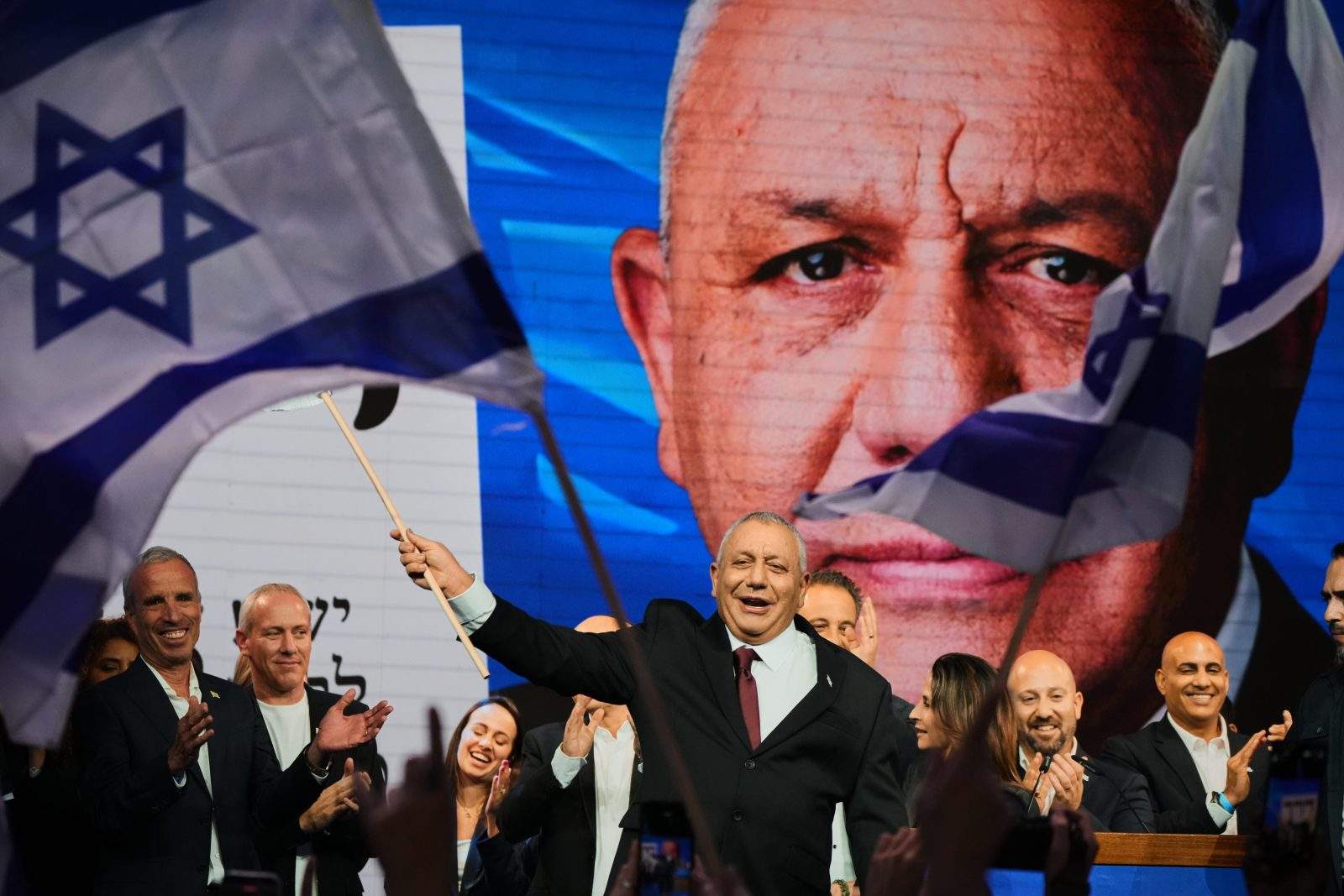
When headlines flash that the Israeli president invites Netanyahu's opposition leader to broker a new government, international readers usually jump straight to one conclusion. They think Benjamin Netanyahu is finished.
They're almost always wrong.
In Israeli parliamentary politics, receiving the presidential mandate isn't a victory lap. It's a high-stakes ticking clock, a brutal math puzzle, and often a political trap disguised as an honor. If you've ever watched Israeli coalition negotiations play out in real time—or studied the Knesset's erratic cycles between 2019 and 2022—you know that getting the first crack at forming a government is worlds away from actually swearing one in.
To understand what's really happening when the President's Residence in Jerusalem hands that mandate to an opposition rival, you have to strip away the dramatic Western framing and look at the cold mechanics of the Knesset.
The Mandate Isn't a Crown
Let's clear up the biggest misconception first. Israel doesn't have an executive presidency like the United States or France. The president's role is largely ceremonial, except during one specific window after an election or a government collapse.
Under Israel's Basic Law The Government, once election results are certified—or when a sitting coalition unravels—the president holds formal consultations with every faction elected to the 120-seat Knesset. Party leaders walk into Beit HaNassi, sit before the cameras, and state who they recommend to become prime minister.
The president then hands the mandate to the Knesset member who has the highest realistic chance of assembling a majority of at least 61 seats.
Notice the phrasing. Realistic chance. It doesn't mean the person already has 61 seats locked up. Usually, nobody does. That's the entire problem.
When President Reuven Rivlin tapped opposition figures like Benny Gantz in 2019 and Yair Lapid in 2021 after Netanyahu failed to secure a majority, the international press treated those moments like regime change. Inside Jerusalem, veteran political correspondents barely blinked. Everyone knew the real fight had just started.
How the 28-Day Clock Actually Works
Once the Israeli president invites Netanyahu's opposition leader to broker a new government, the legal stopwatch begins.
- The Initial Window: The designated candidate gets exactly 28 days to present a coalition agreement backed by a Knesset majority.
- The Extension: If talks stall—and they always stall—the president can grant an extension of up to 14 additional days. In recent years, presidents have grown much stingier with extensions unless a deal is visibly hours away.
- The Pivot: If the opposition leader fails to hit 61 seats before the clock runs out, the mandate doesn't automatically go back to Netanyahu. Instead, the president can either hand it to a third MK or bounce the decision directly to the Knesset itself.
- The 21-Day Free-for-All: When the mandate goes to the Knesset, any member—literally any of the 120 lawmakers—can try to gather 61 signatures within 21 days. If nobody pulls it off, the Knesset dissolves automatically, and Israelis head back to the ballot box.
Think about what that timeline does to an opposition leader's leverage. Every single day that ticks off the calendar makes smaller, ideological parties more expensive to buy off. They know the mandate holder is desperate. They know failure means handing momentum straight back to Netanyahu or triggering another exhausting election campaign.
Why Coalition Math in Israel Is Brutal
Israel uses a pure proportional representation system with a single nationwide electoral district and a 3.25% electoral threshold. That low barrier guarantees a fragmented parliament. You rarely see fewer than ten distinct political parties sitting in the Knesset at once.
Netanyahu's bloc has historically relied on a relatively cohesive ideological core—Likud paired with ultra-Orthodox (Haredi) factions like Shas and United Torah Judaism, alongside religious-Zionist parties. They share overlapping voter bases and complementary demands.
An opposition leader trying to build an alternative government faces the exact opposite problem.
To get to 61 seats without Netanyahu, an opposition architect almost always has to stitch together a frankenstein coalition. You're talking about secular centrists, left-wing social democrats, right-wing defectors who hate Netanyahu personally but love West Bank settlements, and potentially Arab parties like Ra'am or Hadash-Ta'al.
Try writing a single set of policy guidelines that satisfies both a hawkish former Likud minister and a progressive Tel Aviv parliamentarian. It's basically political origami in a wind tunnel.
The Rotation Trap
Because no single opposition party wins anywhere near 61 seats on its own, the opposition leader usually has to give away the prime minister's chair just to get a deal signed.
Look at how Yair Lapid brokered the 2021 "change government." Lapid held the presidential mandate and led the largest party in the opposition bloc. Yet he couldn't reach 61 without Yamina, a small right-wing party led by Naftali Bennett. Bennett demanded the premiership first in a rotation agreement, despite commanding a fraction of Lapid's seats. Lapid swallowed his ego and said yes.
That's the dirty secret of brokering an anti-Netanyahu coalition. The person the president invites to form the government often ends up as alternate prime minister or foreign minister just to keep the math alive.
What Netanyahu Does While the Opposition Sweats
Never assume Netanyahu sits quietly on the sidelines while his rival works the phones. Honestly, Netanyahu is arguably at his most dangerous when someone else holds the mandate.
While the opposition leader is stuck in windowless hotel conference rooms in Ramat Gan or Jerusalem trying to divide up ministerial portfolios, Netanyahu operates with total discipline. His playbook during these windows is predictable and brutally effective.
First, he enforces ironclad bloc unity. He locks down pledges from every right-wing and Haredi faction leader, framing any defection not as a policy choice, but as an unforgivable betrayal of the right-wing camp.
Second, he targets the weakest link in the opposition's prospective coalition. If the opposition needs a 61st or 62nd vote from a conservative-leaning MK, Likud surrogates and sympathetic media outlets apply relentless public pressure on that individual lawmaker. Protests appear outside their house. Rabbis or local mayors weigh in. The message is simple—if you join this government, your political career on the right is over.
Third, he plays for time. Netanyahu doesn't need to win the mandate back immediately. He just needs the opposition leader's 28-day clock to hit zero.
The Structural Fault Lines That Decide Everything
When you're tracking whether an opposition leader can actually pull off a coalition deal, ignore the press conferences. Watch three specific pressure points instead.
1. The Haredi Parties' Red Lines
Shas and United Torah Judaism aren't permanently married to Netanyahu on paper, even though they've acted like it for over a decade. Historically, Haredi parties sat in left-wing governments led by Yitzhak Rabin and Ehud Barak. Their primary goals are protecting yeshiva funding, maintaining ultra-Orthodox exemptions from mandatory military draft laws, and preserving religious status quo rules.
However, the war and ongoing security crises since October 2023 radically altered the Israeli public's tolerance for draft exemptions. An opposition leader built on secular, middle-class voters cannot easily grant sweeping draft exemptions to Haredi parties without triggering a revolt among their own base. That single issue makes a secular-Haredi coalition nearly impossible to assemble today.
2. The Arab Parties' Role
No anti-Netanyahu bloc has clear math without accounting for Israel's Arab political factions. In 2021, Mansour Abbas broke decades of political taboo by bringing his Islamist Ra'am party into a governing coalition, trading political legitimacy for massive state budgets directed toward Arab municipalities.
Joining a coalition is one thing. Surviving the security tensions of wartime or major military operations is another. Whenever violence flares in Gaza or the West Bank, Arab MKs face intense pressure from their constituents to bolt the coalition, instantly stripping the government of its 61-seat majority.
3. The Distribution of "Tier-One" Ministries
Every party leader wants the same three jobs—Defense, Finance, and Foreign Affairs. Justice and Interior come right behind them because they control judicial appointments and municipal budgets.
When you have six or seven small parties demanding senior cabinet posts to justify joining a shaky coalition, the opposition leader runs out of real power to hand out. Creating bloated, invented ministries—like "Minister of Community Advancement" or "Minister of Regional Cooperation"—only fuels public cynicism and makes the coalition look fragile before it even takes the oath of office.
Why These Governments Rarely Last
Suppose the opposition leader beats the odds. They beat the 28-day clock, survive the Likud pressure campaign, sign seven separate coalition agreements at 3:00 AM, and win a Knesset vote of confidence by 61 to 59.
The hard part still isn't over.
A razor-thin ideological coalition doesn't govern by passing sweeping legislation. It governs by avoiding every controversial topic that could blow it up. Annexation, judicial reform, Palestinian statehood, religion-and-state battles—all of it gets shoved into a drawer.
Even then, a 61-seat majority gives every single backbencher veto power over the entire government. If one disgruntled MK decides they didn't get the committee chairmanship they wanted, or if a local crisis upsets their voters, they can freeze legislation or threaten to defect. That's exactly how the Bennett-Lapid government collapsed after barely a year in office—not from an opposition coup, but from internal defections by its own right-wing members.
How to Read the News Cycle Like an Insider
If you want to know whether an opposition leader's mandate is going to succeed or crash, stop reading the official statements coming out of party headquarters. Those are pure theater designed to project confidence.
Instead, track the actual indicators that insiders watch in Jerusalem:
- Watch the Knesset Arrangements Committee: Before a new government is even sworn in, parties fight over who controls this key parliamentary committee. Whoever wins the vote to chair it has the real 61-seat majority in the room.
- Look at who is missing from the negotiating table: If an opposition leader spends the first ten days meeting only with natural allies and hasn't held a single serious session with a swing party, the talks are already dead.
- Track private member bills: When coalition talks are going well, parties freeze contentious ideological bills to avoid embarrassing future partners. When parties suddenly push provocative legislation to the floor, they're already campaigning for the next election.
- Follow the budget deadline: Under Israeli law, failing to pass a state budget by a strict statutory deadline automatically dissolves the Knesset. Any coalition agreement without a locked-in budget framework is just a temporary truce.
Receiving the presidential mandate to form an Israeli government puts an opposition leader in the driver's seat, sure—but the car has four different steering wheels, and everyone inside is trying to turn toward a different destination. Keep your eyes on the 61-seat threshold and the Knesset committee votes, because until those numbers lock into place, Netanyahu is never truly out of the game.