Twelve days across three countries right after major cancer surgery sounds like a scheduling disaster waiting to happen. Yet Pope Leo XIV just boarded a plane out of Rome to launch his longest international trip since taking over the papacy, proving once again that modern Vatican diplomacy doesn't pause for recovery timelines.
Most headlines treat this 12-day South America tour as a simple human-interest story about stamina. They're missing the bigger picture. You don't book a grueling three-nation itinerary across Peru, Argentina, and Uruguay—complete with high-altitude stops and massive public Masses—unless you're trying to reset the Catholic Church's relationship with an entire continent.
Having watched Vatican travel planning up close over multiple pontificates, I can tell you that papal itineraries aren't built around tourist spots or easy logistics. Every city on a papal manifest is a calculated geopolitical message. And when a pope takes on a marathon schedule just months after an operation, that message becomes impossible to ignore.
Why This 12-Day South America Tour Matters Right Now
Let's be honest about the numbers. Latin America still holds roughly 40% of the world's Catholics, according to Pew Research Center demographic tracking, yet church attendance across South America has dropped steadily over the past two decades. Evangelical churches have gained serious ground in urban centers from Lima to Buenos Aires, while secularism has reshaped younger generations in Montevideo.
Pope Leo's 12-day South America tour hits three countries that represent completely different challenges for Rome.
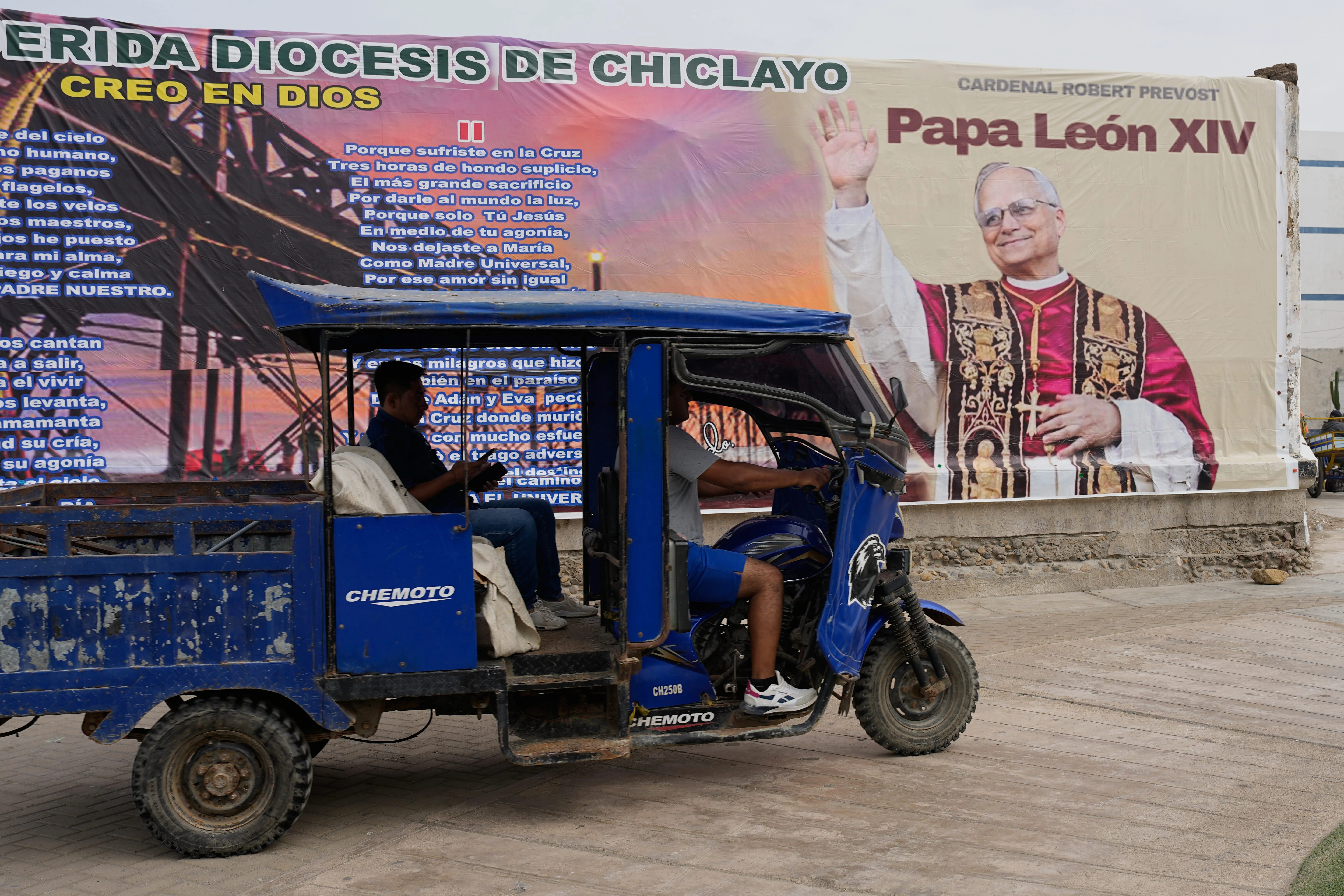
First, there's Peru. For Robert Francis Prevost—now Pope Leo XIV—Peru isn't just another stop on a diplomatic map. He spent decades there as an Augustinian missionary and later served as Bishop of Chiclayo before being called to Rome to lead the Dicastery for Bishops. Returning to Peru as pope carries massive emotional weight, sure, but it also puts him face-to-face with a nation still untangling years of political instability, social protests, and deep institutional distrust.
Then comes Argentina. Everyone knows the backstory here. His predecessor, Pope Francis, never returned to his homeland during his twelve years as pontiff, leaving behind a complicated void in Argentine Catholic life. By stepping onto Argentine soil, Pope Leo XIV is directly addressing a decade-old diplomatic elephant in the room while navigating a country wrestling with fierce economic restructuring and sharp ideological divides.
And finally, Uruguay rounds out the trip. People outside South America often overlook Uruguay because it's small, tucked between Brazil and Argentina. Inside Vatican circles, though, Uruguay is viewed as a bellwether—one of the most secular nations in the Americas, where church and state separated over a century ago. Visiting Montevideo isn't about preaching to the choir. It's about testing how the Catholic Church engages with a post-Christian society on Latin American soil.
The Medical Reality Behind Traveling After Cancer Surgery
You can't talk about this trip without looking at the physical toll. Crossing the Atlantic, jumping time zones, speaking in packed stadiums, and holding back-to-back meetings with heads of state would exhaust a healthy 40-year-old. Doing it after cancer surgery requires an entirely different level of medical choreography.
Vatican travel protocols quietly change when a pope is recovering from major surgery. Whenever the Holy See plans a long-haul apostolic journey under medical supervision, a dedicated medical team travels directly on the papal plane—usually including the pope's personal physician, specialized nurses, and emergency resuscitation gear tucked into a designated cabin area. Local host governments in Lima, Buenos Aires, and Montevideo also have to clear designated trauma and oncology-capable hospitals along every motorcade route before the Vatican's advance team signs off on a single street closure.
People assume popes just tough it out through sheer willpower. That's only half true. Behind the scenes, schedulers build in mandatory afternoon rest blocks—usually two to three hours right after lunch—where no cameras, no bishops, and no diplomats are allowed near the apostolic nunciature. If you look closely at the official Vatican timetable for these 12 days, those quiet gaps are doing the heavy lifting.
Still, there's real risk here. Air travel after surgery increases fatigue and swelling, and long open-air motorcades expose a recovering patient to unpredictable weather and respiratory bugs. By choosing not to trim this 12-day South America tour down to a quick four-day visit, Pope Leo is signaling to both the Roman Curia and the global public that he intends to govern at full speed—not from the sidelines.
Three Things Watchers Get Wrong About Papal Itineraries
If you want to understand what's actually happening during these twelve days, stop focusing only on the stadium Masses. Those giant crowds make great television, but the real work happens elsewhere.
The "Homecoming" Narrative in Peru Isn't Pure Nostalgia
Media coverage loves framing the Peru leg as a warm reunion between a former missionary bishop and his adopted home. That's true on the surface, but it's also incomplete. Pope Leo XIV knows Peru's internal fractures better than almost any senior figure in the Vatican. He lived through the country's rural poverty, environmental clashes over mining, and the painful cleanup of abuse scandals within Peruvian Catholic movements like the Sodalitium Christianae Vitae. Expect his speeches in Peru to cut much deeper than polite diplomatic platitudes.
Argentina Isn't Just About Finishing Francis's Unfinished Business
Some commentators are treating the Buenos Aires stop as a symbolic tribute to Pope Francis. Honestly, that sells Pope Leo's own agenda short. While he shares much of Francis's pastoral instinct for the marginalized, Leo brings an American-born, canon-law-trained, missionary-tested pragmatism to the table. In Argentina, he has to balance compassion for families crushed by inflation without letting either side of Argentina's polarized political class hijack his visit for partisan points. That's a tightrope walk few leaders could pull off.
Uruguay Is a Strategic Test Case
Why spend precious days and energy on a country of three and a half million people when giants like Brazil or Colombia aren't on this manifest? Because Uruguay shows where the rest of urban Latin America might be heading in twenty years. Secularization isn't just a European trend anymore. How Pope Leo talks to Uruguayan youth, academics, and civil leaders will offer a blueprint for how the Vatican plans to stay relevant in societies where religion no longer holds automatic cultural authority.
What to Watch Over the Next Twelve Days
If you're following this trip closely—whether for geopolitical clues, church reform signals, or just to see how the pope holds up physically—skip the generic press releases and watch three specific moments:
- Unscripted remarks during flights and meetings with local clergy. Prepared speeches at presidential palaces go through layers of Secretariat of State vetting. When Pope Leo sets aside his binder to talk directly to Peruvian priests or Argentine seminarians, you'll hear what he actually thinks.
- His physical pacing around Day 7 and Day 8. The transition from the Andean region down to the Río de la Plata basin hits right around the midpoint of the tour. Watch his posture during evening events and whether any afternoon appearances get quietly shortened—that's always the clearest indicator of how his post-surgery stamina is holding up.
- The press conference on the return flight to Rome. Papal pressers at 35,000 feet are notoriously candid. Journalists traveling in the back of the plane will press him directly on his cancer recovery, his impressions of Argentine politics, and what this marathon trip means for future travel to Asia or Africa.
Follow the official Vatican News livestream schedule and check the full text transcripts on the Holy See's official apostolic journey page rather than relying on clipped social media soundbites, because the nuances in his Spanish-language remarks are where the real story lives.