Hiring a public communicator who projects legal authority without bar licensure creates an immediate credibility liability that compounds under media scrutiny. In October 2026, Katie Zacharia served as White House press secretary for five days—from October 12 to October 16, 2026—making her tenure the briefest in the office's history after questions mounted over her claims of being a lawyer despite not passing the bar exam. Conventional commentary frames such episodes around personal embarrassment or a single botched briefing. Structural analysis reveals a deeper failure mode: credential signaling mismatch, unverified authority arbitrage, and high-velocity reputation contagion.
Credential Signaling Mismatch and Bar Licensure Mechanics
A Juris Doctor degree confers academic training in legal theory and statutory analysis, not a license to practice law or hold oneself out as an attorney in regulated jurisdictions. In the United States, state bars govern admission and unauthorized practice rules, separating law school graduates from licensed attorneys. Zacharia earned a law degree from Pepperdine University in 2011, sat for the California bar exam that year without passing, and later worked in roles including an associate position at the Beijing firm Zhong Lun from 2011 to 2013 and communications posts in 2026.
When appointing officials or surrogates describe a spokesperson as an "attorney" or "lawyer," audiences infer specific institutional guardrails. Those guardrails include ethical discipline, evidentiary rigor, and vetted familiarity with legal boundaries. Once reporters audit state bar records and find no active license, the initial signal flips from an asset into a liability.
- Degree vs. License Gap: Holding a J.D. proves coursework completion, whereas bar admission establishes state-sanctioned legal status.
- Jurisdictional Ambiguity: Vague answers regarding where or when an individual passed a bar exam invite immediate verification checks by journalists and watchdog groups.
- Watchdog Escalation: External groups can turn a communications dispute into a formal regulatory inquiry, such as complaints filed with state bar authorities over public self-description.
The gap between a title claim and verifiable licensure acts like an unhedged short position in information markets. As long as nobody checks the underlying record, the claim yields cheap status. The moment verification occurs, repricing happens across every subsequent statement the individual makes.
The Cost Function of Unvetted Spokesperson Appointments
High-visibility press roles operate under continuous adversarial testing rather than friendly alignment. Even when an appointment prioritizes ideological loyalty or television familiarity—such as Zacharia's prior commentary appearances and brief 2026 tenure at the Department of Homeland Security and Trump Media & Technology Group—the briefing room imposes real-time stress. Her sole formal press briefing on October 13, 2026, lasted roughly 15 minutes and drew sharp pushback across media and political circles.
A spokesperson's credibility functions as working capital for the principal: every unverified credential claim or evasive answer drains trust from the institution's core message.
In principal-agent terms, the principal (the executive or organization) delegates message delivery to an agent (the press secretary) to lower transaction costs with the public and press corps. If pre-appointment vetting misses basic biography discrepancies or past controversial remarks, the principal absorbs severe reputation contagion. Rather than focusing on policy priorities, coverage shifts to vetting failures, internal disarray, and rapid leadership turnover.
Consider a communications team preparing a new surrogate without auditing public records and past statements. Journalists routinely cross-check resumes, bar directories, and prior media clips within hours of an announcement. When a spokesperson responds to a question about passing the bar with an ambiguous reference to moving to China—and only confirms later in a television interview that they did not pass the bar exam—the narrative locks onto honesty and competence rather than policy.
Cause-and-Effect Chains Missed in Surface Coverage
Surface-level coverage treats a five-day tenure as a standalone anomaly or a product of media hostility. Tracing the causal chain shows how small governance shortcuts compound into structural failure.
- Selection Heuristic Bias: Prioritizing loyalty or media visibility over rigorous credential verification creates blind spots in candidate selection.
- Title Inflation: Labeling a communications aide or law graduate a "lawyer" raises the evidentiary bar for accuracy in legal and policy framing.
- Public Briefing Friction: A short, tense inaugural briefing exposes unpreparedness under live questioning, leaving zero buffer when credential doubts surface.
- Verification Cascade: Reporters and watchdog organizations check licensing databases and public filings, turning a minor phrasing issue into a formal bar complaint and headlines.
- Rapid Exit: Once the distraction outweighs any messaging benefit, leadership terminates or transitions the appointee to stop further brand erosion.
This sequence also exposes boundary conditions and analytical limits. Credential scrutiny hurts most when a role relies on perceived precision or when a claimed credential is easily falsifiable in public registries. Conversely, roles defined explicitly as pure partisan cheerleading or entertainment face different audience expectations, though even there, factual contradictions weaken persuasion among persuadable observers. Furthermore, outside observers can verify public records and observed timelines, but internal White House deliberations and private motives remain educated hypotheses unless corroborated by primary records.
Tactical Protocol for High-Stakes Communications Vetting
Organizations appointing senior public spokespersons can reduce failure rates by treating spokesperson selection as a risk-management workflow rather than a favor or reward.
- Audit Every Credential Line: Verify degrees, bar admissions, active licenses, and employment dates against primary registries before public rollout.
- Ban Ambiguous Title Labels: Restrict terms like "attorney," "lawyer," or "expert" to individuals who hold active, verifiable standing that matches the audience's standard definition.
- Stress-Test Under Hostile Q&A: Run simulated briefings covering biographical vulnerabilities, past statements, and rapid-fire follow-ups before the first public podium appearance.
- Establish a Fast Containment Rule: Define clear thresholds for correcting misstatements immediately or pivoting personnel before a secondary story overtakes core messaging.
No vetting checklist eliminates every risk in volatile media environments, and over-scripted spokespersons can sound robotic or evasive. Still, disciplined verification before day one prevents self-inflicted credibility collapses that cut a tenure short in days rather than years.
For any executive or communications leader filling a high-visibility public role, run a mandatory 48-hour pre-announcement verification sprint that audits every claimed credential against primary records and stages a live, unscripted Q&A stress test on potential biographical vulnerabilities before releasing the appointment.
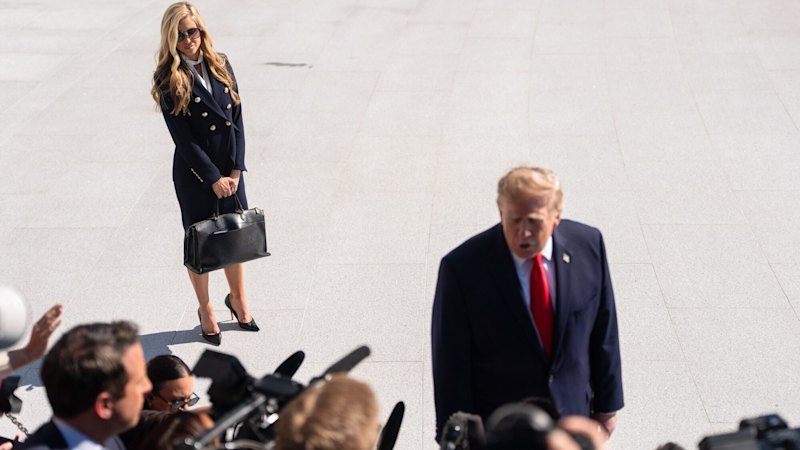
New White House press secretary Katie Zacharia holds first briefing
This video shows Zacharia's first White House press briefing, illustrating the real-time media scrutiny and communication dynamics that preceded her five-day tenure.