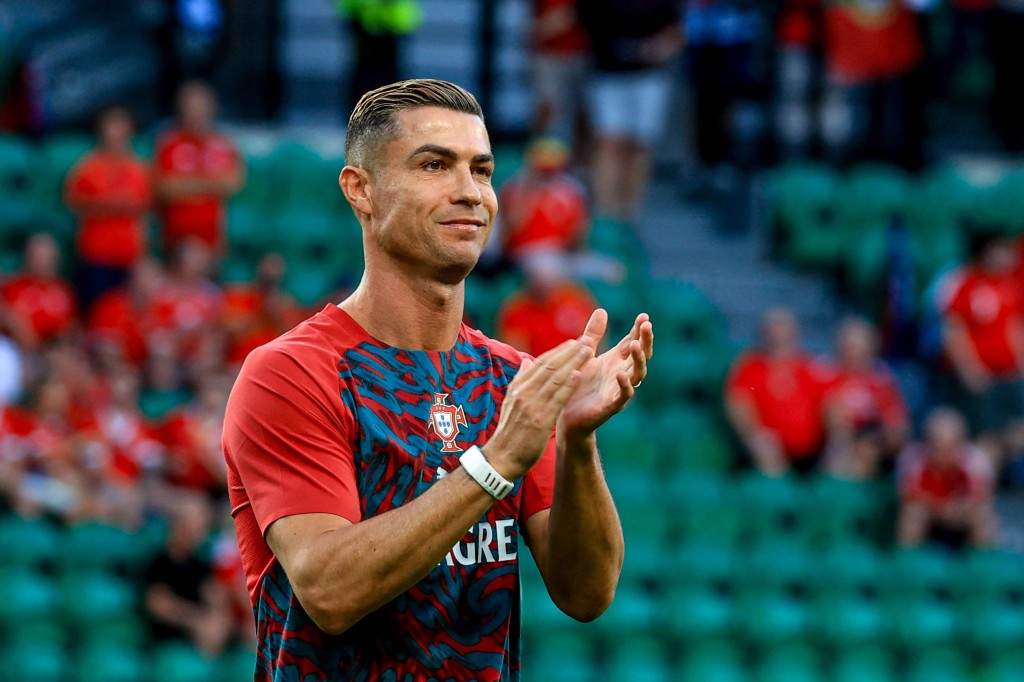
Every sports outlet on the planet is currently publishing the exact same tear-jerking obituary for international football. They want you to mourn the end of an era. They want you to treat Cristiano Ronaldo’s international retirement as an irreplaceable void at the center of Portuguese football.
They are completely wrong. Recently making waves lately: The Structural Friction of Aging Superstars in International Football.
For the last four years, the biggest obstacle standing between Portugal and another major international trophy wasn't France, Spain, or Argentina. It was the gravitational pull of a living legend whose refusal to step aside turned one of Europe’s deepest, most fluid attacking rosters into a rigid, predictable delivery system for a forty-something target man.
The mainstream consensus is lazy. It relies on career totals—over 200 caps, more than 130 international goals, Euro 2016, the Nations League—and mistakes historical greatness for current utility. In elite international football, sentimentality is a death sentence. You do not win modern tournaments by building monuments to what a player did in 2014. You win them by maximizing collective tempo, pressing triggers, and spatial fluidity. Further details regarding the matter are covered by Yahoo Sports.
Ronaldo’s exit isn't a funeral. It is an emancipation.
The Myth of the Indispensable Superstar
I’ve spent enough time around front offices and technical staffs in European football to recognize the exact moment a superstar becomes a structural liability. It happens quietly at first. Coaches stop designing systems around collective strengths and start designing systems to hide one player’s declining mobility.
In tactical terms, this is called asymmetric compensation. When an aging forward can no longer press from the front or make repeated high-intensity sprints in behind, the remaining nine outfield players must alter their geometry to cover the dead zones. Midfielders drop deeper to protect against counter-attacks that weren't stopped at the source. Wingers stop cutting inside and revert to whipping speculative crosses into a crowded box.
Look at Portugal’s recent major tournament campaigns. On paper, Roberto Martínez—and Fernando Santos before him—had an embarrassment of riches. Bruno Fernandes, Bernardo Silva, Vitinha, Rafael Leão, Diogo Jota, Pedro Neto, Gonçalo Ramos. That is a midfield and forward line built for high-pressing, rapid-transition, positional football. Every single one of those players thrives at club level in systems defined by constant movement, interchanging positions, and relentless off-ball work.
Yet every time they pulled on the red and green shirt, the handbrake went up.
Why? Because when Ronaldo is on the pitch, the hierarchy is non-negotiable. Every attack funnels toward him. Every free kick within forty yards—regardless of the statistical probability—belongs to him. Every tactical substitution carries the weight of a national crisis. You cannot build a cohesive, modern pressing machine when your central striker walks while the rest of the team sprints.
What the Goal Tallies Hide
Defenders of the status quo always fall back on the same defense: "Look at the goals."
It is the oldest trap in football analysis. Raw goal totals without context are noise, not signal. If a striker scores five goals in qualifying against minnows ranked outside the top 100, while taking eight shots per game and killing twenty promising transitions by dropping into spaces occupied by his own number ten, did he actually improve the team's net expected goal difference?
Often, the answer is no.
Consider the mechanics of modern tournament knockout rounds. Once you reach the quarterfinals of a World Cup or European Championship, space disappears. Defenses are compact, disciplined, and physically elite. You do not beat low blocks by standing still between two center-backs waiting for a cross. You beat them by dragging defenders out of position through decoy runs, third-man combinations, and fluid rotations.
Imagine a scenario where Portugal plays a high-level knockout match against a disciplined low block like France or England.
- With a static focal point: The opposing center-backs have an easy reference point. They know exactly where the striker wants the ball. They squeeze the space around Bruno Fernandes and Bernardo Silva, forcing Portugal into sterile U-shaped possession around the perimeter of the penalty area. Crosses get headed away. Frustration builds.
- With a fluid, rotational front three: Diogo Jota, Gonçalo Ramos, or even João Félix operating as a false nine constantly vacates the central corridor. Suddenly, Rafael Leão has space to attack the inside-left channel. Bruno Fernandes can crash the box late without colliding with a stationary teammate. Opposing center-backs are forced to pass off runners, creating split-second communication errors.
The data from the 2022 World Cup Round of 16 against Switzerland wasn't an anomaly; it was a blueprint. When Santos finally made the agonizing decision to bench Ronaldo, Gonçalo Ramos stepped in, scored a hat-trick, and Portugal looked like the most dynamic attacking unit in Qatar. The ball moved faster. The press was cohesive. The players looked liberated from the psychological burden of having to feed the king.
And yet, the sheer political gravity of Ronaldo’s presence meant that experiment could never be sustained long-term while he remained available for selection. No manager in the world has the political capital to permanently bench a five-time Ballon d'Or winner in his own country without turning every press conference into a referendum on loyalty and respect.
Answering the Questions Nobody Wants to Ask Honestly
When news of an icon’s departure breaks, fans immediately flood search engines with the same predictable questions. Most pundits answer them with diplomatic platitudes. Let’s strip away the PR polish and look at the reality.
Can Portugal actually win a major trophy without Ronaldo?
Not only can they—their statistical probability of winning the next major tournament just went up.
Compare Portugal’s current squad to the 2016 European Championship winners. The 2016 side was a pragmatic, defensive, underdog unit that squeezed through the group stage with three draws and needed heroic individual moments—including Ronaldo’s brilliance—to survive. The current Portuguese pool is vastly superior in technical quality, depth, and tactical versatility across every single line of the pitch.
Look at the spine of this team:
- Defense: Rúben Dias, António Silva, Gonçalo Inácio, Nuno Mendes, Diogo Dalot. Elite ball-playing defenders comfortable defending at the halfway line.
- Midfield: Vitinha, João Neves, Bruno Fernandes, Bernardo Silva, João Palhinha. Arguably the most technically gifted and balanced midfield rotation in international football.
- Attack: Rafael Leão, Diogo Jota, Pedro Neto, Gonçalo Ramos, Francisco Conceição. Pace, direct dribbling, clinical finishing, and relentless work rate.
This squad does not need a savior. It needs a system. Removing the singular, dominant variable allows the collective equation to finally balance.
Who replaces his leadership in the dressing room?
This is where the "intangible leadership" myth falls apart. Leadership isn't just barking orders or demanding the ball in high-pressure moments. True modern leadership in a national team setup is about empowering peers to take ownership of the moment.
When a monumental figure like Ronaldo occupies the room, everyone else subconsciously defers. Players like Bruno Fernandes—who wears the armband at Manchester United—and Bernardo Silva—a serial winner under Pep Guardiola at Manchester City—have been forced to operate as tactical deputies for their country. Rúben Dias is one of the most vocal, commanding defensive organizers in the Premier League.
These men are not timid rookies needing a mentor to hold their hand. They are seasoned veterans at the peak of their powers who have spent the last decade winning domestic trebles and Champions League titles. Stepping out of Ronaldo’s shadow forces them to claim full psychological ownership of the Seleção. That shift in accountability will forge a much stronger, more resilient dressing room culture than relying on one man’s aura.
Did Ronaldo stay too long?
Yes. By at least two years.
Great athletes rarely know when to leave the stage because the exact psychological trait that makes them great—an irrational, obsessive self-belief—blinds them to their own physical decline. Michael Jordan in a Washington Wizards jersey. Peyton Manning’s final season in Denver, where the Broncos won the Super Bowl in spite of his arm strength rather than because of it.
Ronaldo’s move to the Saudi Pro League was a clear demarcation line in competitive intensity. You cannot play week-in, week-out at a lower tactical and physical tempo and then suddenly flip a switch to match the suffocating intensity of top-tier European international football. The body adapts to the demands placed upon it. By extending his international career past Euro 2024, he traded the chance for a clean, triumphant handover for a prolonged, awkward twilight that stalled Portugal’s tactical evolution.
The Uncomfortable Truth About The Transition
To be clear, ripping off this band-aid won't be painless. Anyone claiming Portugal will immediately breeze through every match without hiccups is selling a fairy tale. There are real, tangible downsides to losing a player of Ronaldo’s profile, and ignoring them would be dishonest.
First, Portugal loses its ultimate psychological weapon against mid-tier opponents. Fear is a real factor in football. Before a ball was even kicked, opposing defenders were terrified of Ronaldo. That reputation alone pinned back full-backs and forced managers into overly cautious game plans. Without him on the team sheet, underdog nations will step higher up the pitch and play with far more bravery against Portugal.
Second, there is an immediate void in box presence and aerial dominance. Even at 40, Ronaldo’s leap, timing, and instinct inside the six-yard box remained elite. Gonçalo Ramos is a smart finisher and a tireless presser, and Diogo Jota is remarkably dangerous in the air for his height, but neither possesses the sheer physical intimidation factor Ronaldo brought when chasing a goal in the 88th minute. When Plan A fails and a game turns into chaotic route-one football in stoppage time, Portugal will miss having the greatest penalty-box predator in history waiting on the end of a desperate cross.
Third, the spotlight shifts instantly—and mercilessly—to the manager and the next generation. For twenty years, Ronaldo acted as a lightning rod. When Portugal failed, the headlines were about Ronaldo. When Portugal won, the headlines were about Ronaldo. Now, if Bruno Fernandes misplaces a pass in a knockout game or Roberto Martínez gets his substitutions wrong, there is nowhere to hide. The scrutiny on the rest of the squad is about to intensify dramatically.
How Portugal Must Rebuild Tomorrow Morning
If the Portuguese Football Federation is smart, they won't spend the next six months hosting tribute tours and looking backward. They will treat this moment as a hard tactical reset. Here is the exact blueprint for maximizing the post-Ronaldo era:
- Commit to a high-line, high-press identity. With Rúben Dias anchoring the backline and João Palhinha or João Neves screening in front, Portugal has the athleticism to suffocate opponents in their own half. Without a stationary striker breaking the pressing line, the front three can finally hunt in packs.
- Hand the keys unconditionally to Vitinha and Bruno Fernandes. Vitinha’s ability to dictate tempo from deep, combined with Bruno’s creative risk-taking between the lines, is a devastating combination—provided the players ahead of them are making vertical runs in behind rather than checking to feet.
- Rotate the striker role based on the opponent, not hierarchy. Stop looking for "the new Ronaldo." He doesn't exist. Play Diogo Jota when you need sharp link-up play and clinical finishing in tight spaces. Start Gonçalo Ramos when you need relentless pressing and physical occupation of center-backs. Use Rafael Leão as a roving wide forward who attacks space in transition.
- Fix the dead-ball inefficiency. Over the last decade, Portugal wasted dozens of prime set-piece opportunities because of one player’s monopoly over direct free kicks. Let Bruno Fernandes, Vitinha, and Pedro Neto utilize actual statistical variety—whipped deliveries, short routines, and varied angles—to turn set pieces back into a genuine weapon.
Stop Mourning the Past
Cristiano Ronaldo gave Portugal everything. He dragged a small nation of ten million people to the pinnacle of world football, delivered its first major international trophies, and shattered records that will stand for generations. His statue outside the museum in Funchal is earned ten times over.
But statues belong outside the stadium, not in the starting eleven.
The era of the solo superstar carrying a national team on his back is dead. Modern international football belongs to the collective—to systems where eleven players move, press, and attack as a single organism. For the first time in two decades, Portugal has the personnel to play that exact brand of football without compromise.
Let the pundits cry over the end of an era. The rest of Europe should be terrified of what comes next.