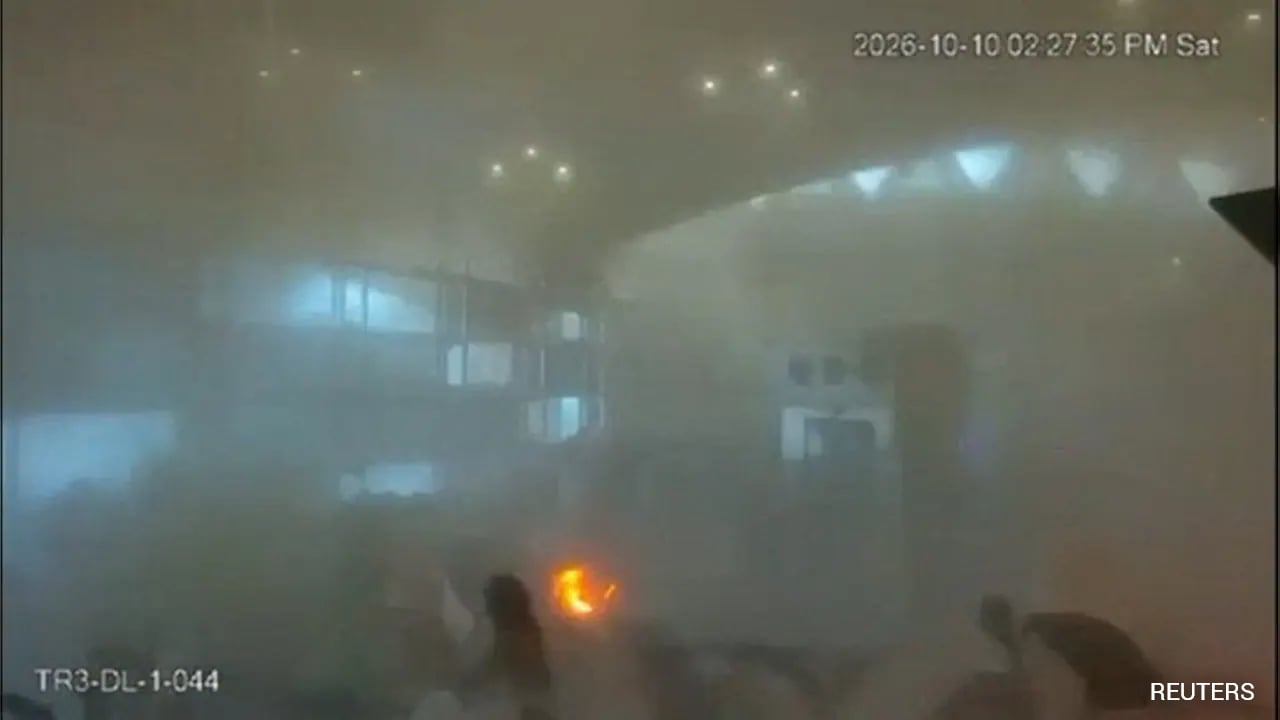
Mortality following a high-energy security incident at a major aviation hub exposes a chain of operational, medical, and diplomatic dependencies that headline casualty counts routinely obscure. When a second Indian national dies weeks or days after sustaining injuries in an October 10 attack at Riyadh's airport, the event cannot be read as an isolated tragedy or a static tally increase. It represents a delayed fatality conversion driven by initial blast or kinetic trauma severity, trauma-care capacity under surge or triage conditions, cross-border consular and family coordination, and the second-order strain placed on Gulf labor corridors and air transport risk governance.
No external article text or verified post-incident medical or operational telemetry is provided in the prompt, so this analysis separates verifiable structural mechanisms from educated hypotheses. Where exact casualty numbers, injury classifications, clinical timelines, or security attributions are absent, the argument models the underlying systems rather than fabricating figures. This article maps how delayed mortality occurs after an airport security incident, how bilateral labor and consular systems respond when expatriate casualties rise, how aviation nodes absorb security shocks, and what concrete institutional adjustments reduce downstream harm.
The Delayed Mortality Chain in High-Energy Airport Incidents
Headline reporting typically treats casualty figures as fixed snapshots, yet trauma epidemiology shows that deaths often unfold across distinct time horizons. Immediate fatalities reflect catastrophic structural or neurological damage at the scene, whereas subacute and delayed deaths reflect secondary physiological deterioration, infection, multi-organ failure, or complex surgical complications. A second fatality linked to an October 10 attack demonstrates how a single kinetic or explosive event continues to generate mortality long after initial perimeter containment.
To analyze why a second injured worker or traveler dies after the initial wave of care, analysts must separate four operational stages in the injury-to-outcome pathway.
- Point-of-injury stabilization and extraction: Speed of triage, hemorrhage control, and airway management inside a complex, high-throughput terminal or landside forecourt determines whether survivable injuries remain survivable during transfer.
- Definitive trauma and critical-care capacity: Survival from severe blast, shrapnel, or structural impact depends on specialized surgical teams, intensive care bed availability, blood supply continuity, and management of secondary infections or acute kidney injury.
- Clinical transfer and continuity of care: Moving severely injured patients between facilities—or coordinating specialized care across jurisdictions—introduces physiological risk if hemodynamic instability is not tightly controlled.
- Complication management over weeks: Prolonged hospitalization carries compounding hazards, including sepsis, thromboembolism, respiratory failure, and metabolic exhaustion, turning initially stabilized patients into delayed fatalities.
The first bottleneck in many mass-casualty or targeted airport incidents is spatial friction. Airports are engineered for high passenger density, heavy baggage logistics, and multi-level access, not rapid medical evacuation from congested forecourts, arrivals halls, or transit zones. Even when emergency response teams arrive quickly, crowding, blast debris, or temporary security lockdowns can delay initial extraction and complicate accurate triage sorting.
A second critical mechanism is the gap between initial survival and long-term physiological recovery. A patient who survives the first 24 to 72 hours may still succumb to secondary cascades that are harder to trace back to the initial headline event. In news reporting, later deaths often appear as sudden updates, masking the continuous clinical attrition occurring inside intensive care units.
Consider a conceptual example of two patients injured in the same perimeter incident. Patient A suffers immediate non-survivable trauma and is counted in the initial toll. Patient B sustains severe multi-system injuries, undergoes emergency stabilization, and enters prolonged intensive care, only to deteriorate weeks later from secondary organ failure or refractory infection. Both deaths stem from the same incident, but their operational and reporting footprints differ sharply.
Bilateral Labor Corridors and Consular Crisis Architecture
An Indian national injured and later dying in Saudi Arabia sits at the intersection of two massive, tightly coupled systems: Gulf labor migration and sovereign consular protection. Millions of Indian citizens live and work across Saudi Arabia in aviation support, construction, hospitality, logistics, and facility services. When a security incident injures Indian nationals, consular missions face immediate pressure to verify identities, notify next of kin across time zones and languages, monitor hospital care, and manage repatriation or local burial logistics.
This environment creates distinct friction points that shape how families and governments experience a delayed death.
- Identity and status verification: Confirming whether an injured individual is a short-term transit passenger, a resident worker, or an airport contractor requires cross-checking hospital registries, employer records, and immigration databases under high-stress conditions.
- Information asymmetry for families: Relatives in India often rely on fragmented updates from employers, fellow workers, community networks, or media reports before receiving formal consular confirmation, amplifying anxiety during weeks of critical care.
- Employer and insurer coordination: For expatriate workers, medical coverage, wage continuity, workplace incident classification, and repatriation paperwork involve multiple institutional actors whose incentives and speed vary.
- Cross-border logistical execution: Whether a deceased citizen is repatriated to India or laid to rest locally depends on family preferences, medical-legal clearances, flight availability, and diplomatic coordination.
A common analytical error is treating consular response as a purely diplomatic formality rather than a high-volume case-management operation. When an incident involves multiple injured nationals, embassy and consulate teams must simultaneously track clinical status, liaise with host-country authorities, brief grieving families, and counter rumors spreading on messaging apps. A subsequent death reopens administrative and emotional burdens just as initial crisis attention begins to fade.
As a conceptual illustration, suppose three Indian workers are hospitalized after an airport attack: one recovers and returns to work, one remains in critical care for several weeks, and one dies after a prolonged clinical decline. Each trajectory requires a different operational sequence from diplomatic missions and employers, yet public attention usually spikes only at the initial shock and again when another death is announced.
Aviation Security Economics and Hub Resilience
Major international airports operate as high-reliability nodes where throughput, passenger convenience, and threat mitigation compete for finite space and budget. An attack at a major Saudi aviation hub tests both physical hardening and operational continuity. Even when commercial flight schedules resume quickly, security incidents expose vulnerabilities around landside perimeters, curbside drop-off zones, and public-facing concourses where screening is lighter than airside sterile zones.
Airport security risk can be evaluated through three structural trade-offs that govern every hub operator.
- Openness versus perimeter control: Tightening vehicle checks and access screening improves deterrence and early detection, but it lengthens queues, increases congestion outside terminals, and can create dense crowds that become attractive targets if poorly managed.
- Speed of recovery versus investigative thoroughness: Airlines and hub operators face strong commercial pressure to restore slots and connections rapidly, while security and forensic agencies require access, perimeter controls, and procedural checks that slow normalization.
- Localized disruption versus network ripple effects: A security shock at a key connecting hub can cascade across regional flight banks, crew rotations, and cargo schedules, even if runway operations remain intact.
The cause-and-effect chain following an airport attack extends well beyond physical blast or impact damage. Security agencies typically adjust threat postures, heighten surveillance, and review access protocols across neighboring transport nodes. Those adjustments strengthen long-term resilience but impose recurring operational costs—more staffing, slower passenger flow, and higher compliance friction—that persist long after media coverage moves on.
For example, if an attack occurs near a high-volume landside access point, authorities may reconfigure drop-off lanes, add inspection checkpoints, or restrict public access to certain forecourt areas. Those measures reduce immediate exposure at that point, but unless queue management and crowd dispersion are engineered alongside them, they can shift crowding bottlenecks elsewhere along the approach road.
Separating Verified Facts from Analytical Hypotheses
Rigorous analysis requires drawing a sharp line between confirmed facts and plausible interpretations, especially when details from an ongoing security and medical aftermath are incomplete. A second Indian national dying after an October 10 Riyadh airport attack establishes that the incident produced at least two Indian fatalities and involved injuries severe enough to cause death after the initial day of the attack. Beyond that core sequence, specific clinical causes of death, exact injury counts by nationality, operational security lapses, and perpetrator attribution remain hypotheses unless backed by verified official disclosures.
Confusing plausible explanations with established facts weakens decision-making for policymakers, security planners, and corporate risk teams. A delayed death might stem from extreme initial injury severity, hospital surge strain, complex surgical limitations, or underlying health factors—or a combination of all four. Similarly, an attack at an airport hub might reflect a targeted strike on aviation infrastructure, a broader regional security spillover, or a failure in landside access control.
Analyst discipline requires testing hypotheses against observable evidence rather than narrative convenience. When reporting is sparse or staged over weeks, each new fatality should prompt a structured review of what is known, what remains unconfirmed, and what operational indicators would validate or refute each explanation.
Strategic Recommendations for Institutional Actors
Reducing both the human toll of severe trauma and the systemic shock of high-profile transport attacks requires targeted adjustments across medical coordination, expatriate support, and hub risk management. None of these measures eliminates risk entirely; each carries cost, administrative complexity, or operational friction that institutions must manage deliberately.
- Establish dedicated post-incident trauma tracking and family liaison desks: Governments and major employers should maintain structured case tracking for all critically injured nationals until clinical stabilization or final resolution, assigning single points of contact to families so updates do not stall after the first 72 hours. This improves transparency and trust, though it requires sustained staffing during multi-week hospital stays.
- Integrate landside crowd dispersion with perimeter security upgrades: Airport and security planners should pair stricter vehicle and access controls with decentralized drop-off zones, clear pedestrian sightlines, and rapid-evacuation lanes. This lowers target density and speeds emergency vehicle access, at the cost of higher infrastructure investment and ongoing passenger guidance.
- Build surge-ready trauma and blood-supply protocols linking airports and tertiary hospitals: Health authorities and hub operators should periodically stress-test triage routing, critical-care bed surge capacity, and inter-hospital transfer chains for delayed-onset complications, recognizing that exercise drills often test initial response better than weeks-long intensive care demands.
- Standardize cross-border emergency medical and repatriation workflows: Diplomatic missions, labor authorities, and large contractors should pre-clear documentation templates, hospital liaison channels, and family travel/repatriation protocols so administrative delays do not compound grief or complicate medical decisions. The limitation is that individual family preferences and local legal procedures still require case-by-case handling.
The decisive strategic play for governments, hub operators, and multinational employers managing expatriate workforces in high-value transport corridors is to treat critical-injury care and consular family support as a multi-week operational campaign rather than a 48-hour emergency response. Organizations that align trauma continuity, transparent family communication, and landside crowd-security engineering will contain both human loss and institutional disruption far more effectively when subsequent casualties occur.