A Financial Transformation Hidden in Plain Sight
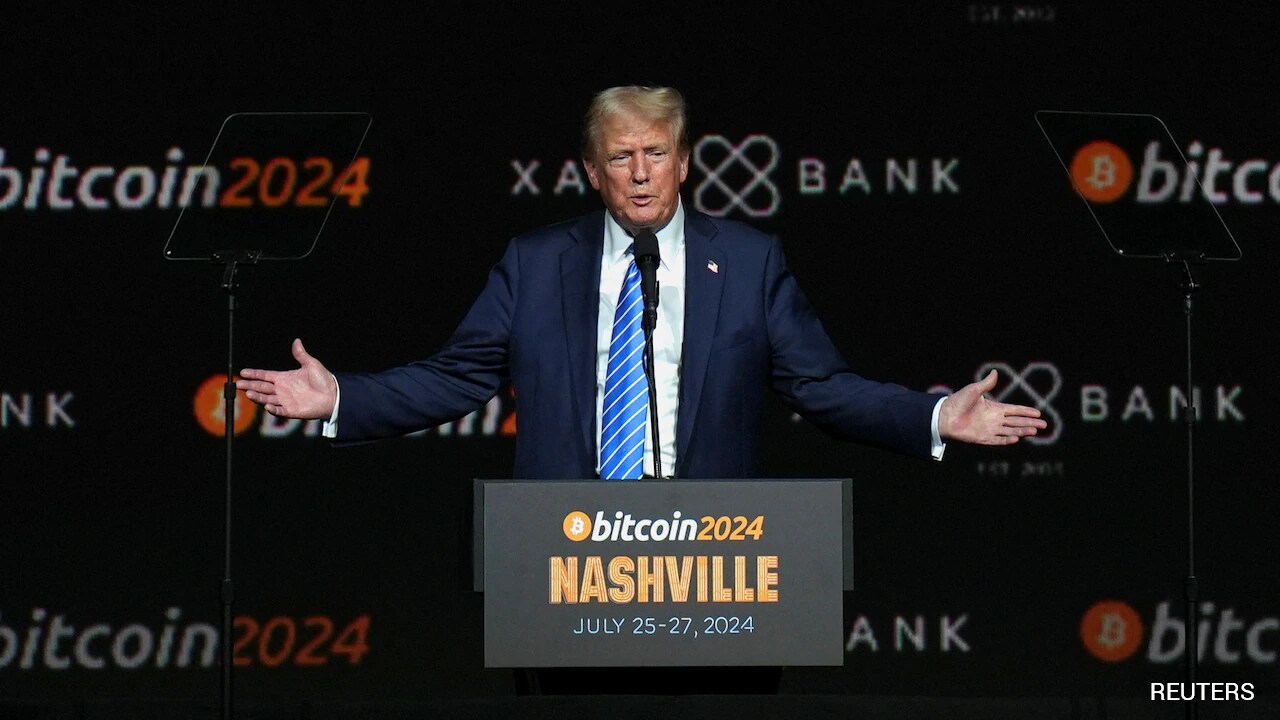
When the Office of Government Ethics published a 927-page disclosure form, the headlines focused on a familiar figure: Donald Trump earned more than $1.4 billion from digital asset ventures in a single year.
That number represents a fundamental transformation of presidential wealth. For six decades, brick, mortar, and golf course fairways formed the foundation of the Trump organization. Today, digital tokens, licensing royalty contracts, and token sales dwarf the revenue generated by commercial real estate holdings. Mar-a-Lago generated $77 million in revenue. The licensing agreements behind a single meme coin generated $635 million.
The mechanics behind this cash flow reveal a system designed to strip financial exposure from the asset originators while shifting risk entirely onto public buyers.
The Anatomy of a Nine-Figure Token Machine
To trace where the money went, follow the corporate architecture established just before the election.
Instead of building decentralized technology, the operation relies on a traditional licensing framework. An entity named CIC Digital LLC licensed the rights to stamp the presidential likeness onto digital tokens sold under the ticker symbol $TRUMP. A separate entity, Celebration Coins, managed the issuance and sales.
The risk distribution in this structure is asymmetrical.
- Licensing Revenue: The brand owner receives upfront royalties and cut-of-sales income regardless of how the token performs post-launch.
- Capital Protection: The brand owner takes no debt and retains no obligation to support token liquidity.
- Public Risk: Retail buyers absorb 100 percent of the market volatility when secondary market trading begins.
When retail buyers rushed into the market, token prices spiked on enthusiasm, driving massive cash volume into corporate accounts. Shortly after, secondary market prices dropped sharply, leaving open-market buyers with heavy paper losses while the licensing entities secured $635 million in realized income.
+------------------+         Licensing Rights         +-------------------+
|  CIC Digital LLC | -------------------------------> | Celebration Coins |
| (Trump Entity)   | <------------------------------- | (Issuer/Sponsor)  |
+------------------+         $635M Royalties          +-------------------+
                                                                |
                                                                | Token Issuance
                                                                v
                                                      +-------------------+
                                                      | Public Market     |
                                                      | Retail Buyers     |
                                                      +-------------------+
A parallel revenue engine operated through World Liberty Financial, a entity co-founded with family members. Financial disclosures show World Liberty Financial generated nearly $800 million. Over $520 million came directly from the sale of digital tokens, alongside $250 million realized by selling equity stakes in the management company itself.
The Regulatory Freeze and the Policy Echo Chamber
Money flowing into these corporate entities did not happen in a vacuum. It coincided directly with sweeping changes in federal financial policy.
Within months of taking office, federal enforcement against digital asset firms ground to a halt. The Justice Department and Securities and Exchange Commission scaled back aggressive litigation campaigns against major industry players. Executive orders established a framework for federal stablecoin adoption, and executive actions initiated a strategic federal digital asset reserve.
Prominent industry figures received executive clemency, including BitMEX co-founders and Silk Road creator Ross Ulbricht.
While White House representatives maintain that all presidential actions aim to make America the global hub for digital finance, the financial disclosures demonstrate that policy shifts aligned directly with family balance sheets.
Structural Disconnects Between Insider Revenue and Retail Value
Understanding the true nature of these ventures requires dissecting the financial products sold to the public.
World Liberty Financial did not sell equity stock to retail participants. They sold governance tokens.
"Governance tokens do not represent equity ownership, offer no rights to corporate earnings, and carry no statutory liquidation protections typical of traditional securities."
These instruments give buyers voting power over corporate decisions within an online protocol. They do not confer ownership of the management company that holds the cash.
| Venture Entity | Primary Revenue Stream | Disclosed Income | Secondary Market Performance |
|---|---|---|---|
| CIC Digital LLC / Celebration Coins | Brand licensing & meme coin sales | $635 Million | Heavy drawdown post-launch |
| World Liberty Financial | Token sales & equity liquidations | $799 Million | Governance tokens down significantly |
| Traditional Real Estate (Mar-a-Lago) | Membership dues & resort fees | $77 Million | Steady historical growth |
While public token holders watched their holdings plummet in secondary trading, the issuers had already collected proceeds in hard currency or established stablecoins.
Tax Complexity Inside a Black Box
Determining how much tax will be paid on $1.4 billion in digital earnings remains a complex challenge for tax attorneys.
Digital asset income can be classified as ordinary income, capital gains, or corporate revenue depending on how corporate entities structure the receipts.
If structured as personal ordinary income, the maximum statutory federal tax rate of 37 percent would yield an initial obligation around $518 million. However, if the funds pass through nested LLCs or corporate holding companies, lower corporate tax rates apply. Corporate entities can also utilize historical operating losses from physical real estate portfolios to offset digital profits.
The lack of public tax returns leaves beneficial ownership details hidden inside corporate shells, making precise calculations impossible for outside auditors.
The End of Traditional Real Estate Supremacy
For half a century, the commercial real estate world operated on long development cycles, bank debt, municipal permits, and physical maintenance. Developing a Manhattan skyscraper or a Florida resort required years of capital expenditure and continuous operational management.
Digital asset ventures compressed that cycle from decades down to months.
Without construction loans, union contractors, or physical property maintenance, digital asset licensing produced margins unheard of in classical real estate development. The $1.4 billion generated from tokens and licensing eclipsed decades of accumulated property value in a single 12-month period.
This financial reality marks a permanent shift in how political and commercial influence convert into capital. Physical buildings require maintenance, pay heavy local property taxes, and face real-world vacancies. Digital tokens require only a brand, a smart contract, and an audience willing to trade market risk for immediate political proximity.