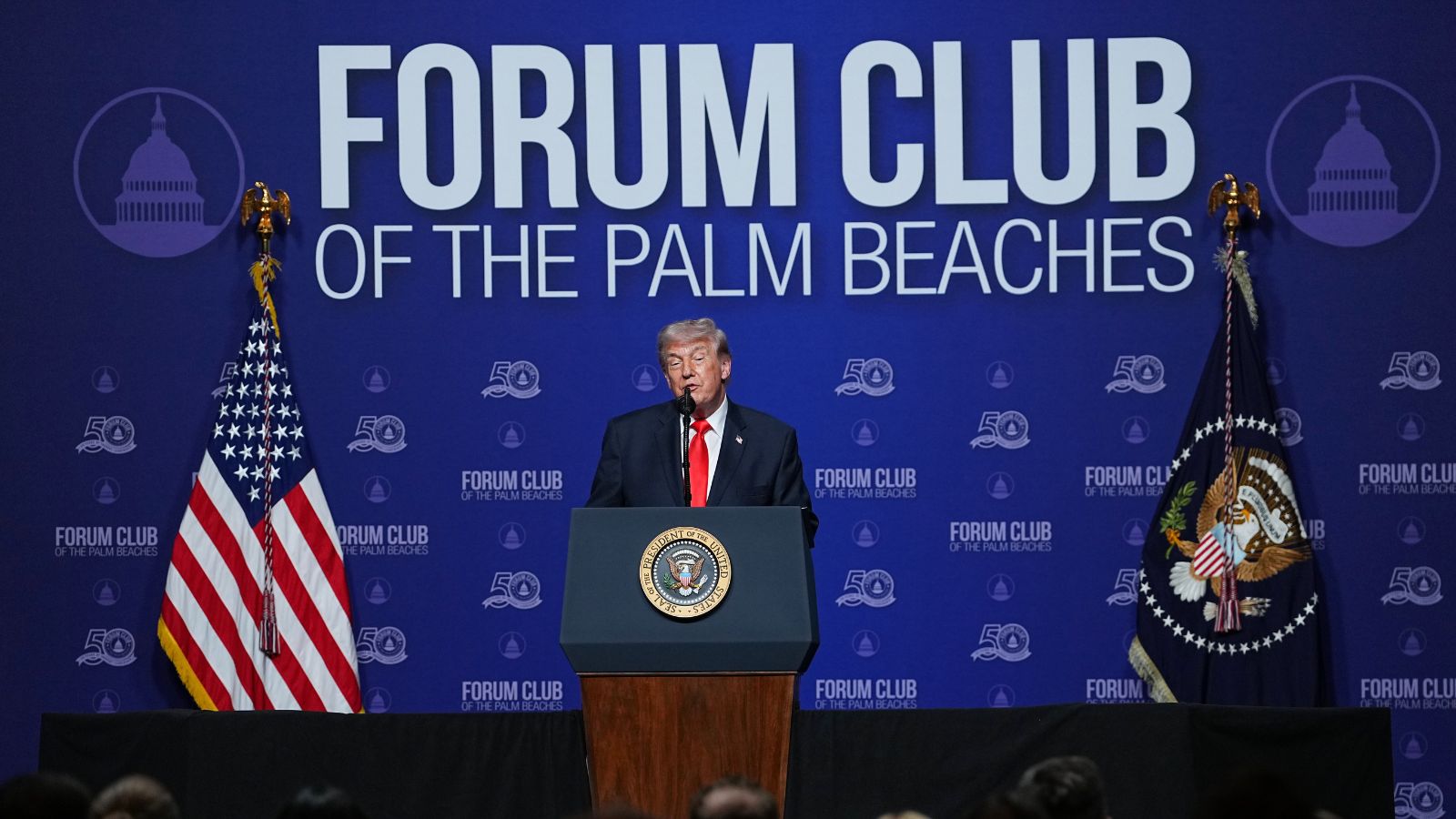
Donald Trump wants to park the USS Abraham Lincoln 100 yards off the coast of Havana and wait for a white flag. On Friday, the President signaled that Cuba is the next target for American intervention, claiming the U.S. could take over the island nation "almost immediately." This isn't just campaign trail bluster. It is the culmination of a multi-year strangulation campaign that has pushed the Cuban state to the brink of total collapse.
By declaring a national emergency and imposing a secondary blockade on oil shipments earlier this year, the administration has effectively severed Havana’s life support. The goal is no longer just "regime change" in the vague sense used by previous administrations. The rhetoric now leans toward a full-scale absorption or forced surrender. Trump’s strategy relies on the belief that a massive show of naval force, fresh from the conclusion of hostilities in Iran, will trigger a bloodless capitulation. Discover more on a connected issue: this related article.
The Geography of Collapse
Cuba is currently experiencing its darkest period since the Special Period of the 1990s. Massive blackouts have paralyzed Havana, leaving more than half the city without power. The U.S. ban on oil shipments from Venezuela—enforced by aggressive naval patrols—has turned the island into a giant parking lot. Without fuel, there is no transport. Without transport, the fragile food distribution system has splintered.
The President’s "on the way back" doctrine treats the Caribbean as a pit stop. By suggesting that a carrier strike group returning from the Persian Gulf could simply pivot to the Florida Straits, the White House is betting that the Cuban Revolutionary Armed Forces (FAR) have no stomach for a fight against a battle-hardened U.S. military. This is a high-stakes psychological operation. The administration is banking on the idea that the Cuban government, seeing the scale of destruction in Iran, will choose survival over sovereignty. Further analysis by Al Jazeera explores similar perspectives on the subject.
The Oil Noose
The January 2026 Executive Order was the turning point. It didn't just sanction Cuba; it threatened any nation or shipping company that dared to move petroleum to the island with total exclusion from the U.S. financial system. This effectively ended the "oil-for-doctors" swaps that had sustained the Cuban grid for two decades.
Internal intelligence suggests the Cuban leadership is fractured. While the old guard remains defiant in state media, younger officers are reportedly more concerned with the mounting civilian unrest. Infant mortality rates have spiked. Basic medicines are non-existent. When the President says he likes to "finish a job," he is referring to the systematic dismantling of the island’s infrastructure that his sanctions have already set in motion.
The Annexation Question
The phrase "take over" is intentionally ambiguous. Does it mean a military occupation, the installation of a provisional government, or something closer to the acquisition of a territory? Trump has previously mentioned an interest in Greenland and parts of the Caribbean. In his second term, the "America First" policy has evolved into a more transactional form of expansionism.
Critics argue that a "takeover" would trigger a humanitarian catastrophe and a migration wave that would dwarf the 850,000 arrivals seen between 2022 and 2024. If the U.S. assumes control, it assumes the debt, the crumbling infrastructure, and the responsibility of feeding 11 million people. It is a massive liability disguised as a strategic asset.
Force as Diplomacy
The USS Abraham Lincoln is the centerpiece of this theater. It is a floating city capable of projecting more power than most national air forces. Parking it 100 yards offshore—essentially within shouting distance of the Malecón—is an act of extreme provocation. Under international law, this would be a blockade, an act of war.
However, the administration’s legal team has already laid the groundwork by designating Cuba as an "extraordinary threat" to national security. They cite the presence of foreign intelligence facilities and ties to hostile actors as justification for preemptive action. The White House view is that the Cold War never ended; it just went into a dormant phase that is now being terminated.
The Resistance Within
The Cuban government’s response has been a mix of historical defiance and desperate diplomacy. They have reached out to the international community, calling the latest sanctions an "illegal economic war." But with traditional allies like Russia and Iran preoccupied or severely weakened by their own conflicts, Havana is standing alone.
There is a significant risk that the President’s "almost immediately" timeline is an underestimation. While the formal military may be outmatched, the potential for an entrenched insurgency remains. Cuba has spent 60 years preparing for exactly this scenario. The "War of all the People" doctrine involves arming the civilian population and utilizing the island’s rugged interior for long-term resistance.
Tactical Reality
Logistically, a takeover is never simple. Even if the government in Havana surrenders as Trump predicts, the "day after" involves managing a bankrupt state with zero foreign reserves. The U.S. would need to immediately restore the power grid and flood the island with food to prevent a total breakdown of order.
The President believes his personal intervention is the "game-ender" for a 70-year stalemate. He sees Cuba as a small problem that previous leaders were too timid to solve. By applying maximum economic pressure and following it with the threat of overwhelming kinetic force, he is attempting to rewrite the rules of Western Hemisphere engagement.
The Abraham Lincoln is moving. The sanctions are in place. The question is no longer if the U.S. will act, but whether the Cuban regime will break before the first ship appears on the horizon. The President is betting that the sight of an American carrier will be enough to end the oldest holdout in the Americas.
It is a gamble that assumes the Cuban people will see the U.S. as liberators rather than occupiers. History suggests that such assumptions are often the first casualty of intervention. The "job" Trump wants to finish might be far more complicated than a simple surrender on the beach.