Cuba's healthcare system is bleeding. I'm not talking about a lack of bandages or the crumbling walls of provincial clinics, though those are real enough. I’m talking about the people. The doctors who were once the crown jewel of the revolution are walking away in numbers that should terrify anyone relying on the state for a heartbeat. If you think the "white coat missions" abroad are just about diplomacy, you're missing the grimmer reality at home.
Young physicians in Havana and Santiago aren't just tired. They’re broke and disillusioned. When a taxi driver or a hotel maid makes five times what a neurosurgeon earns, the social contract doesn't just bend. It snaps. We’re seeing a massive "sauve-qui-peut"—a frantic every-man-for-himself escape—that's gutting the island's clinics.
Why Cuban Doctors Are Quitting in Droves
The math doesn't work. It hasn't for a long time. A junior doctor in Cuba might bring home the equivalent of $15 to $20 a month after the latest currency devaluations. That isn't a "modest" wage. It's a starvation wage. You can't buy a carton of eggs and a liter of oil on that salary, let alone maintain a home or raise a family.
I've talked to residents who spend their nights worrying more about where to find soap than how to treat a patient's arrhythmia. The "prestige" of being a doctor doesn't pay the rent. In 2024 and 2025, the exodus accelerated. The Cuban government tries to frame it as "imperialist brain drain," but that’s a lazy excuse. People leave because they can’t eat.
It's not just the money. The conditions are objectively grim. Imagine trying to practice 21st-century medicine without basic antibiotics. Imagine telling a mother you can't perform a routine surgery because there's no surgical thread or because the power went out and the backup generator failed. That moral injury—the gap between what you know how to do and what you're allowed to do with zero resources—is what finally kills the vocation.
The Myth of the Healthcare Superpower
For decades, the world looked at Cuba’s health statistics and saw a miracle. Low infant mortality. High life expectancy. But those numbers were built on the backs of a workforce that had no other options. Now, they have options. Or at least, they’re willing to risk everything to find them.
The state still exports thousands of doctors to countries like Brazil, Mexico, and Italy. It’s a massive revenue stream for the government—often bringing in more hard currency than tourism. But the doctors on those missions often see it as a ticket out. They "defect" at the first opportunity, crossing borders to reach the United States or staying in South America to work as waiters while they wait for their papers.
Inside the island, the gaps are becoming impossible to ignore. Specialist wait times are exploding. Primary care offices, the consultorios that were the pride of the neighborhood, are frequently shuttered because the resident physician hopped on a flight to Nicaragua or applied for a humanitarian parole program.
The Broken Infrastructure of Cuban Medicine
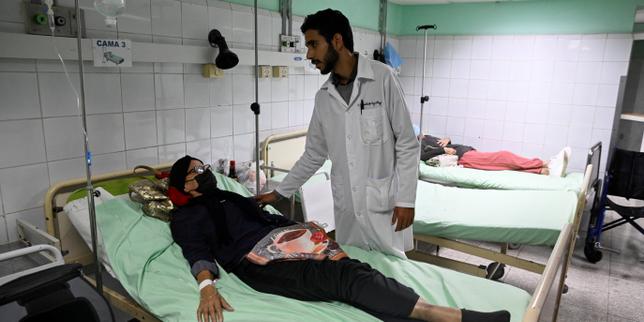
Walking into a hospital in rural Cuba today feels like entering a time capsule from a war zone. The walls are peeling. The smell of bleach is often replaced by the smell of decay because cleaning supplies are "out of stock."
- Lack of Basic Supplies: Surgeons often ask patients' families to provide their own lightbulbs for the operating room or their own bedsheets for the recovery ward.
- Equipment Failure: X-ray machines and CT scanners sit idle for months because a single proprietary part broke and the state can't—or won't—spend the foreign currency to fix it.
- Brain Drain at the Top: It’s not just the kids leaving. Senior consultants with 30 years of experience are moving to Spain or Miami to work as medical assistants or laboratory techs. They’d rather be overqualified and fed than respected and hungry.
The government’s response has been a mix of denial and occasional, ineffective pay raises. But when inflation is running at triple digits, a 20% bump in pesos is like trying to stop a forest fire with a water pistol. It’s insulting.
The Human Cost of the Medical Exodus
We have to look at the patients. When a 26-year-old doctor decides to quit medicine to sell black-market trinkets or wait for a visa, a community loses its lifeline. The elderly in Cuba are particularly vulnerable. They grew up believing the state would always provide care. Now, they find themselves in a system where you need "gifts"—a bag of coffee, some chicken, or cash—just to get an appointment with a specialist.
It’s a two-tier system now. If you have family in Miami sending remittances, you can buy your way into better care or secure medicines through private channels. If you don't? You're stuck with a system that has the knowledge but none of the tools.
This isn't a political debate about socialism vs. capitalism. This is a logistical and humanitarian collapse. When the people who are supposed to save lives are busy trying to save their own, the foundation of society is gone.
What Happens When the Doctors are Gone
The current trend isn't sustainable. The government is trying to train more doctors faster, but quality is dropping. You can’t replace a seasoned cardiologist with a student who hasn't had access to a functioning lab in three years.
Young doctors are looking at the "Nicaragua Route"—flying to Managua and trekking north—or the "Parole" programs offered by the U.S. government. They see their peers who left three years ago. Those peers are now buying houses and sending money back home. The comparison is lethal to the Cuban state's narrative of "revolutionary sacrifice."
Survival Tactics for Cuban Medics
If you're a doctor in this position, the choices are agonizingly thin. Some try to stay within the system while running "private side hustles," treating patients for cash under the table. It's illegal and risky, but it's the only way to buy milk. Others simply stop showing up. They let their licenses lapse and find work in the growing private sector—the mipymes—where they might earn more as a warehouse manager than they ever did in a clinic.
The state is losing its most valuable asset: human capital. And unlike a bridge or a road, you can't just rebuild a medical class in a weekend. It takes a decade to make a doctor. It takes five minutes for that doctor to decide they’ve had enough and pack a suitcase.
To fix this, the Cuban government would need to prioritize healthcare spending over hotel construction. They would need to pay doctors a wage that reflects the cost of living in 2026. They would need to stop treating medical professionals as export commodities and start treating them as essential citizens. Don't hold your breath for that shift.
If you’re following this crisis, watch the migration numbers. Watch the "humanitarian parole" stats. As long as those numbers stay high, the Cuban medical system will continue its slow-motion collapse. For the young doctor in Havana today, the most important medical instrument isn't a stethoscope anymore. It's a passport.