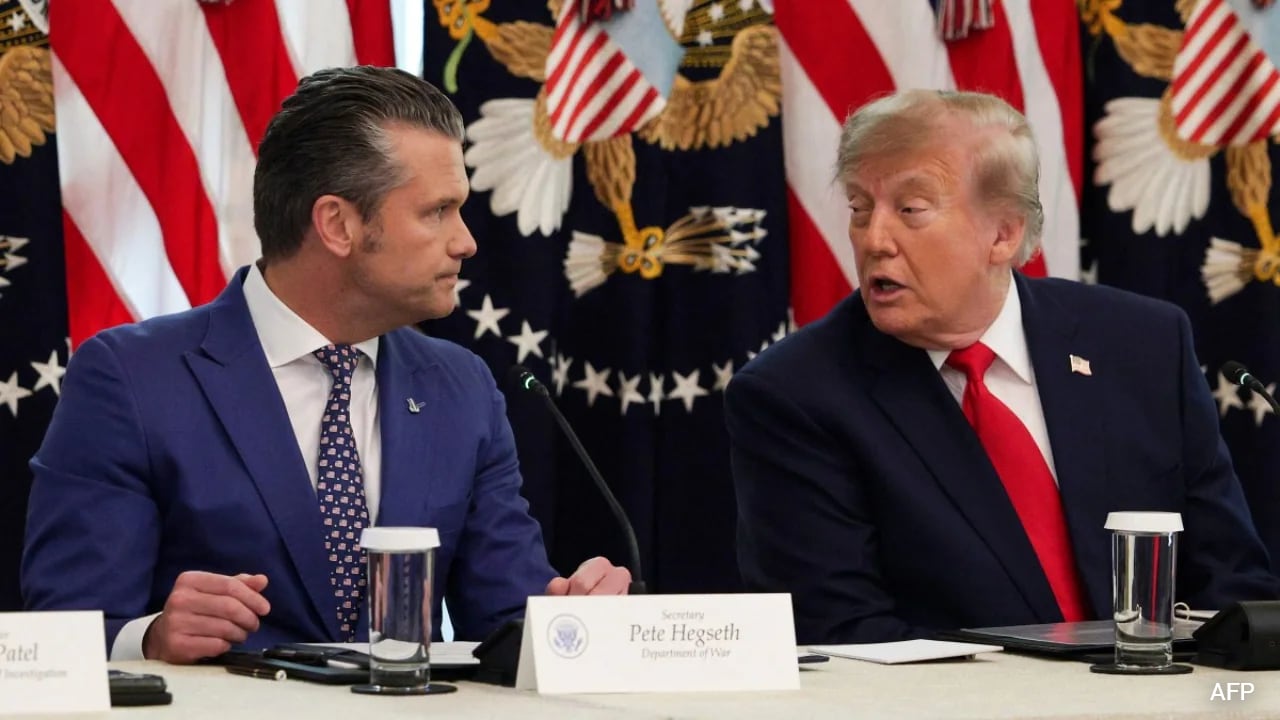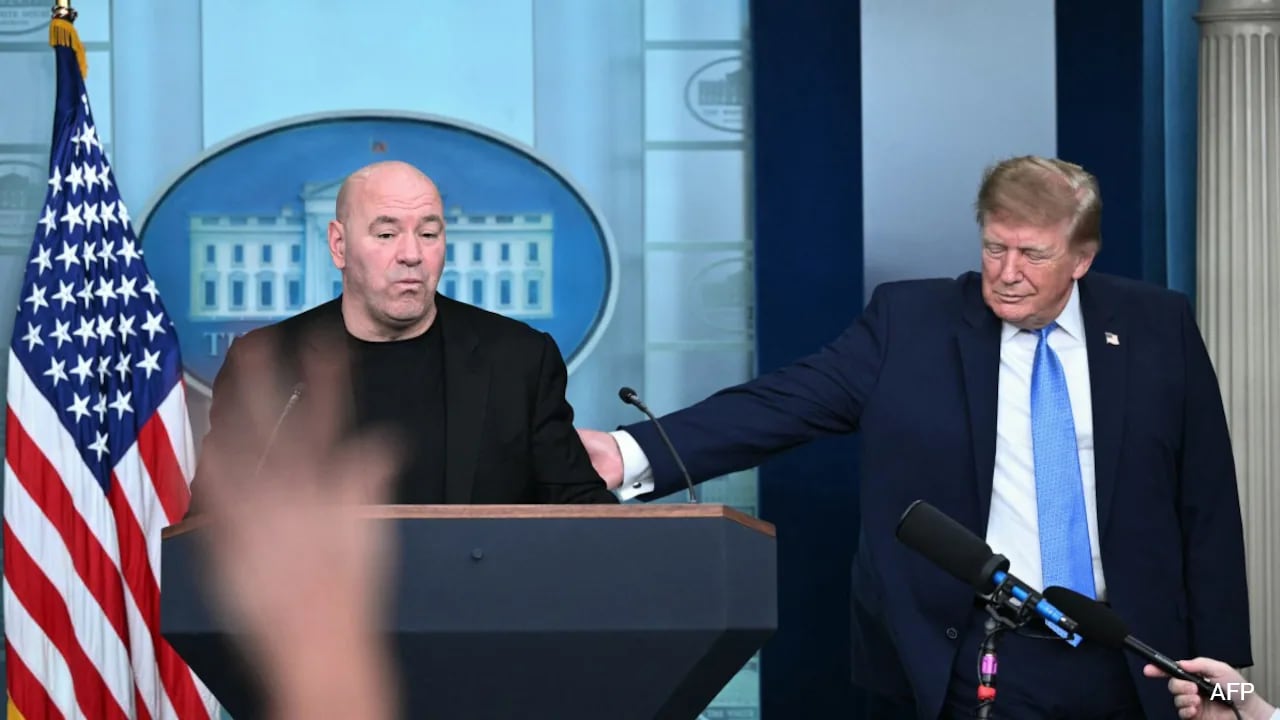
When Ultimate Fighting Championship CEO Dana White stepped up to the podium in the James S. Brady Press Briefing Room and barked, "Who has the first question?", he did more than borrow a catchphrase from pre-fight press conferences. He exposed how thoroughly American political theater has merged with combat sports promotion. White's appearance at the White House—a venue built on scripted decorum and institutional restraint—signals a deliberate shift in how modern administrations command attention, bypass traditional media gatekeepers, and turn policy messaging into pay-per-view entertainment.
For decades, the briefing room operated under an unspoken choreography. Correspondents from legacy outlets sat in assigned seats, a press secretary read from thick binders of vetted talking points, and the exchanges followed predictable rhythms. White blew up that script in three seconds flat. By importing the cadence, posture, and confrontational energy of a UFC media day directly into the West Wing, he demonstrated that political communication no longer competes merely with evening news broadcasts. It competes with viral clips, algorithm-driven outrage, and the raw visceral appeal of prize fighting.
The Anatomy of the UFC Podium Playbook
To understand why White's brief moment behind the presidential seal resonated so loudly, you have to look at how he built the UFC from a struggling fringe promotion into a multibillion-dollar media juggernaut under TKO Group Holdings. White never treated press conferences as administrative obligations. He treated them as primary content.
In traditional sports, league commissioners stay in the background until it is time to hand over a trophy. White put himself front and center. At every major fight week, he sits behind a microphone, calls on reporters with an abrupt point of the finger, and delivers unvarnished, often combative answers that generate headlines before a single punch is thrown. The phrase "Who has the first question?" is not a polite invitation. It is a starting bell. It establishes immediate dominance over the room, signaling that the person behind the mic controls the tempo, the tone, and the terms of engagement.
When that exact dynamic transplants into the White House, the psychological effect on the room changes instantly. Political reporters are trained to press officials on legislative mechanics, budget deficits, and diplomatic fallout. They expect evasions couched in bureaucratic language. They do not expect a promoter whose entire career rests on selling conflict and cutting through polite nonsense.
The brilliance of the crossover lies in its simplicity. White did not need to master policy briefs to command the room. His presence alone altered the visual grammar of the broadcast. Watching the head of a mixed martial arts organization command the White House press corps creates cognitive dissonance that stops viewers mid-scroll. In an attention economy where engagement metrics dictate survival, cognitive dissonance is pure gold.
Why Political Operatives Are Obsessed With Fight Promotion
The bond between Donald Trump and Dana White stretches back more than two decades, rooted in the early 2000s when the Trump Taj Mahal in Atlantic City hosted UFC events at a time when mainstream venues wanted nothing to do with cage fighting. That loyalty matured into a shared media philosophy. Both men instinctively grasp that traditional public relations rules—apologize when cornered, stay on message, never alienate the middle—are obsolete in a fragmented media ecosystem.
Modern political strategists study combat sports promotion because boxing and mixed martial arts solved a problem that plagues every campaign and administration. How do you make people care about an event that hasn't happened yet?
In politics, the answer used to be policy white papers and town halls. Today, strategists rely on narrative conflict and character archetypes. A UFC fight card is built on clear stakes, personal animosity, and the promise of a decisive outcome. Political messaging increasingly mirrors that exact structure. Legislation is framed not as a complex compromise, but as a heavyweight bout. Opponents are not colleagues with differing views; they are rival contenders stepping into the octagon.
Bringing White to the White House podium serves multiple strategic purposes at once:
- Cultural signaling to key demographics. The UFC audience skews heavily toward young and middle-aged men, a demographic that traditional political messaging frequently fails to reach through conventional news channels. Putting White at the podium speaks directly to that audience without needing a single policy speech.
- Disrupting hostile press dynamics. Legacy White House correspondents rely on institutional norms to press officials. Introducing an outsider who openly mocks those norms shifts the narrative from whatever controversy the press corps wants to cover to the spectacle of the disruption itself.
- Generating earned media across non-political channels. Sports blogs, MMA podcasts, and social media accounts that normally ignore Washington suddenly carry White House footage because Dana White is in the frame.
This strategy carries obvious risks. Governance is not a three-round preliminary bout, and turning official communications into a promotional stunt invites legitimate criticism that serious public business is being trivialized. Yet from a pure communications standpoint, the calculation is ruthless and effective. You cannot ignore a spectacle that refuses to play by your rules.
The Structural Shift in White House Media Access
White's appearance did not happen in a vacuum. It fits squarely into a broader dismantling of the traditional White House press hierarchy. Over the past several years, the briefing room has gradually opened its doors to podcasters, independent digital creators, and partisan commentators, eroding the monopoly once held by wire services and major television networks.
For nearly a century, the White House Correspondents' Association functioned as an unofficial guild. Seating charts reflected institutional prestige. Front-row chairs belonged to the Associated Press, Reuters, and the major broadcast networks, who traditionally received the first questions as a matter of protocol. That arrangement ensured that baseline factual reporting set the agenda for the day's news cycle.
When White barked out his signature opener, he inadvertently—or quite deliberately—highlighted how fragile that hierarchy has become. In a UFC press conference, there is no senior diplomatic correspondent who gets automatic deference. Whoever catches White's eye or shouts loudest gets the mic. Applying that ethos to the Brady Briefing Room flattens institutional seniority overnight.
Consider what happens to information flow when the gatekeeping mechanism changes. In a traditional briefing, the first three questions establish the core policy queries that define the evening news. In a spectacle-driven briefing, the opening moments are consumed by viral soundbites, crowd reactions, and personality clashes. The substantive policy questions still get asked, often twenty minutes later, long after the social media clip has already racked up millions of views and defined the public's takeaway.
Entertainment Logic Versus Institutional Accountability
There is a hard truth that veteran journalists and political analysts have to confront. The audience has changed, and the tools of accountability have not kept pace.
For decades, the press corps operated under the assumption that exposing contradictions or catching an official off-guard at the podium would inflict political damage. That assumption depended on a shared media ecosystem where voters consumed the same evening broadcasts and held leaders to similar standards of decorum. That ecosystem is dead.
Today, a fiery exchange in the briefing room does not hurt a political figure with their base; it strengthens them. White perfected this dynamic years ago. Whenever sports journalists criticized UFC fighter pay, matchmaking, or controversial remarks, White leaned into the confrontation at the podium, framing the media as out-of-touch elites trying to police a sport they didn't understand. His core audience loved him for it.
Political operatives watched that playbook work for twenty years and adopted it wholesale. When a figure like White steps into the West Wing and brings that exact posture to the podium, it validates the populist argument that Washington's sacred traditions are just another form of gatekeeping.
The Hypothetical Ripple Effect Across Washington
To see where this trajectory leads, consider a hypothetical example of how future administrations of either party might adapt this model. Imagine a high-stakes legislative push over healthcare or tax reform. Instead of sending the Treasury Secretary or a senior policy advisor to the podium to walk reporters through spreadsheets, the administration brings out a charismatic sports commissioner, a viral podcast host, or a prominent entertainment executive to frame the bill in plain, combative language.
In that hypothetical scenario, the press corps faces an impossible trap. If reporters ask detailed questions about statutory language, the guest shrugs it off as bureaucratic noise and pivots back to punchy talking points. If reporters push back aggressively, they end up on social media clips looking like humorless scolds attacking a popular cultural figure. Either way, the administration wins the news cycle without answering a single technical question about how the policy actually works.
This is not a partisan phenomenon. It is an evolutionary adaptation to modern media consumption. Once an administration proves that blending entertainment figures with official state platforms yields massive reach, every future communications director will feel pressure to replicate the formula.
What the Press Corps Gets Wrong About the Spectacle
Many seasoned Washington reporters view moments like White's podium takeover with thinly veiled disdain, treating them as transient sideshows that distract from real journalism. That attitude is a strategic blind spot.
Dismissing the fusion of fight promotion and politics as mere theatrics misses the deeper mechanics at play. Language, posture, and venue selection are not cosmetic details; they are instruments of power. When Dana White stands behind the White House podium and uses the exact phrasing he uses before a title fight at the T-Mobile Arena in Las Vegas, he is visually merging two distinct worlds of American culture. He is telling millions of viewers that the people running the country speak their language, share their tastes, and reject the stuffy conventions of Washington insiders.
Reporters who respond to that shift by clinging harder to procedural decorum only reinforce the caricature that White and his allies want to project. The press corps cannot out-banter a fight promoter, nor should it try. Journalism's strength has never been theatricality. It is verification, historical memory, and relentless follow-up after the cameras turn off.
The real danger of the UFC-style briefing is not that a sports executive told a joke or called on a reporter with a catchphrase. The danger is that the spectacle crowds out the boring, essential work of scrutiny. Pay-per-view fights end when the final bell rings and the judges read the scorecards. Public policy lives on for decades, long after the viral clips stop circulating and the promoters move on to the next card.
White walked out of the briefing room having accomplished exactly what a great promoter always does. He sold the moment, dominated the headlines, and left everyone talking about the show rather than the fine print. Until journalists and voters alike learn to separate the promotional hype from the underlying substance, Washington will keep looking less like a seat of government and more like the main event.