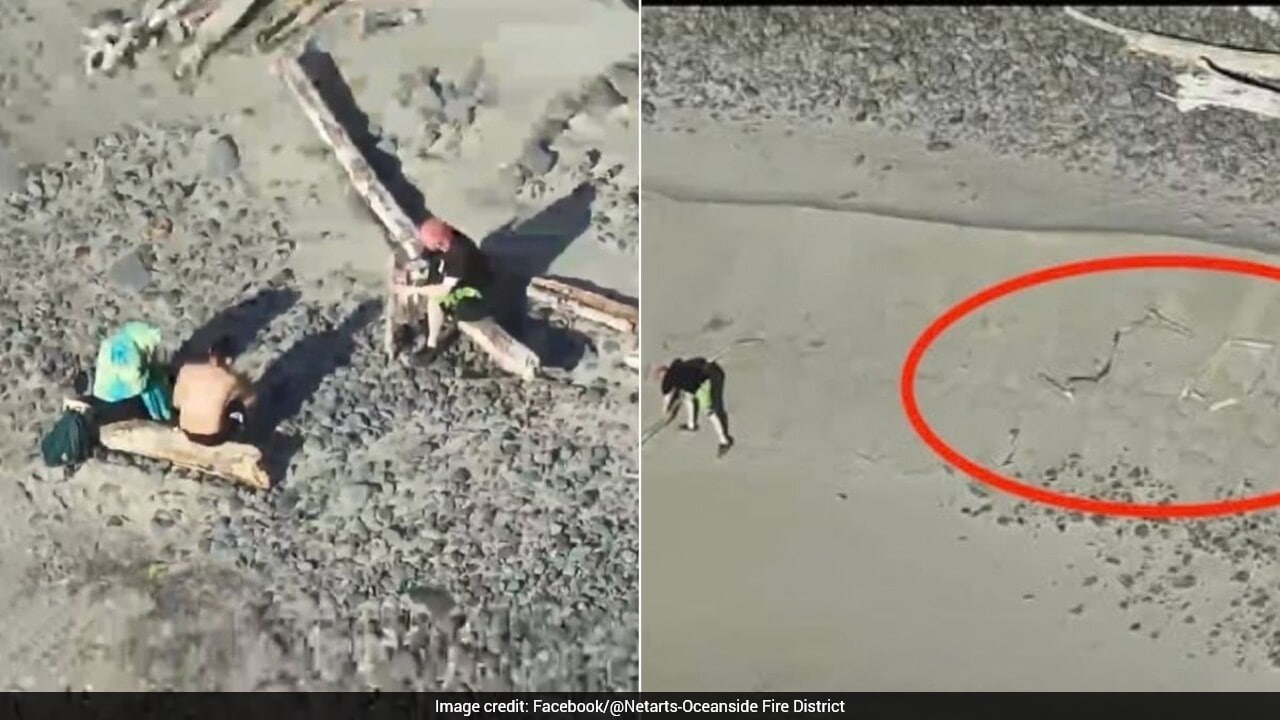
Tourists stranded on remote coastal margins due to vanity photography risk more than their own lives; they strain emergency systems and expose a deadly disconnect between digital aesthetics and physical reality. When rescue helicopters pull stranded sightseers from rising tides beneath sheer cliffs, public attention briefly flares before fading back into the algorithm. Beneath the sensational headlines lies a systemic failure of environmental education, municipal risk management, and the distorting psychological pull of online visibility.
Beaches are routinely marketed by tourism boards as serene, static paradises. Brochures display wide expanses of golden sand, gentle surf, and solitary walkers silhouetted against glowing sunsets. This commercial fiction erases the reality of marine geography. Shorelines are high-energy interfaces governed by gravitational forces, shifting sediment, and unpredictable fluid dynamics. When visitors arrive expecting a controlled amusement park experience, they bring zero mental models for survival when faced with a rapidly closing tidal window. Meanwhile, you can read related events here: Inside the European Aviation Breakdown That Proves Our Infrastructure Is Broken.
The Illusion Of Safety On Isolated Shores
Human intuition fails completely at the water's edge. Our brains evolved on terrestrial terrain where boundaries are fixed and solid objects remain where we leave them. The ocean defies these assumptions entirely. A pocket beach flanked by towering bluffs looks like an inviting sanctuary until the tide turns. Within minutes, dry sand transforms into a churning channel of cold water, cutting off the only path back to safety.
Visitors frequently misjudge environmental cues because unfamiliar terrain strips away local knowledge. Urban travelers assume that if a path exists, it is safe to walk. They fail to recognize that paths worn into coastal cliffs are often game trails, erosion channels, or paths used exclusively at extreme low tide by experienced locals who carry tide tables in their heads. To see the full picture, we recommend the detailed report by Lonely Planet.
Compounding this miscalculation is the prevalence of cellular dead zones in rugged coastal regions. Remote shorelines famous for dramatic vistas are precisely the areas lacking reliable signal coverage. A tourist trapped against a cliff face cannot simply pull out a smartphone and dial emergency services with an accurate GPS pin. They must watch the water rise while waiting for someone on the clifftop above to notice their absence—a delay that can easily prove fatal.
The Psychology Of The Digital Vanity Loop
Why do intelligent adults walk past explicit warning signs, climb over barriers, and position themselves on precarious rocks while storm surges crash below? The answer requires looking past simple recklessness into the mechanics of modern social validation.
The internet rewards high-contrast, high-drama imagery. Photos taken from safe, designated viewing platforms blend into a saturated sea of similar vacation snapshots. To break through the noise of social feeds, creators require novel perspectives. They need intimacy with danger. The visual grammar of a photograph changes fundamentally when the viewer senses peril. A picture taken from a safe distance communicates relaxation. A picture taken from a wave-swept outcrop communicates daring, exclusivity, and emotional intensity.
This dynamic creates a profound cognitive distortion. The perceived reward of a high-engagement photograph actively suppresses the baseline assessment of physical risk. Brain imaging studies regarding risk and reward consistently show that anticipated social approval fires dopamine pathways capable of overriding self-preservation instincts. Victims rarely think they are marching toward death; they believe they are calculating a manageable risk for a temporary payoff. By the time they realize the margin of error has vanished, panic replaces calculation.
Coastal Geomorphology And The Rising Tide Trap
Understanding why people become trapped requires examining the specific physical mechanics of dangerous coastlines. Many striking shorelines feature narrow strips of sand backed by vertical rock walls or crumbling mudstone cliffs. These formations are sculpted by relentless wave action, meaning the margin between safety and catastrophe is razor-thin.
Tides do not rise at a steady, predictable pace everywhere. In regions with complex bathymetry and funnel-shaped bays, flood tides can rush ashore with astonishing velocity. A surge driven by distant storms or seismic activity can stack water against a cliff face faster than an adult can scramble across slick boulders. Furthermore, the suction of receding backwash can pull a person off their feet in ankle-deep water, neutralizing swimming ability through sheer kinetic force.
Rogue waves represent another invisible hazard. These abnormal swells arrive without warning, surging significantly higher up the beach than preceding waves. Tourists standing near the waterline to capture spray or foam are routinely swept off their feet and dragged into deep water. Once submerged in cold water, rapid thermal shock induces hyperventilation and loss of motor control within seconds. Even strong swimmers succumb quickly when heavy clothing and shoes become waterlogged in turbulent surf.
The Strain On Volunteer Search And Rescue
When poor decisions intersect with unforgiving geography, the burden falls disproportionately on emergency responders—many of whom are volunteers operating on shoestring budgets.
Search and rescue operations in remote coastal areas require specialized assets. Helicopters, swift-water rescue teams, unmanned aerial vehicles, and all-terrain vehicles must be deployed rapidly. The costs associated with a single major coastal rescue operation can easily run into tens of thousands of dollars, draining resources from municipal budgets that also fund fire departments, emergency medical services, and routine law enforcement.
Beyond the financial toll lies the human cost. Rescuers routinely put their own lives at risk to pull unprepared tourists from rising tides or treacherous surf zones. Navigating a rescue boat through churning surf near jagged rocks is inherently hazardous. When a rescue operation turns tragic, the community loses valued members—all because a visitor prioritized capturing an ephemeral digital asset over basic self-preservation.
Critics increasingly argue for cost-recovery legislation, where individuals rescued from closed or clearly marked hazardous areas are billed for the full expense of the operation. While such measures provide a deterrent, they rarely stop the most reckless behavior. People who believe they are clever enough to beat the odds also believe they will never need to be rescued.
Redesigning Physical Infrastructure For The Smartphone Era
Land management agencies and park authorities are currently losing a rearguard action against the tide of selfie-driven tourism. Traditional warning signs featuring generic text or standard hazard symbols are routinely ignored, defaced, or treated as backdrops for ironic photographs.
Effective mitigation requires a complete overhaul of how coastal hazards are communicated. Standard metal signs must be replaced with dynamic physical barriers, geofenced emergency alerts pushed directly to mobile devices upon entering high-risk zones, and architectural design choices that naturally channel foot traffic away from unstable edges.
Some jurisdictions have experimented with smart warning infrastructure, utilizing motion-activated audio alarms and digital signage that display real-time tide data and hazard warnings in multiple languages. When a tourist approaches a dangerous promontory, a loud, direct voice warning combined with flashing lights breaks through the digital trance induced by smartphone screens.
However, technology alone cannot replace cultural deterrence. Tourism boards, travel influencers, and major tech platforms must share responsibility for mitigating the harms generated by algorithmic promotion of dangerous locations. Until the digital ecosystem stops rewarding hazardous locations with outsized visibility, individuals will continue trading their safety for attention.
The sea remains entirely indifferent to human metrics of engagement. It does not care about follower counts, aesthetic curation, or the desire for a memorable vacation keepsake. Every time a traveler steps past a warning line onto a wave-swept shelf of rock, they enter a domain governed strictly by physics. The ocean always collects its debt in full, and no photograph is worth the price of admission