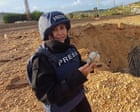
Journalism in south Lebanon isn't just about getting the scoop anymore. It's about surviving the workday. On April 22, 2026, Amal Khalil, a veteran reporter for the Al-Akhbar newspaper, didn't make it home. She was killed in an Israeli strike near the town of al-Tayri, and the details coming out of the site are grim. It wasn't just the initial blast that ended her life; it was a series of events that seemingly blocked any chance of a rescue.
If you're following the news, you know there's a fragile 10-day ceasefire in place. It’s supposed to be a pause in the hostilities between Israel and Hezbollah, but for those on the ground, the "pause" feels nonexistent. Khalil and her colleague, photographer Zeinab Faraj, were out there doing their jobs when a strike hit the car in front of them. They did what anyone would do—they ran for cover in a nearby house. Then that house was hit, too.
Why Rescuers Couldn't Reach the Rubble
When a building collapses on someone, every second is a lifeline. Rescuers managed to pull Faraj out; she had a serious head wound but she was alive. When they tried to go back for Khalil, things turned sideways. Lebanon’s health ministry and various witnesses say the Israeli military fired sound grenades and live ammunition at the ambulances.
Think about that. You have a crew trying to pull a woman out of a pile of concrete, and they're being pushed back by active fire. The Israeli military (IDF) claims they were targeting "hostile vehicles" that entered a buffer zone, but that doesn't explain why a humanitarian mission was reportedly blocked for hours. Khalil was eventually found dead, her body pulled from the debris four hours later.
A Pattern of Targeting
This isn't an isolated incident. Honestly, the number of journalists being hit in this conflict is staggering. Since March 2026, the toll has climbed to nine journalists killed in Lebanon alone. If you look at the Committee to Protect Journalists (CPJ) data, the numbers across the region are even more haunting.
- Amal Khalil: Killed in al-Tayri after rescue efforts were blocked.
- Ghada Dayekh: Killed earlier in April during strikes in the south.
- Suzan Khalil: A reporter for Al-Manar, also killed in April strikes.
There’s a chilling detail here you won't find in every headline. Back in September 2024, Khalil reportedly received a direct death threat attributed to the IDF via text. Press advocates like Elsy Moufarrej from the Union of Journalists in Lebanon are calling this a deliberate assassination, not a mistake. When you combine a prior threat with a double-tap strike and then block the ambulance, it's hard to argue it was just "collateral damage."
The Ceasefire That Isn't
The timing is incredibly messy. This happened right before Lebanese and Israeli officials were set to meet in Washington to talk about extending the truce. While diplomats sit in air-conditioned rooms, people in towns like Bint Jbeil and al-Tayri are still living in a combat zone.
The IDF says Hezbollah is violating the ceasefire by moving into restricted zones. Hezbollah says they're defending their territory. In the middle of this finger-pointing, you have people like Khalil—who had been covering the south since 2006—getting buried under their own beats.
What This Means for Press Freedom
If reporters can't trust that "Press" vest to protect them, they stop going into the field. When they stop going into the field, we lose the only eyes we have on the ground. This isn't just about one tragic death; it’s about the systematic erasure of witnesses.
Lebanon's Prime Minister Nawaf Salam has already labeled these actions as "war crimes." He's promising to take this to international bodies, but we've heard that before. Documentation is great, but it doesn't bring back a reporter who was just trying to document the demolition of homes in her own backyard.
Staying Informed Without the Noise
If you're trying to make sense of what’s happening in Lebanon right now, don't just look at the casualty counts. Look at the "how" and the "why."
- Follow local reporters: They have the context that international wires often miss.
- Check the CPJ reports: They track the specific circumstances of every journalist's death.
- Question the "buffer zone" narrative: Both sides use these zones to justify strikes that often hit civilians or media.
The situation in southern Lebanon is volatile and changing by the hour. Don't expect the ceasefire to hold perfectly, and don't expect the rhetoric from either side to be the whole truth. The real story is usually found in the rubble that rescuers weren't allowed to reach.


