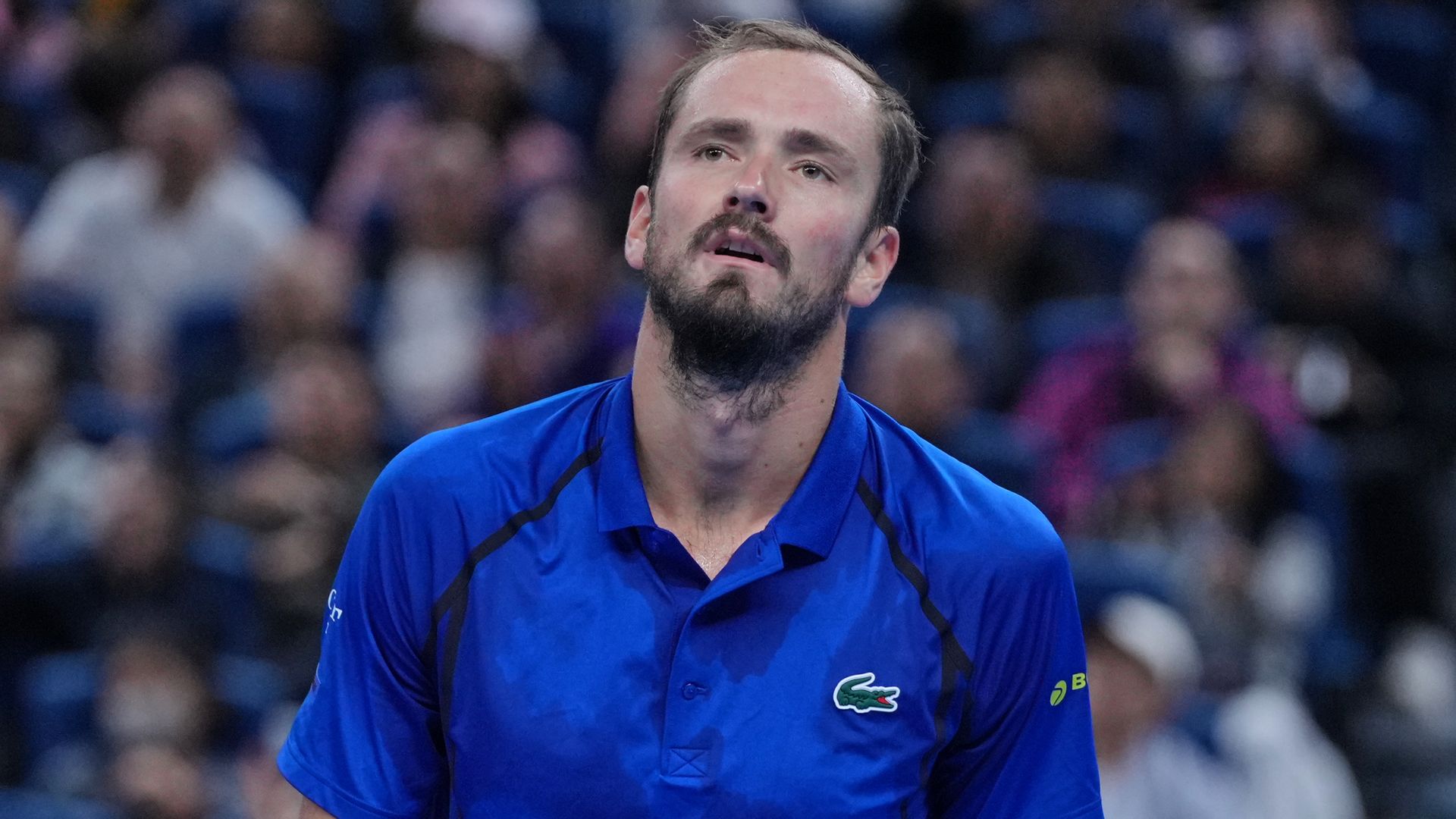
Daniil Medvedev was disqualified from his China Open semifinal against Novak Djokovic in Beijing after a rebounding ball struck a spectator in the front row, abruptly terminating a grueling two-hour and twenty-nine-minute battle. The incident, which occurred when Medvedev swatted a ball back toward the stands after it ricocheted off the advertising boards, reignited intense scrutiny over player discipline, on-court volatility, and the rigid application of safety rules in professional tennis.
For veterans of the sport, the default felt less like an isolated anomaly and more like an inevitable collision between high-pressure environments and lax handling of routine player frustrations. Medvedev insisted the action was completely accidental, noting that he merely intended to clear the ball from the court without malice. Yet intent has rarely shielded players from the letter of the law.
The tournament referee had little discretion once the ball made direct physical contact with a fan. The rulebook is explicit regarding ball abuse that endangers spectators. But the fallout exposes deeper systemic flaws in how tennis manages volatile athletes before small incidents escalate into match-ending catastrophes.
The Anatomy of a Breakdown
To understand how a routine rally descends into a disqualification, one must examine the physical and mental toll of modern hard-court tennis. Medvedev and Djokovic were locked in a punishing tactical duel. Long rallies in slower court conditions amplify mental fatigue. Frustration accumulates incrementally.
Medvedev's relationship with umpires and crowds has long been combustible. His history features high-profile blowups, including racket-smashing episodes and volatile exchanges with fans. When a player carries a reputation for a short fuse, officials watch them through a different lens.
Yet framing this purely as a character flaw misses the structural reality. Professional tennis players hit objects out of frustration hundreds of times a year. Most bounce harmlessly into the back curtain or are caught safely by ball kids.
When a ball ricochets awkwardly off advertising boards—as it did in Beijing—physics takes over. A routine clearance turns into a projectile. The line between a harmless release of steam and a tournament-ending default is often decided by inches and bad geometry rather than sheer malice.
The Shadow of Precedent
The immediate narrative after the default naturally invoked the 2020 US Open, where Novak Djokovic himself was disqualified after striking a line judge with an errant ball. Djokovic's empathy for Medvedev in the aftermath carried the authentic weight of a man who knows the unique isolation of walking off a court in disgrace while leading a match.
There is a cruel symmetry to the parallel. Djokovic argued then, as Medvedev argued in Beijing, that there was zero intent to harm. Both incidents highlight a glaring gray area in tennis governance.
Officials are trapped between absolute liability rules and the subjective interpretation of a player's mindset. If a player smashes a ball into the backboards in pure anger, it is treated as a code violation. If that exact same ball catches an unlucky bounce and nicks a spectator, it transforms instantly into a straight disqualification.
This creates a perverse lottery system. Two players can exhibit identical levels of recklessness, yet one receives a minor code violation while the other loses a million-dollar paycheck and ranking points because of a random architectural angle on the stadium wall.
The Cost of Reactionary Governance
Tennis authorities have repeatedly opted for zero-tolerance optics over nuanced reform. Following high-profile incidents over the past decade, the governing bodies tightened enforcement to protect the safety of officials and fans. That priority is unimpeachable. Spectators pay good money to watch sport, not to dodge stray tennis balls.
However, a zero-tolerance policy without proportional intermediate steps invites controversy. Referees are forced into binary choices. They either swallow their whistles on dangerous plays or drop the hammer on accidental deflections.
Medvedev was three points away from potentially closing out a monumental victory over Djokovic. Losing a match of that magnitude on a fluke ricochet leaves a hollow feeling across the entire ecosystem. Fans are cheated out of a dramatic finish. Broadcasters lose their climax. The tournament loses its premier matchup.
Fixing this requires more than post-match apologies and sympathetic press conferences. Tournaments need to look closely at stadium layouts, the proximity of advertising hoardings that cause unpredictable rebounds, and clearer protocols that differentiate between malicious endangerment and clumsy athletic reactions.
Until tennis administrative bodies build a more sophisticated framework for adjudicating accidental contact, players will remain one bad bounce away from disaster. The sport continues to rely on rigid punishments to mask the absence of proactive safety design. Medvedev packed his bags in Beijing because of a bad bounce, but the system that forced him out is the one truly broken.
Daniil Medvedev disqualified after hitting spectator with ball
This video provides brief news footage capturing the aftermath and official reporting surrounding Daniil Medvedev's unexpected disqualification at the China Open.