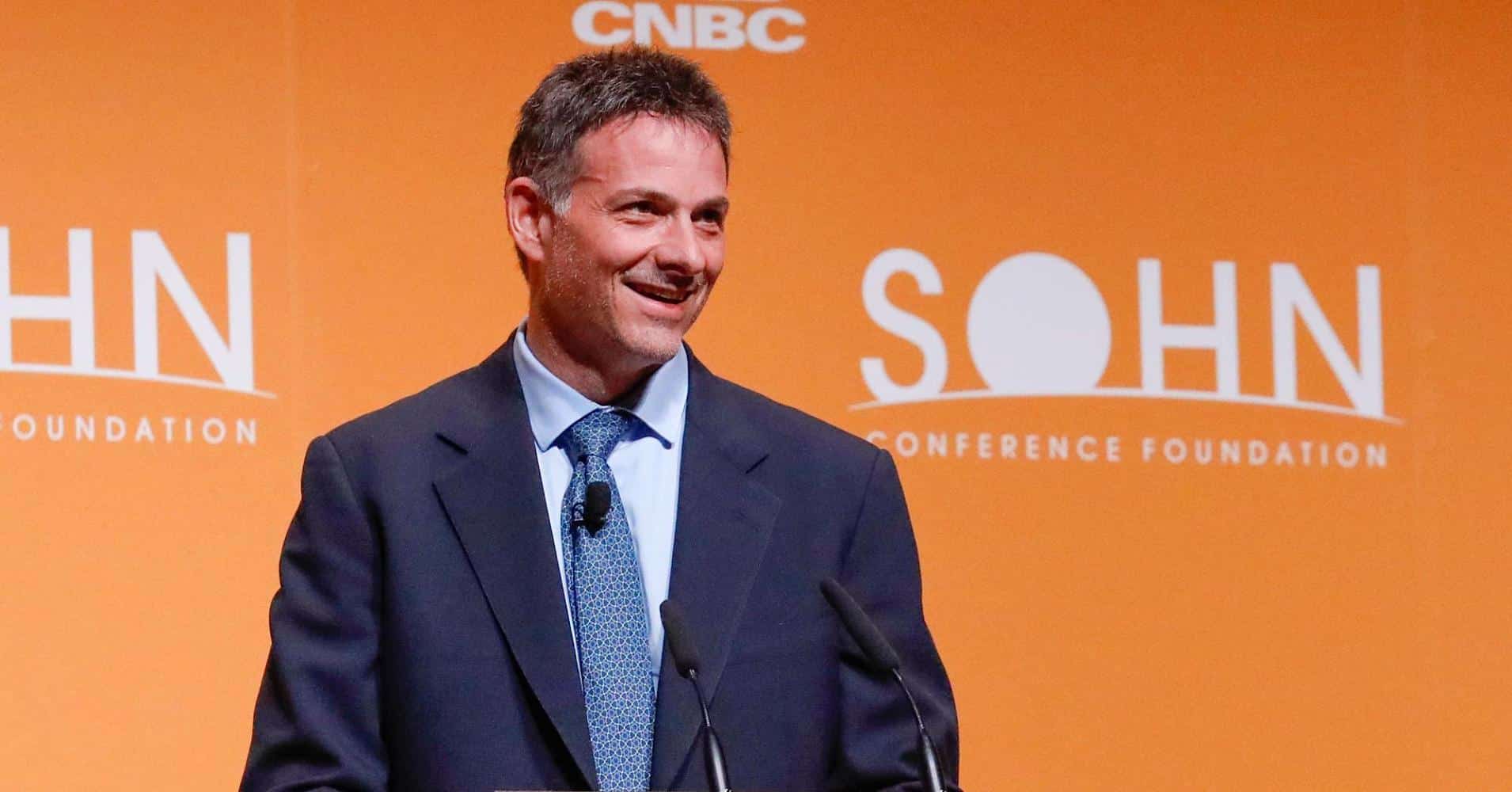
The Federal Reserve thinks it has a handle on inflation. David Einhorn thinks they're dreaming. While the consensus on Wall Street suggests a "soft landing" or a couple of cautious rate cuts, the Greenlight Capital founder is positioning for a much more chaotic reality. He isn't just hedging. He’s going long on gold because he believes the Fed will be forced to cut rates substantially more than twice, not because the economy is healthy, but because the debt load is becoming unbearable.
If you’ve followed Einhorn for the last two decades, you know he isn't a "gold bug" in the traditional, tinfoil-hat sense. He’s a math guy. When the math stops working for the U.S. Treasury, he looks for the exit. Right now, that exit is paved in bullion.
The Problem with the Higher for Longer Narrative
The market has spent months obsessing over whether we get two cuts or three. It’s the wrong question. Einhorn’s thesis hinges on the idea that the Fed’s current restrictive stance is actually inflationary in a weird, circular way. We call this the "interest income channel." When the Fed keeps rates high, the government has to pay out more in interest on its staggering $34 trillion debt. That money goes directly into the pockets of bondholders, who then spend it, fueling the very inflation the Fed is trying to kill.
It’s a feedback loop.
Most analysts miss this. They use old models from the 1980s when debt-to-GDP was a fraction of what it is today. Back then, raising rates sucked liquidity out of the system. Today, it’s like trying to put out a fire by spraying it with gasoline that’s been cooled in a refrigerator. The temperature might drop for a second, but you’re just adding more fuel to the pile. Einhorn sees this contradiction. He realizes that eventually, the interest expense will eat the budget alive, forcing the Fed to pivot hard and fast to keep the government solvent.
Why Two Cuts Won't Be Enough
The Fed is currently walking a tightrope that’s fraying at both ends. On one side, you have a regional banking system that’s still quietly smoldering from the 2023 mini-crisis. On the other, you have a commercial real estate market facing a wall of refinancings at rates double or triple what they were five years ago.
When these sectors start to snap, the Fed won't just "normalize" rates. They'll have to slash them. Einhorn is betting that once the cutting cycle begins, it won't stop at a 25-basis point "insurance cut." We're looking at a structural shift. If the economy slows down even slightly, the tax receipts drop, the deficit explodes, and the Fed becomes the buyer of last resort for Treasuries once again. That’s the "substantial" cutting Einhorn is talking about. It’s a rescue mission, not a policy adjustment.
Gold as the Ultimate Currency Hedge
For years, gold was the boring asset that sat in the corner and did nothing. It didn't pay a dividend. It didn't have earnings. But in a world where the US dollar's purchasing power is being sacrificed to maintain the Treasury's solvency, gold becomes the only honest currency left.
Greenlight Capital has been increasing its exposure to the SPDR Gold Trust (GLD) and physical gold for a simple reason. They don't trust the long-term value of fiat paper when the math behind the deficit doesn't add up.
- Central Bank Buying: It isn't just hedge fund managers. Central banks in China, India, and Turkey are hoarding gold at record rates. They see the same writing on the wall.
- The Debt Ceiling Circus: Every time Washington bickers over the debt limit, the "risk-free" status of US Treasuries takes a hit.
- Inflation Volatility: We aren't going back to a steady 2% world. We're in a world of 4% inflation spikes followed by frantic policy shifts. Gold thrives in that instability.
Einhorn’s move into gold isn't a trade. It’s a statement on the end of the "Great Moderation." He’s basically saying the adults are no longer in the room, and the printing press is the only tool left in the box.
What Most Investors Get Wrong About Einhorn’s Strategy
People hear "David Einhorn is buying gold" and they think he’s liquidated his entire portfolio to hide in a bunker. That’s not how Greenlight works. He’s still finding value in specific stocks, but he’s using gold as the foundational layer of his "macro" view.
The mistake most retail investors make is waiting for the crisis to happen before they buy the hedge. By the time the Fed announces a surprise 50-basis point cut because a major bank is wobbling, gold will already be at new all-time highs. You buy the insurance when the sun is shining, not when the hurricane is making landfall.
Einhorn is looking at the divergence between the stock market's optimism and the bond market's reality. The S&P 500 is trading at multiples that assume everything goes perfectly. Meanwhile, the underlying cost of capital is screaming that things are broken. Gold is the bridge between those two realities.
The Real Risk of Doing Nothing
If you’re sitting 100% in US equities and cash, you’re betting that the Fed can perfectly time the most difficult economic transition in history. You’re betting they can lower rates exactly enough to save the banks but not so much that inflation hits 10% again. That’s a massive gamble.
Einhorn's perspective suggests that the risk of "missing out" on the last 5% of a stock market rally is much lower than the risk of being unhedged when the currency debasement accelerates. Whether the Fed cuts twice, four times, or ten times, the direction of travel is clear. The dollar is being devalued to pay for the past.
If you want to follow the Greenlight playbook, stop looking at the monthly CPI prints as the only signal. Look at the interest expense on the national debt. Look at the balance sheets of the "too big to fail" institutions. When the cost of servicing the past exceeds the ability to fund the future, the Fed will choose the printing press every single time.
Start by diversifying your cash holdings. Physical gold or low-cost ETFs are the standard entry points. Don't wait for a formal invitation from Jerome Powell. By then, the price will be out of reach. Check your portfolio's sensitivity to a sudden drop in the dollar's value and adjust your weightings toward hard assets before the "substantial" cuts become front-page news.


