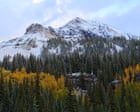
Two Colorado college students were found dead after failing to return from a hike in the state's rugged backcountry, a recurring tragedy that points directly to the lethal gap between casual trail accessibility and extreme alpine volatility. While standard news briefs treat these deaths as isolated accidents or simple bad luck, search and rescue data across the Rocky Mountains reveals a predictable pattern. Young, physically fit hikers routinely underestimate how fast high-altitude environments strip away human margins for error, turning a routine afternoon excursion into a survival crisis within minutes.
The Anatomy of a High-Altitude Trap
Colorado draws millions of visitors and residents to its trailheads every year. The state boasts 58 peaks over 14,000 feet and thousands of miles of trails winding through national forests and wilderness areas. Many of these trailheads sit less than an hour's drive from major university campuses in Boulder, Fort Collins, Golden, and Colorado Springs.
That proximity creates a dangerous illusion of safety. A student can finish a morning lecture, grab a light backpack, and stand above treeline before noon.
The mountain environment does not care about proximity to a highway. Above 10,000 feet, the physics of weather and human physiology change entirely. Ambient air temperature drops roughly 3.5 to 5 degrees Fahrenheit for every 1,000 feet of elevation gain. A pleasant 65-degree afternoon at the base of a trail easily translates to freezing temperatures and biting wind near a summit or ridge.
When moisture enters the equation, the timeline to hypothermia accelerates. Afternoon convective storms build rapidly over the Rockies, often developing out of sight behind a ridge before dumping freezing rain, sleet, or wet snow onto exposed terrain. Cotton clothing—still the default wardrobe for countless casual hikers—absorbs water like a sponge and loses virtually all insulating value. Once wet fabric meets 30-mile-per-hour alpine gusts, convective heat loss pulls warmth from the body faster than shivering can replace it.
Why Physical Fitness Fails in the Backcountry
A common thread in Colorado search and rescue reports involving college-aged hikers is high baseline athleticism paired with low technical preparedness. Twenty-year-olds accustomed to running, climbing in indoor gyms, or playing intramural sports often assume their cardiovascular endurance will carry them out of trouble.
Fitness is not a substitute for judgment. In fact, high fitness frequently pushes hikers deeper into hazardous terrain before fatigue forces them to turn around.
Consider a hypothetical scenario common along the Front Range. Two fit students set out at 10:00 AM for a six-mile loop with 2,500 feet of elevation gain. Moving fast, they reach the high point by noon, burn through their single water bottle, and decide to take an unmarked shortcut down a drainage to save time. By 1:30 PM, clouds roll in, visibility drops to twenty feet, and the drainage cliffs out into impassable rock bands. Because they moved quickly on the ascent, they are now miles from the trailhead with depleted glycogen stores, zero extra layers, and a dying phone battery.
Decision fatigue and mild hypoxia compound the problem. Even at moderate elevations between 9,000 and 12,000 feet, lower barometric pressure reduces oxygen saturation in the blood. The brain functions slightly slower. Risk assessment degrades. Hikers make choices—like leaving an established trail or attempting to downclimb wet rock—that they would never consider at sea level.
The Myth of the Digital Safety Net
Modern smartphones have fundamentally altered how young adults approach the outdoors. GPS mapping apps, satellite text capabilities on newer devices, and perceived cellular coverage convince hikers that rescue is always a button-press away.
Mountain topography destroys that assumption. Deep canyons, granite walls, and dense timber block cellular signals completely. Even when a hiker manages to place a 911 call, cold temperatures can cause lithium-ion batteries to plummet from 40 percent charge to zero in seconds.
How Search and Rescue Actually Operates
When a hiker goes overdue, the response is neither instant nor automatic. Unlike urban emergencies where an ambulance arrives in eight minutes, mountain rescue relies largely on unpaid volunteer teams—organizations like Alpine Rescue Team, Rocky Mountain Rescue Group, and Larimer County Search and Rescue.
- Notification Lag: Search teams cannot deploy until someone notices the hikers are missing and contacts the county sheriff. For college students living in dorms or off-campus apartments where roommates keep irregular schedules, that notification often happens 12 to 24 hours after the hikers ran into trouble.
- Resource Mobilization: Dispatchers must verify trailhead parking, check vehicle registrations, and assemble volunteer field teams who leave their day jobs and families to gear up.
- Environmental Limits: Helicopters cannot fly in high winds, whiteout conditions, or darkness without specialized night-vision crews and clear landing zones. Ground teams must hike in on foot, carrying heavy medical and technical rigging gear through the exact same storm that trapped the victims.
By the time boots hit the trail to look for missing hikers, a night in sub-freezing temperatures has already passed.
Navigation Errors and Terrain Traps
Getting lost in Colorado rarely happens because a hiker walks blindly into the woods. It happens at transition points.
Snowfields lingering into late spring or early summer obscure painted blazes and cairns. Fallen timber from pine beetle infestations forces hikers to detour around deadfall, where they inadvertently pick up game trails instead of the main path. Above treeline, wide tundra expanses offer no clear corridor, making it easy to drift off-bearing in fog or twilight.
Once off-trail, human instinct pulls people downhill. Following a creek or drainage seems logical because water leads to valleys and roads. In the Rocky Mountains, drainages frequently terminate in waterfalls, steep scree chutes, or impenetrable willow thickets. Climbing back up consumes massive energy, while continuing down risks a fatal fall.
Traumatic falls remain one of the leading causes of death among Colorado hikers, second only to medical events and exposure. Loose talus, wet lichen on granite slabs, and icy north-facing slopes require specific footwork and traction devices like microspikes. Without them, a single slip on a steep pitch becomes unrecoverable.
The Ten Essentials Are Not Optional Gear
Veteran mountaineers preach the Ten Essentials not out of rigid tradition, but because each item addresses a specific physiological failure point. Carrying them adds roughly three to five pounds to a pack—a negligible weight penalty for anyone healthy enough to hike a mountain.
| System | Specific Items | Failure Point Prevented |
|---|---|---|
| Navigation | Paper topographic map, compass, offline GPS download | Battery failure and loss of trail in zero visibility |
| Insulation | Synthetic or down puffy jacket, rain shell, warm hat, gloves | Rapid hypothermia from wind and afternoon precipitation |
| Illumination | Dedicated headlamp with spare batteries | Becoming stranded in place after sunset |
| Hydration & Nutrition | At least 2 liters of water, filter, 1,000+ extra calories | Exhaustion, cramping, and impaired cognitive function |
| Emergency Shelter | Lightweight Mylar bivy sack or emergency tarp | Surviving an unplanned overnight bivouac |
| Fire & First Aid | Waterproof matches/lighter, tinder, blister care, trauma bandage | Inability to generate heat or stop bleeding |
Leaving any of these systems in the car because the forecast looks clear at 8:00 AM is a gamble against mountain meteorology. Forecasts in complex terrain predict general atmospheric trends, not localized microclimates on specific peaks.
Institutional Blind Spots Near Mountain Campuses
Universities across Colorado actively market their outdoor lifestyle to prospective students. Brochures feature smiling undergraduates hiking beneath jagged peaks, skiing powder, and camping beside alpine lakes. Orientation programs routinely encourage newcomers—many arriving from flat, sea-level states—to explore the local trails.
Education rarely matches the marketing. While campus outdoor recreation centers offer gear rentals and guided trips, the vast majority of students head into the mountains independently without formal wilderness training.
There is no mandatory backcountry orientation for incoming freshmen at Colorado colleges. Students learn how to register for classes, navigate campus shuttles, and manage dorm rules, yet receive little structured instruction on reading mountain weather, recognizing early signs of hypothermia, or filing a basic trip plan with a roommate.
The Trip Plan Protocol
The single most effective survival tool costs nothing and weighs zero ounces. Leaving a written itinerary with a reliable contact narrows a search area from hundreds of square miles down to a specific drainage.
A functional trip plan requires four data points:
- Exact trailhead and intended route, including any planned side trips.
- Vehicle description, license plate number, and exact parking location.
- Gear and clothing colors, which help aerial spotters and ground teams visually identify subjects against rock or snow.
- Hard turnaround time and an explicit deadline for calling the county sheriff if no check-in occurs.
Without that information, search managers waste critical hours checking multiple trailheads across county lines while the clock runs down on survival windows.
The Reality of Risk Management
Wilderness areas are intentionally left unmanaged to preserve their natural character. There are no guardrails on cliff edges, no heated shelters every two miles, and no rangers patrolling every ridge to turn back underdressed hikers. That freedom is precisely what draws people to the Colorado high country, and it carries an absolute requirement for self-reliance.
Every season, volunteer rescuers carry bodies out of terrain located just a few miles from paved roads and college towns. The mountains do not distinguish between seasoned alpinists and twenty-year-olds out for a Tuesday afternoon walk. Check the high-altitude point forecast before leaving the dorm, pack layers built for winter regardless of the calendar month, and text your exact route and return deadline to someone who will actually call 911 when you are late.