The heat in Panama City doesn't just sit on you; it breathes. On a Tuesday afternoon, that humidity usually carries the scent of salt spray and diesel from the gargantuan container ships waiting their turn to cross from the Atlantic to the Pacific. But at 2:14 PM, the air changed. It didn't just vibrate. It buckled.
A sound like a mountain splitting apart tore through the Balboa district. Then came the fire.
The Bridge of the Americas is more than just a span of metal and asphalt. It is a literal umbilical cord between two continents, a soaring arch that has watched over the canal since 1962. When the explosion happened, it wasn't just a structural failure or a logistical nightmare. It was a violent intrusion into the lives of people who were simply trying to get home, to work, or to the other side of the world.
The Anatomy of a Moment
Picture a man named Carlos. He is a hypothetical composite of the dozens of commuters stuck in the mid-afternoon crawl, but his reality is mirrored in every witness statement gathered since the blast. Carlos is thinking about dinner. He is thinking about the rattling sound in his Honda’s engine. He is looking at the rusted guardrails of the bridge, a familiar sight he’s passed a thousand times.
Then, the world turns orange.
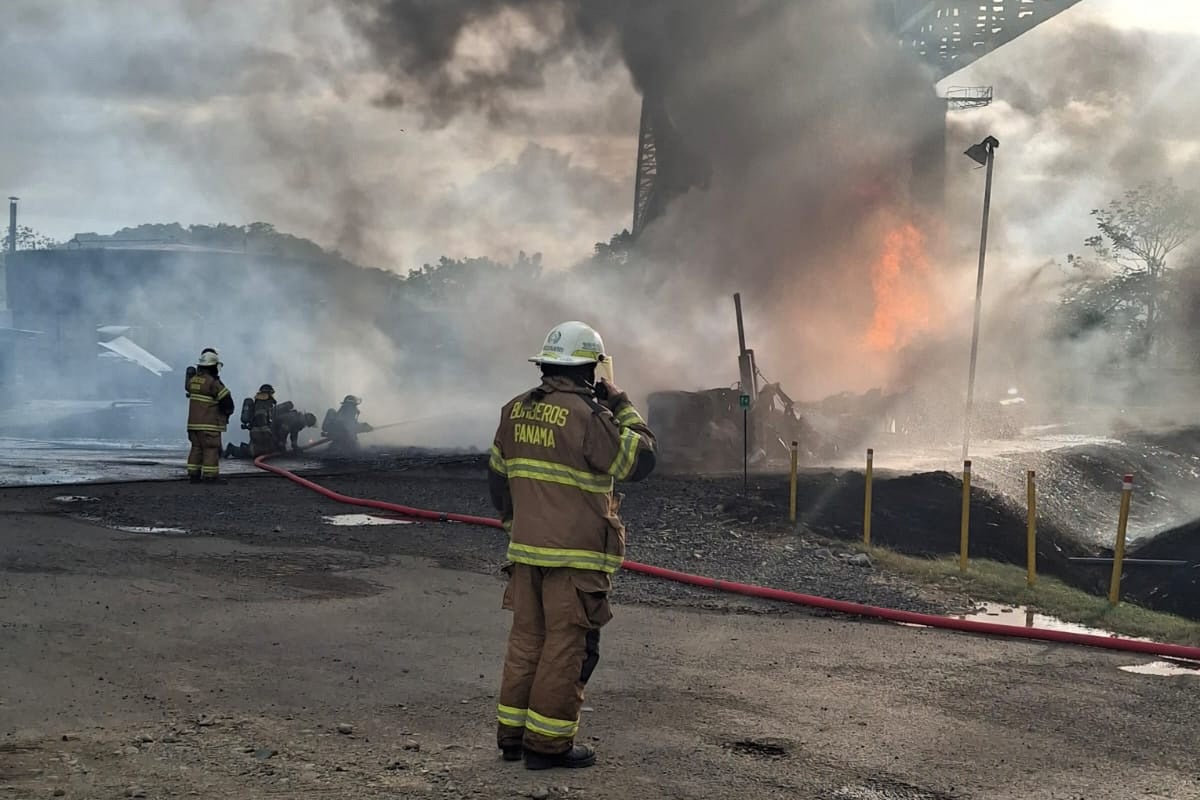
The explosion originated near the western approach, a concussive force so powerful it shattered windshields three hundred yards away. Authorities later confirmed that a maintenance vehicle carrying pressurized canisters was the catalyst. It wasn't a terrorist act or a coordinated strike. It was something far more terrifying in its banality: a mechanical failure, a spark, and the sudden, explosive release of energy.
One person died instantly.
We talk about "one fatality" in news reports as if it’s a statistic to be filed away. But that one person had a keyset in their pocket, a half-finished coffee in the cupholder, and someone waiting for them to walk through a front door that will now stay closed. Eight others were rushed to local hospitals, their bodies mapped with the jagged geometry of glass shards and thermal burns.
When the Arteries Clog
The Panama Canal is the pulse of global trade. When something happens to the Bridge of the Americas, that pulse skips a beat.
For the uninitiated, the bridge is the primary link for the Pan-American Highway. Imagine if someone cut the main power line to your house while you were in the middle of a dark hallway. That is what happened to the flow of goods and people. Within thirty minutes of the blast, the traffic tailbacks stretched for six miles.
But the real crisis wasn't just the asphalt. It was the water below.
Debris from the explosion—twisted rebar and chunks of blackened concrete—rained down into the mouth of the canal. The Panama Canal Authority (ACP) had to act with a speed that felt like a fever dream. If a single structural beam had compromised the shipping lane, the global supply chain would have felt the shockwaves from Shanghai to Rotterdam.
Shipping isn't a fast business. It is a game of inches and minutes. A four-hour delay for a Neo-Panamax vessel can cost a shipping line tens of thousands of dollars in fuel and port fees. Multiply that by the dozens of ships hovering in the Bay of Panama, and you start to see the invisible stakes. We aren't just talking about a bridge; we are talking about the nervous system of modern capitalism.
The Human Cost of Infrastructure
We often ignore the things that hold our world together until they break. We trust the bridges. We trust the tunnels. We trust that the industrial gases being transported next to our minivans are secure.
The investigation into the blast revealed a series of small, cascading failures. A valve that hadn't been checked. A driver who ignored a faint smell of gas because he was behind schedule. A midday sun that heated the canisters just enough to push the internal pressure toward the red line.
Safety is an illusion maintained by constant, exhausting vigilance. When that vigilance slips, the results are visceral.
Emergency responders who arrived on the scene spoke of a "war zone atmosphere." The smell was the worst part—a mixture of burnt rubber, scorched paint, and something metallic that stuck to the back of the throat. They worked under the shadow of the bridge's massive steel frame, unsure if the secondary structural supports had been compromised by the heat.
Consider the courage it takes to run toward a burning wreck on a bridge that might, for all you know, be seconds away from a catastrophic collapse into the water 200 feet below.
The Ripples in the Water
By nightfall, the fire was out, but the silence that followed was even heavier. The bridge was closed indefinitely. The "Bridge of the Americas" had become a bridge to nowhere.
For the residents of Arraiján and La Chorrera, the explosion transformed their lives into a logistical purgatory. These are the people who live on the west side of the canal but work in the city. Their three-hour round-trip commutes suddenly doubled. They had to rely on the Centennial Bridge, miles away, or the erratic ferry services that struggled to handle the surge.
The economic impact is easy to quantify in a spreadsheet. You can calculate the lost man-hours. You can estimate the cost of the structural repairs, which will likely run into the millions. You can track the delay in cargo.
What you cannot quantify is the fear.
Every person who drove across that bridge the following week did so with their windows rolled up and their hearts hammering against their ribs. They looked at every white van with suspicion. They gripped the steering wheel a little tighter as they reached the crest of the arch, looking down at the shimmering water and wondering if the steel beneath them was truly as solid as it looked.
The investigation will eventually produce a thick binder of reports. There will be recommendations for new safety protocols. There will be lawsuits and insurance settlements. The scorched section of the road will be repaved, the black soot scrubbed from the girders.
But the scar remains.
It is a reminder that our modern world is a miracle of fragile connections. We live our lives balanced on the work of engineers and the luck of the draw. We move through the world assuming the ground will hold, the bridge will stand, and the air will remain breathable. Usually, we are right.
But on a Tuesday in Panama, for one brief, terrifying moment, the world showed us exactly how thin that margin of safety really is. The bridge still stands, silhouetted against the Pacific sunset, but it looks different now. It looks like a survivor.
The ships continue to pass underneath, their massive hulls cutting through the water with an indifference that feels almost cruel. They have schedules to keep. The world needs its grain, its oil, its plastic trinkets. The canal doesn't stop for grief. It only pauses for the smoke to clear.