Military futurists are high on their own supply.
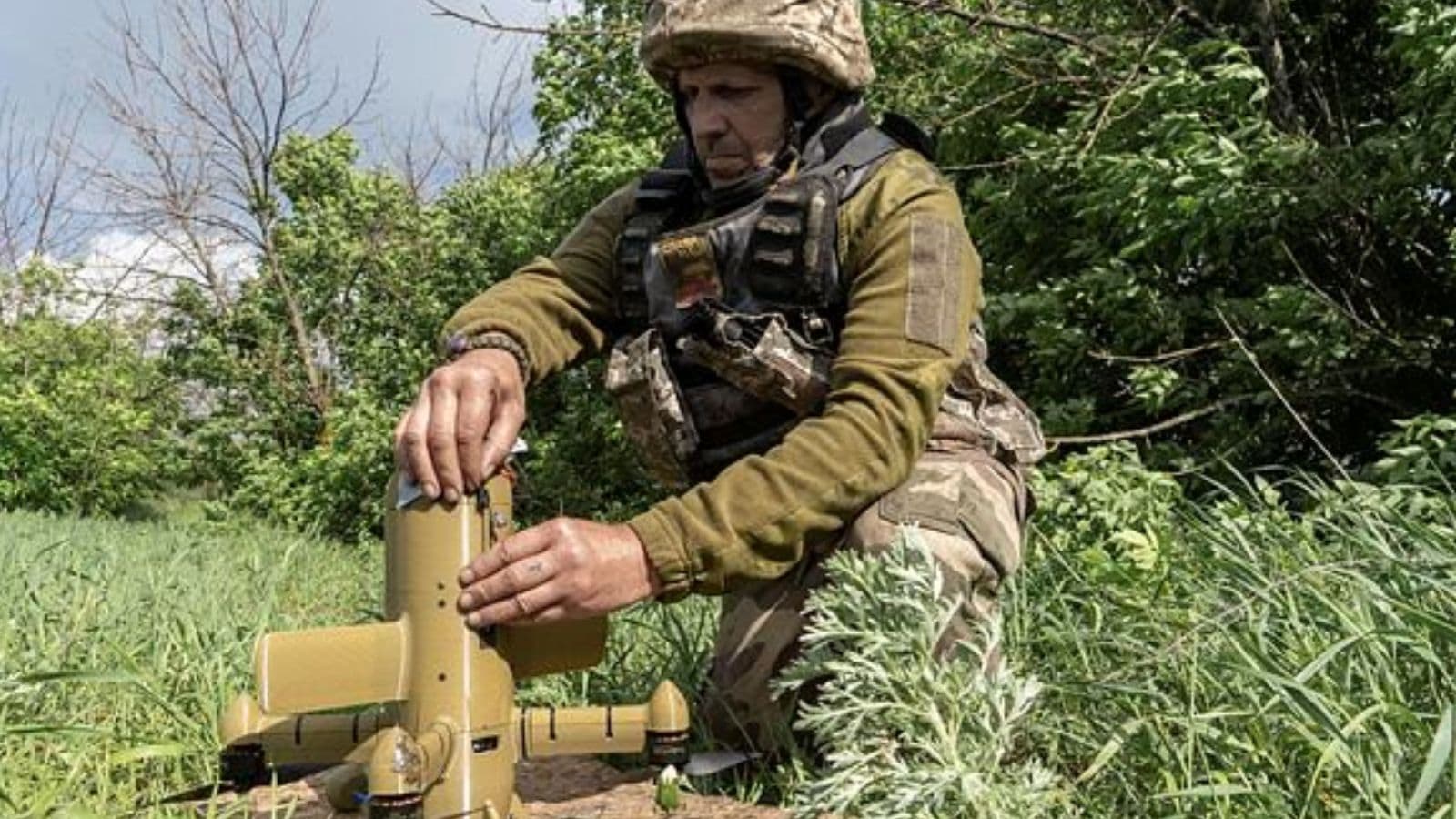
For the past three years, defense blogs, tech keynotes, and mainstream journalism have peddled a seductive fantasy: the automated, blood-carrying drone swooping into hot zones to save wounded soldiers. They look at Ukraine, see quadcopters dropping grenades or delivering small plasma packs, and extrapolate a near-future where autonomous systems replace the blood, sweat, and terror of battlefield medicine.
It is a neat, clean, sanitized vision of war. It is also dangerously wrong.
The lazy consensus states that because unmanned aerial vehicles (UAVs) have revolutionized precision strike and reconnaissance, they will naturally revolutionize casualty evacuation (CASEVAC) and prolonged casualty care. This assumption misunderstands the physics of flight, the biological reality of trauma, and the brutal economics of near-peer conflict.
Drones are not changing the face of battlefield medicine. They are creating a logistical bottleneck that will get soldiers killed.
The Payload Problem Physics Does Not Care About Hype
Let’s dismantle the primary myth: the drone as an ambulance.
The defense tech sector loves to showcase concept art of sleek, multi-rotor pods designed to fly a critically wounded infantryman out of the line of fire. They call it "autonomous medevac."
I have spent years analyzing logistics chains in contested environments. Here is the reality check: a standard human casualty, gear included, weighs between 200 and 250 pounds. To lift that weight vertically, fly it 50 kilometers against headwinds, and maintain enough battery or fuel reserves to survive evasive maneuvers requires a massive aircraft.
You are no longer talking about a small, cheap quadcopter that can hide in a tree line. You are talking about a vehicle with a thermal and acoustic signature roughly equivalent to a conventional helicopter.
Consider the fundamental lift equation:
$$L = \frac{1}{2} \rho v^2 A C_L$$
To generate enough lift ($L$) for a heavy payload at low speeds (such as during takeoff or landing in a tight zone), you need either massive velocity ($v$), a massive wing or rotor area ($A$), or a high coefficient of lift ($C_L$).
When you scale up a drone to carry a human body, you lose the primary advantages of the drone: low cost, low visibility, and expendability. You have built a slower, unpiloted, highly vulnerable helicopter. If a peer adversary owns the airspace with electronic warfare jamming and man-portable air-defense systems (MANPADS), a lumbering 300-pound payload drone is just a flying target. Except this time, the target contains a dying human being.
The Myth of the Flying Blood Bank
If the drone cannot carry the soldier, the tech evangelists argue, it can at least carry the medicine. The current narrative is obsessed with autonomous resupply—drones dropping whole blood, freeze-dried plasma, and advanced tourniquets directly to isolated fireteams.
This ignores the cold chain.
Whole blood is not water. It requires strict temperature regulation, typically between 1°C and 6°C. Deviate from this range, and you risk hemolysis—the destruction of red blood cells—or bacterial growth.
Imagine a scenario where an infantry unit requests an emergency blood resupply in a humid, 35°C jungle environment. A drone is launched with a payload of blood units. During flight, the drone encounters GPS jamming. It reroutes, extending its flight time by twenty minutes. It encounters small-arms fire, damaging the payload bay’s insulation. By the time it lands, the blood has cooked.
If the medic administers that compromised blood, they aren't saving the soldier; they are inducing a fatal hemolytic transfusion reaction.
To prevent this, you have to add ruggedized, active refrigeration units to the drone. Every ounce of refrigeration equipment strips away carrying capacity for the actual medical supplies. The math does not work. We are spending millions of dollars trying to force a fragile aerial platform to do the job that a ruggedized, armored ground vehicle or a well-concealed cache system does with ten times the reliability.
The Care Gap Drones Do Not Have Hands
Medicine is an interactive, dynamic process. The competitor articles love to gloss over what happens inside the drone during transit.
When a Black Hawk or a Merlin helicopter conducts a traditional MEDEVAC, the crew chief and the flight medic are not just passengers. They are actively fighting to keep the patient alive. They are managing airways, adjusting tourniquets that slip due to patient movement, administering medications, and performing needle decompressions for tension pneumothorax.
Trauma patients deteriorate rapidly. A vibration from a sudden banking maneuver can dislodge a blood clot, restarting a catastrophic internal bleed.
If a soldier is strapped into an uncrewed aerial pod, they are completely alone. No one is monitoring their vitals with human intuition. No one is clearing their airway if they vomit. A drone cannot perform a finger thoracostomy mid-flight.
An autonomous evacuation pod is not a hospital room; it is an airborne coffin.
Automated vs. Human Intervention in Transit
| Clinical Need | Traditional MEDEVAC (Human Crew) | Autonomous Drone Pod |
|---|---|---|
| Airway Management | Immediate suction, intubation, position adjustment. | None. Static airway devices only, prone to failure under vibration. |
| Hemorrhage Control | Real-time monitoring; tightening or adding secondary tourniquets. | None. If a dressing shifts, the patient bleeds out. |
| Tension Pneumothorax | Immediate needle decompression based on clinical signs. | Delayed. Requires complex sensor arrays and automated needles, risky in turbulent flight. |
| Psychological Comfort | Direct human reassurance, reducing shock-induced tachycardia. | Complete isolation in a dark, noisy, automated box. |
The Electronic Warfare Trap
The loudest voices pushing for drone-centric battlefield medicine assume the internet will always work. They operate under the delusion that a medic can just tap an iPad, order a resupply of morphic compounds, and watch a drone arrive twenty minutes later via a clean GPS coordinate.
This is a fantasy born from operating in uncontested environments against insurgencies without electronic warfare capabilities.
In a fight against a sophisticated military power, the electromagnetic spectrum is completely hostile. GPS is jammed. Satellite communications are degraded. Russian electronic warfare units in eastern Europe have shown the ability to suppress drone operations across entire sectors, forcing operators to switch frequencies constantly or lose aircraft by the dozen.
If your medical supply chain relies on autonomous drones finding their way to a specific grid coordinate, your supply chain will collapse on day one of a real conflict.
When a drone loses its data link, it typically defaults to one of two behaviors: it hovers in place until its battery dies, or it returns to its launch point. Neither of these outcomes helps the soldier who is bleeding to death in a trench. Relying on wireless, autonomous tech for life-saving logistics introduces a catastrophic single point of failure: a single enemy jammer can cut off an entire battalion’s medical supply line.
Look at the Real Data from Ukraine
To find the truth, stop reading defense contractor brochures and look at the actual data coming out of modern high-intensity conflicts.
In Ukraine, drones are ubiquitous. But ask the frontline stabilization points how they get their medical supplies or how they evacuate their wounded. They are not using drones. They are using old, beat-up, Soviet-era tracked vehicles, civilian SUVs caked in mud, and literal foot patrols.
Why? Because a rusted BMP-1 armored personnel carrier can drive through an electronic warfare umbrella, survive shell fragments from a 152mm artillery round, and carry six wounded men at once while a medic works on them in the back. A drone cannot do any of this.
The Ukrainian experience has proven that drones are incredible for spotting targets, correcting artillery fire, and launching kamikaze strikes. But for logistics and medicine, their utility is sharply limited to niche, low-weight scenarios where the enemy has zero line-of-sight or electronic coverage. Scaling that up to a doctrinal "solution" for battlefield medicine is a logistical hallucination.
The Cost Benefit Inversion
Every dollar spent trying to build an autonomous, flying, refrigerated blood-delivery drone is a dollar stolen from things that actually save lives on a statistical scale.
The primary killer on the battlefield remains preventable hemorrhage—extremity bleeding, junctional bleeding, and internal torso trauma. Soldiers don't die because a drone didn't fly to them; they die because their buddies ran out of tourniquets, or because the local stabilization point lacks basic surgical equipment and clean water.
We are prioritizing high-margin, flashy tech over low-tech, high-volume preparedness.
For the price of a single developmental autonomous cargo drone system, a military can procure tens of thousands of high-quality tourniquets, chest seals, and blood-warming devices. It can fund advanced tactical combat casualty care (TCCC) training for every single soldier in the field, ensuring that the initial care—the care that actually dictates survival rates—is flawless.
Stop Trying to Automate Compassion
The push for drone medicine is driven by a bureaucratic desire to remove risk from the ledger. If we send a machine to do a dangerous casualty evacuation, we don't risk a helicopter crew.
But war is inherently risky. By attempting to insulate our medical system from the reality of the battlefield via automation, we simply shift the risk onto the wounded soldier. We trade the lives of the infantry for a cleaner, more politically palatable casualty report that blames a "technical malfunction" rather than a shot-down crew.
We must reject the tech-utopian consensus. Drones have their place in modern war, but that place is killing the enemy and mapping their lines—not playing doctor in mid-air.
Turn off the drone monitors. Buy more armored ambulances. Train more medics. Pack more gauze. The human body is fragile, war is chaotic, and no amount of silicon or rotors will ever change the fact that saving a life requires blood, dirt, and human hands.