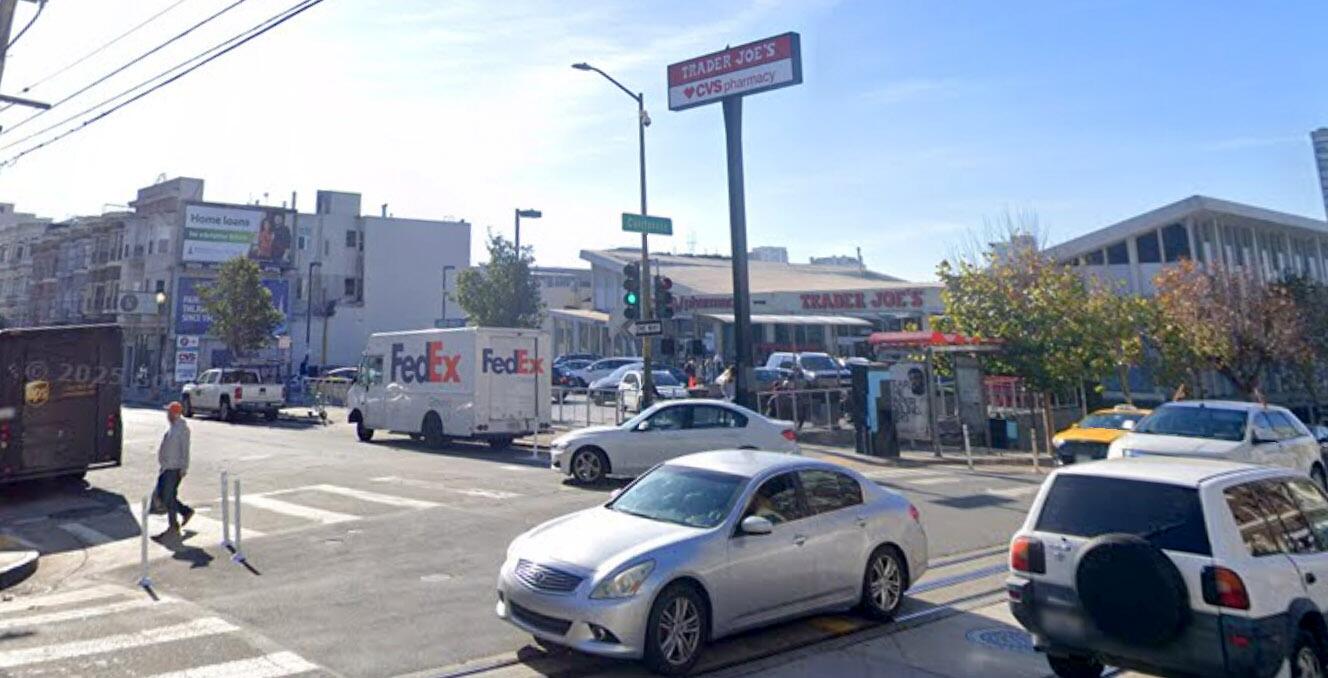
Standard crime reporting has a predictable, lazy rhythm. A suspect flees. A crash occurs. Tragic injuries or fatalities follow. The media predictably frames the event through a narrow lens of personal criminality versus immediate police response. This surface-level framing completely misses the structural mechanics of urban police pursuits. The recent incident in San Francisco—where a theft suspect died and two officers were injured after a collision involving a Lexus SUV—is being treated as an isolated tragedy of a desperate criminal. That interpretation is completely wrong.
The uncomfortable truth is that modern police pursuit policies themselves often create the exact lethality they are supposed to prevent. When an agency engages in high-speed chases through dense urban corridors for property crimes, the pursuit itself becomes a greater threat to public safety than the initial offense.
The Mathematical Failure of Urgent Pursuits
Look at the mechanics of an urban chase. A standard police cruiser or a fleeing suspect's vehicle traveling at 60 miles per hour moves at 88 feet per second. In a dense environment like San Francisco, human reaction time averaged against variables like blind intersections, pedestrian crossings, and vehicle physics means that a crash is not a risk; it is a statistical certainty.
The traditional defense of aggressive pursuits rests on a flawed premise: that immediate apprehension deters future crime. Data from the National Institute of Justice suggests otherwise. High-speed chases rarely deter the desperate or the impaired in the heat of the moment. Instead, they escalate a low-level property crime into a high-stakes kinetic event.
- The Velocity Escalation: A suspect fleeing a property crime scene drives at a survival pace. The moment emergency lights activate, adrenaline spikes, cognitive bandwidth narrows, and speeds double.
- The Collateral Equation: For every suspect apprehended via high-speed chase, data consistently shows a disproportionate ratio of innocent bystanders and officers injured or killed.
- The Cost-Benefit Deficit: Damaged infrastructure, destroyed city property, worker's compensation for injured officers, and massive civil liability payouts completely dwarf the monetary value of a stolen vehicle or retail theft.
We are trading lives and millions of dollars in liability to immediately recover depreciating consumer goods. It is a losing trade every single time.
Dismantling the Blue Wall of Consensus
"If we don't chase them, the criminals win." This is the emotional argument used by police unions and tough-on-crime commentators to defend outdated tactics. It is a false dichotomy. Choosing not to engage in a dangerous physical pursuit through a crowded city does not mean letting a suspect go free. It means utilizing superior tactics.
In my years analyzing municipal risk and law enforcement deployment strategies, I have watched cities bankrupt themselves defending actions that should have been handled with basic technology. We live in an era of ubiquitous license plate readers, real-time GPS tracking darts, air support, and interconnected cellular networks. Chasing a multi-ton metal box with another multi-ton metal box at high speeds through a residential neighborhood is the tactical equivalent of using a sledgehammer to fix a watch.
When two officers are injured and a suspect ends up dead over a theft investigation, the system has failed. The officers are victims of a policy that demands they put their bodies on the line for a metric—immediate apprehension—that does not actually make the city safer.
The Flawed Questions Everyone Is Asking
People looking at the San Francisco incident constantly ask the wrong questions. The public discourse centers on: Why did the suspect drive so recklessly? or Could the officers have maneuvered better?
These questions are irrelevant. The suspect drove recklessly because they were a criminal trying to evade capture. You cannot control a criminal's behavior. You can, however, control the department's tactical response. The real question must be: Why was a pursuit initiated or sustained in an environment where the risk of catastrophic failure was so high?
If an officer fires a weapon into a crowd to stop a shoplifter, the public would be outraged because the risk to bystanders clearly outweighs the necessity of the arrest. Yet, launching a high-speed vehicular pursuit through city streets carries a strikingly similar risk profile, but it is routinely excused as an unavoidable consequence of police work. It isn't unavoidable. It is a choice.
The Cost of the Contrarian Reality
Adopting a strict non-pursuit policy for non-violent offenses has a distinct downside. It requires stomach. It means accepting the optics of a suspect driving away from a crime scene in the short term. It means weathering the inevitable political grandstanding from critics who claim the city is soft on crime.
But the upside is measured in human lives, intact police fleets, and millions of dollars saved in legal settlements. Departments that have severely restricted their pursuit policies to violent felonies see an immediate drop in officer injuries and bystander fatalities. They don't lose the ability to catch criminals; they simply catch them later, safely, using investigative work rather than adrenaline-fueled adrenaline chases.
Stop measuring police efficacy by the dramatic end of a high-speed chase. Start measuring it by the cold, hard metrics of risk mitigation and community survival. The current model is broken, dangerous, and unsustainable.
Stop chasing. Start tracking. Clean up the mess before the next intersection becomes a graveyard.