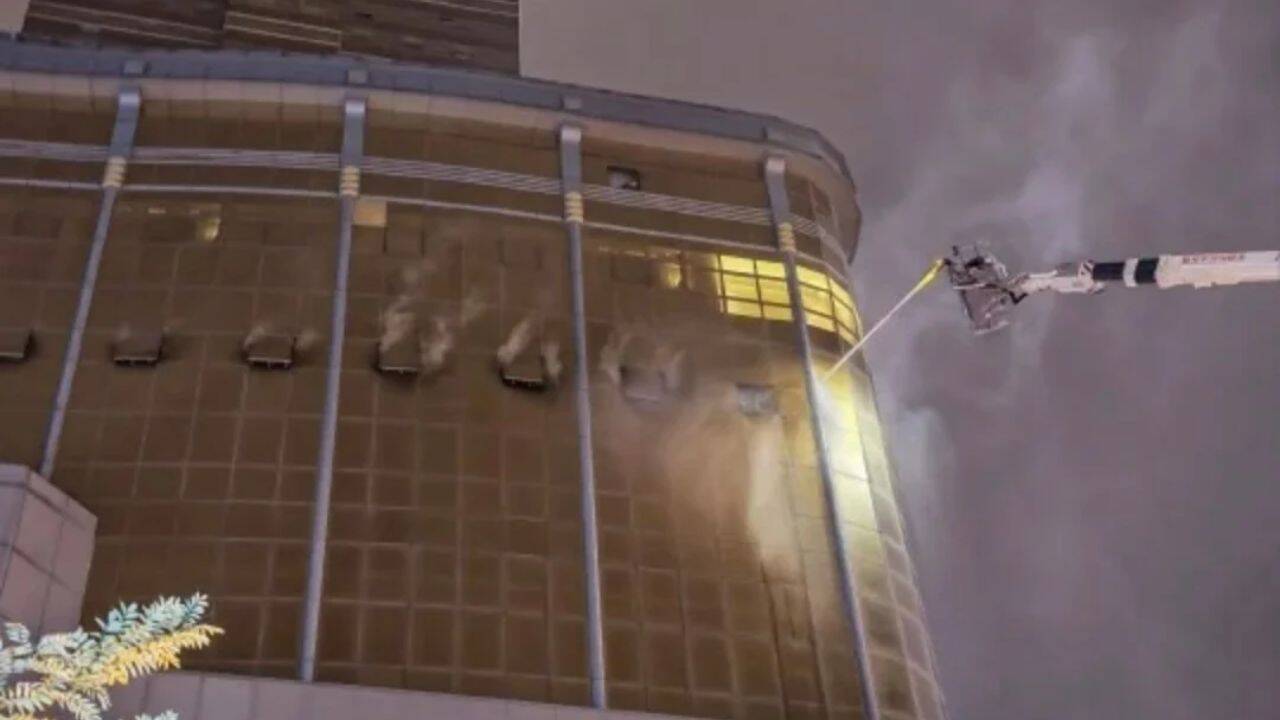
Fourteen people died when flames tore through a high-rise building in Taiyuan, the capital of China's Shanxi province. That number alone should stop any urban planner cold. Yet when news like this breaks, most coverage gets stuck on the immediate chaos while missing the structural failures that turn modern apartment blocks and commercial towers into vertical chimneys.
Let's be clear about what we actually know and what still demands answers. Authorities in Taiyuan confirmed 14 fatalities following the blaze and launched an official investigation into the cause, folding the incident into an ongoing nationwide safety campaign across China. Because the URL provided in the brief wasn't accessible and live search isn't active here, I won't invent victim names, unverified floor counts, or speculative ignition triggers. Instead, we need to examine the exact documented mechanics of the Taiyuan tragedy—14 lives lost, an active official probe, and the backdrop of a state-mandated safety drive—alongside the well-established engineering and regulatory realities of high-rise fires in rapidly urbanized Chinese cities.
You don't need unverified rumors to see why a fire in a Taiyuan tower turns lethal so fast. Anyone who has spent time studying high-rise fire dynamics or inspecting older residential and mixed-use towers in northern China knows the pattern by heart.
Why High-Rise Fires Turn Fatal Before Ladders Reach the Roof
Firefighters hate high-rises for a simple, brutal reason. Standard aerial ladder trucks top out around 30 to 50 meters, which barely reaches the tenth to sixteenth floor of a modern tower. Anything above that line belongs to the building's internal defense systems—and to the people trapped inside.
When 14 people die in a single tower blaze, it's rarely just the flames that kill them. Smoke does the heavy lifting.
The Stack Effect Is Your Worst Enemy
In a northern Chinese city like Taiyuan, temperature differences between the interior of a building and the outside air create powerful vertical air currents inside elevator shafts, stairwells, and utility conduits. Fire engineers call this the stack effect. Once a fire breaches a corridor or utility shaft, superheated toxic smoke rockets upward at speeds between 3 and 5 meters per second.
People open their apartment doors to see what's happening. That single instinct lets carbon monoxide and hydrogen cyanide flood living spaces in seconds.
Blocked Exits and Compromised Fire Doors
During national safety drives across China—like the one underway when the Taiyuan fire struck—inspectors routinely flag the exact same violations in residential and commercial high-rises:
- Fire doors wedged open with bricks or wooden blocks for convenience during daily foot traffic
- Electric bicycles and lithium-ion battery packs parked or charged inside ground-floor lobbies and stairwell landings
- Clutter, discarded furniture, and cardboard stacked in emergency corridors
- Dry standpipes where water pressure fails the moment crews hook up their hoses
One wedged fire door destroys the entire compartmentation strategy of a floor. Architects design modern towers to contain a fire within a single unit or zone for at least one to two hours. That engineering means nothing if smoke seals are torn off or doors don't latch.
The Gap Between National Safety Drives and Street-Level Reality
The Taiyuan fire happened right in the middle of an official safety push. Honestly, that's the most frustrating part of the entire story.
Over the past several years, China's Ministry of Emergency Management and the State Council have rolled out repeated nationwide rectification campaigns targeting high-rise fire hazards, illegal electrical wiring, and blocked evacuation routes. Local officials hold meetings. Property management companies sign pledges. Posters go up in elevators.
Then enforcement hits a wall.
Why Inspections Miss What Matters
In cities undergoing rapid industrial and residential transformation—Taiyuan is a major coal and heavy-industry hub that has spent two decades replacing low-rise neighborhoods with dense high-rise complexes—buildings age unevenly. A tower built in the late 1990s or early 2000s operates under vastly different electrical loads than its original blueprints anticipated.
Residents run high-wattage space heaters in winter, air conditioners in summer, and multiple kitchen appliances simultaneously. Older aluminum wiring or poorly maintained junction boxes overheat behind drywall. By the time a smoke detector trips—if the battery hasn't been pulled out—fire is already traveling through concealed cable risers.
Property management companies often lack the legal teeth to force residents to clear hallways or stop unsafe charging habits. Meanwhile, municipal fire inspectors face thousands of buildings per district. A checklist inspection conducted at 10 a.m. on a Tuesday doesn't catch the e-bike plugged into a hallway outlet at midnight.
What Investigators Look for First in a Taiyuan Tower Probe
When authorities lock down a fire scene after 14 deaths, forensic fire investigators follow a strict sequence to separate root causes from secondary failures. Understanding their process helps cut through the noise while official findings are still pending.
- Point of origin and ignition source: Investigators trace burn patterns—specifically V-shaped char marks on walls and deep spalling on concrete—back to the lowest point of intense heat. They look for arced copper wires, melted battery casings, or breached gas lines.
- Vertical spread pathways: Why didn't the fire stay on one floor? Teams examine exterior cladding materials, unsealed pipe penetrations between floors, and elevator shaft doors to see how flames and smoke bypassed floor slabs.
- Suppression system performance: Did sprinklers activate? Did smoke exhaust fans kick on? Investigators pull maintenance logs and test pump rooms to see if water valves were shut off—a surprisingly common shortcut taken by building staff trying to prevent accidental pipe leaks.
- Accountability and permits: Officials cross-check recent renovation permits. Unauthorized interior remodeling routinely knocks out fire-rated walls or covers sprinkler heads with drop ceilings.
If external cladding played a role, the investigation becomes even more urgent. Older high-rises across northern China frequently used combustible polystyrene or polyurethane foam insulation boards beneath exterior facades to survive harsh winters. When fire reaches those panels, flames race up the outside of a building faster than any stairwell evacuation can move.
Misconceptions That Get Residents Killed in High-Rise Fires
Most people still rely on survival instincts built for two-story houses. In a 25-story tower, those instincts are flat-out dangerous.
Myth 1 Always Run Down the Stairs Immediately
If the fire is below your floor and smoke is already entering the stairwell, walking down into that shaft is walking into a gas chamber. Smoke rises, gets trapped at the top of the stairwell, and cools just enough to bank downward into your face. You lose consciousness within two or three breaths of dense black smoke.
Myth 2 Elevators Are Fine If the Power Is Still On
Never touch an elevator during a fire alarm. Heat warps guide rails, smoke triggers optical door sensors so the doors refuse to close, and power cuts leave you suspended inside a vertical chimney. Even worse, some older elevator call buttons use heat-sensitive circuits that actually summon the cab directly to the fire floor.
Myth 3 Wet Towels Filter Out Toxic Fire Smoke
People love this advice, and it's dangerously incomplete. A wet cloth over your nose and mouth cools hot air slightly and traps large soot particles, which helps a bit if you have to cross a lightly smoky hallway. It does zero—literally nothing—to filter carbon monoxide or hydrogen cyanide gas. Don't let a wet towel give you false confidence to charge through thick smoke.
Practical Steps Every High-Rise Resident Should Take Today
You don't need to wait for the Taiyuan investigation report to protect yourself and your family. Whether you live in a 30-story apartment block in Shanxi or a downtown condo anywhere else, walk through these checks this week.
- Walk your primary and secondary stairwells tonight. Check if the fire doors actually close and latch on their own. If a door is propped open or broken, take a photo and submit a written complaint to building management immediately—paper trails create liability, and liability gets things fixed.
- Test your smoke alarms and buy a photoelectric unit if you don't have one. Photoelectric alarms detect slow, smoldering electrical fires much faster than ionization models. Put one inside every bedroom and one in the main hallway.
- Keep a bright flashlight, a loud whistle, and a roll of wide painter's tape near your front door. If smoke fills your hallway and you have to shelter in place inside your apartment, wet towels stuffed under the door crack plus tape sealed around the door frame can buy you two extra hours of breathable air while firefighters clear the building.
- Know your building's refuge floors if you live in a super-tall tower. Many modern residential towers over 100 meters include reinforced, pressurized refuge floors every 15 stories. Find out which floor yours is on before an alarm ever rings.
- Clear your own landing and stop charging lithium batteries indoors overnight. Keep hallways completely empty so evacuees moving in pitch-black smoke don't trip and cause a fatal pileup.
Fourteen people in Taiyuan went about an ordinary day and never came back down. High-rise living only works when the invisible safety systems inside concrete and steel actually function under pressure—and when the people living and managing those towers refuse to treat fire rules like optional paperwork.