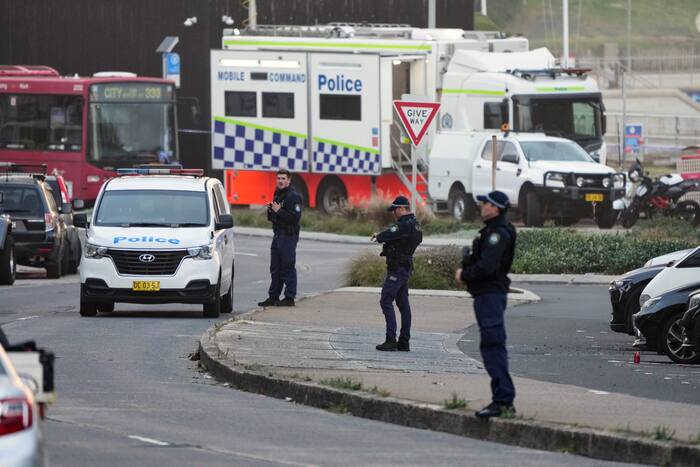
Surviving a genocide as a child only to be gunned down during a religious holiday nearly eighty years later is a cruel irony that breaks your heart. Yet that's the exact reality behind the death of a 90-year-old Holocaust survivor who passed away almost a year after being shot in the Sydney Hanukkah attack.
It's a tragedy that demands more than a passing headline.
When news broke that this elderly survivor had finally succumbed to the long-term toll of the violence, the public reaction mixed grief with a quiet, burning anger. You don't live through the darkest chapter of modern human history just to become a casualty of modern-day antisemitism on a warm Australian evening. People searching for details on this story usually want to know two things: how someone can survive for nearly twelve months after such a severe trauma before passing, and what this means for the broader conversation around hate crimes and community safety in Australia.
Let's be honest about what happened here. The immediate news cycle loves a clean narrative—an attack happens, casualties are counted within twenty-four hours, and the world moves on to the next crisis by Tuesday. Real life doesn't work on a twenty-four-hour news clock. For a 90-year-old body, a gunshot wound isn't a single event you simply recover from and forget. It's a permanent destabilization.
Why Delayed Deaths After Mass Shootings Happen More Often Than You Think
Medical examiners and trauma surgeons deal with this reality constantly, even if the general public rarely sees the follow-up reports. When an older adult suffers ballistic trauma, the initial surgery is only the opening round of a grueling fight.
At ninety years old, physiological reserves are thin. Even if emergency responders save a patient's life on the night of the shooting, the cascade of secondary complications begins almost immediately. Bone density is lower, immune responses are slower, and the cardiovascular system has to work overtime just to heal damaged tissue.
Consider what a protracted recovery actually looks like for a nonagenarian gunshot victim:
- Chronic infection risks from prolonged hospital stays, surgical hardware, or compromised mobility that leads to pneumonia or sepsis months down the line.
- Severe muscle wasting caused by weeks or months of bed rest, which permanently alters balance, swallowing mechanics, and respiratory strength.
- Cardiovascular strain where the ongoing inflammatory response and pain medications quietly tax an aging heart until it simply gives out.
- Psychological trauma that triggers acute stress responses, elevating cortisol levels and disrupting sleep cycles needed for physical repair.
In criminal law across many jurisdictions, including Australia, prosecutors often examine the chain of causation when a victim dies months after an assault. If medical evidence shows the shooting directly triggered the decline that led to death, a charge of attempted murder or grievous bodily harm can legally escalate to homicide. That legal reality underscores a grim truth. The shooter didn't just injure an elderly bystander during Hanukkah; they stole the final chapter of a life that had already beaten impossible odds.
The Weight of Surviving Twice
You can't separate the medical facts from the staggering historical weight of who this victim was. Being a Holocaust survivor in your nineties means you were a child or young teenager during World War II. You already know what it feels like when society decides your existence is a problem to be solved with violence.
Many survivors who relocated to Australia after 1945 chose cities like Sydney and Melbourne specifically because they offered distance, stability, and the promise of quiet normalcy. Organizations like the Sydney Jewish Museum have spent decades documenting how thousands of European refugees rebuilt their lives from scratch on Australian soil, raising families and contributing to civic life under the assumption that the worst was permanently behind them.
Think about the psychological betrayal of being targeted at a Hanukkah gathering. Hanukkah isn't even a somber fast day; it's a festival centered on resilience, light, and the survival of Jewish identity against forced erasure. Getting shot while celebrating that exact tradition turns a symbol of survival into a site of trauma.
Honestly, it's hard not to feel frustrated by how sanitized public commentary becomes after these events. Politicians issue standard statements condemning hate. Community leaders call for unity. Meanwhile, families are left managing feeding tubes, rehabilitation schedules, and the slow, agonizing decline of a grandparent who survived Nazi Europe only to be struck down in a peaceful democracy.
Antisemitism in Australia Isn't an Imported Problem
A common mistake people make when reading about attacks on Jewish events in Australia is assuming this is a brand-new phenomenon imported from overseas conflicts. That's a convenient myth, and it's wrong.
Data tracked by the Executive Council of Australian Jewry (ECAJ) has consistently documented sharp spikes in antisemitic incidents—ranging from verbal harassment and vandalism to physical assaults—well before recent international flare-ups dominated cable news. Security guard deployments outside synagogues, Jewish schools, and community centers in Sydney have been standard operating procedure for years.
Walk past almost any major Jewish institution in Sydney's eastern suburbs or north shore during a holiday, and you'll notice the infrastructure of vigilance immediately. High perimeter fencing, controlled access gates, and private security patrols aren't there for show. They exist because threat assessments by local law enforcement and community security groups have flagged persistent risks for decades.
When a shooting breaks through that protective perimeter—or targets an event where security wasn't tight enough—it exposes the fragility of relying solely on defensive measures. You can't harden every street corner, every public park, and every family gathering without turning community life into a fortress.
What Most Coverage Misses About Elderly Crime Victims
Mainstream coverage of violent crime usually centers on the perpetrator's motive or the immediate police response. Almost nobody sticks around eleven months later to examine how violent trauma dismantles elder care.
When a 90-year-old is shot, the family structure around them undergoes an overnight transformation. Adult children—many of whom are in their sixties and approaching retirement themselves—suddenly become full-time medical advocates and caregivers.
Here's what actually happens behind closed doors during that long year:
- Rehabilitation goals shift dramatically. For a 25-year-old shooting victim, physical therapy aims to restore running, working, and full independence. For a 90-year-old, the goal is often just sitting upright without pain or avoiding bedsores.
- Cognitive decline accelerates rapidly. Hospital delirium is well-documented in geriatric medicine. Anesthesia, unfamiliar environments, and heavy painkillers can trigger permanent cognitive drops in seniors who were sharp and independent prior to the injury.
- The financial and emotional toll compounds quietly. Public victim compensation schemes rarely cover the full indirect costs of around-the-clock care, home modifications, and lost wages for family members managing medical crises.
By the time the death notice is published nearly a year later, the public memory of the shooting has faded. Yet for the family, the funeral isn't the beginning of grief—it's the end of a brutal, twelve-month siege.
How Communities and Readers Can Respond Meaningfully
Reading about an elderly Holocaust survivor dying from gunshot wounds shouldn't leave you feeling helpless or cynical. Grief without action just turns into numbness. If you want to honor the reality of what happened rather than just scrolling past another tragic headline, focus on concrete steps that actually protect vulnerable communities and preserve historical truth.
Support local institutions that keep survivor testimonies alive. Museums and educational trusts rely heavily on public engagement and funding to ensure firsthand accounts of the Holocaust aren't reduced to abstract footnotes as the final generation of survivors passes away. Visit the Australian Human Rights Commission resources on combating racial and religious vilification to understand how hate crime laws operate locally and where enforcement gaps still exist.
Pay attention to local reporting on hate crime prosecutions, not just the breaking news alerts on the day an attack occurs. Accountability in the court system depends on sustained public scrutiny long after television cameras leave the scene. Check in on elderly neighbors and local community centers, push local representatives for transparent reporting on extremist threats, and refuse to treat delayed fatalities from violent hate crimes as anything less than what they are.