The room smells of stale coffee and hot copper. Outside, a grey London drizzle streaks the windows of the Ministry of Defence, but inside, the air is perfectly conditioned, perfectly still. On the wall, a high-definition monitor displays a pixelated stretch of desert thousands of miles away.
A cursor hovers over a white truck.
For the last two decades, this room has relied on a specific human reflex: the hesitation. It is that micro-second of sweat and heartbeat where a drone pilot, sitting in a comfortable chair in the home counties, looks at a screen and decides whether to press a button that will end a life. That hesitation is messy. It causes ulcers, sleeplessness, and post-traumatic stress. But it is also the final, fragile thread connecting state-sponsored violence to human conscience.
Now, Britain’s military planners are quietly considering cutting that thread.
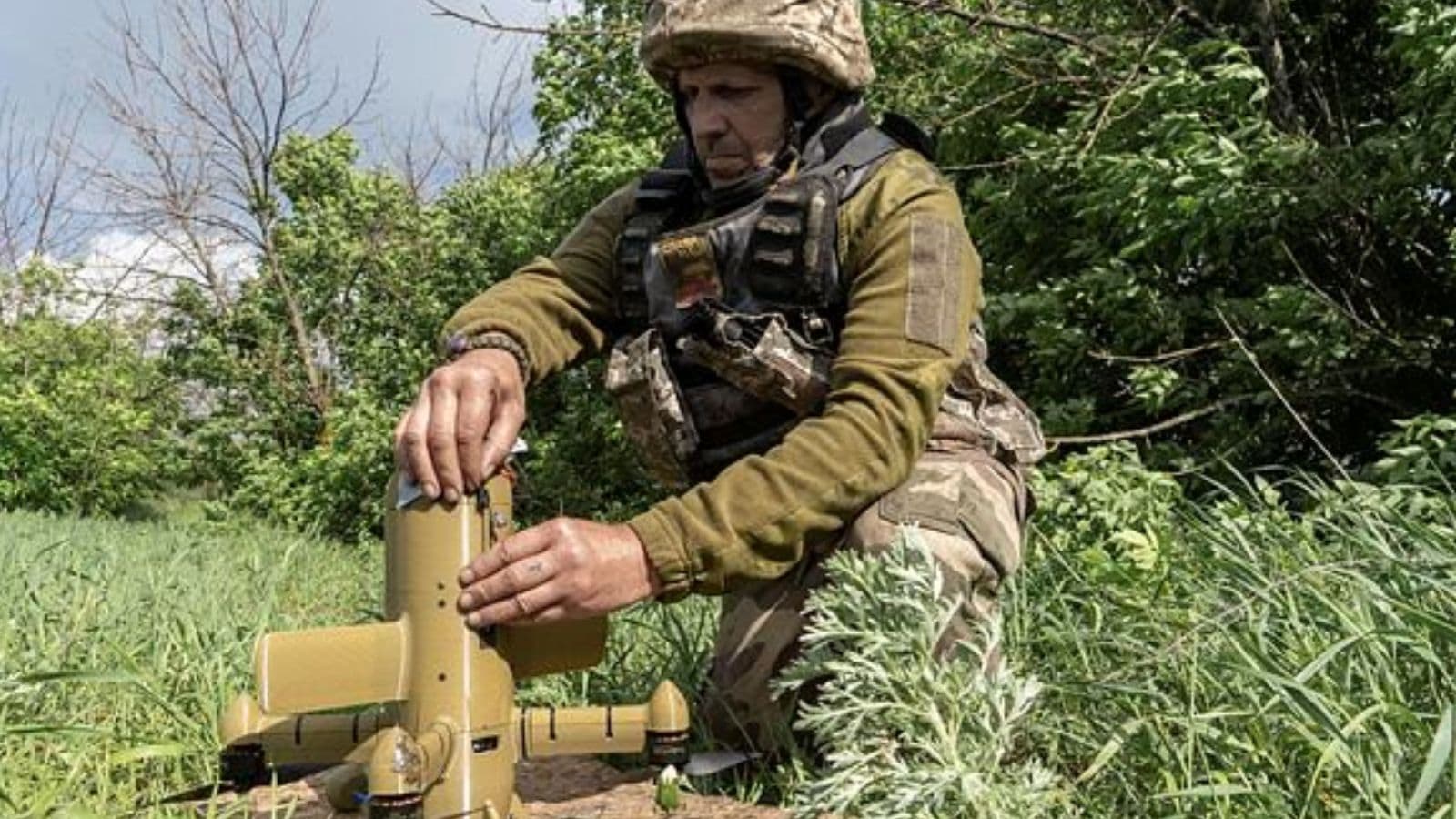
The UK military is exploring a profound shift in its operational doctrine, weighing the transition from weapons that require human approval to systems that can identify, target, and eliminate human beings entirely on their own. It is a transition spoken of in the muted, sanitized language of white papers and strategic reviews. They call it "autonomous targeting." They talk about "keeping pace with peer adversaries."
But strip away the bureaucratic paint, and the reality is stark. We are talking about the cold calculations of software replacing the heavy, agonizing burden of human judgment.
The Algorithm in the Mud
To understand why this is happening, we have to leave the dry briefings of Whitehall and look at the brutal mathematics of modern conflict.
Imagine a hypothetical scenario. A British infantry squad is pinned down in a crumbling urban ruin. The air is thick with plaster dust and the deafening crack of incoming fire. Mortar shells are landing with terrifying predictability. In this moment, the squad leader cannot wait for a satellite link to beam imagery back to a command center in England. They cannot wait for a legal officer to review the rules of engagement while bullets are chewing through the brickwork above their heads.
Seconds mean survival.
In this frantic context, a swarm of miniature drones is released. They buzz through the shattered windows like mechanical hornets. They don’t just see the environment; they parse it. They map the geometry of the rooms, calculate the trajectories of the incoming fire, and identify the opposing combatants hiding behind a concrete barricade.
Under the current rules, the drone must send a grainy image back to a human operator, who must then say the word: "Fire."
But what if the radio jamming is too intense? What if the connection drops? What if the human operator takes four seconds too long to look at the screen?
The argument from the military establishment is simple and, on its surface, deeply persuasive. Machine intelligence processes data at the speed of light. Humans process data at the speed of biology. In a high-tech war against a near-peer adversary—nations equipped with their own advanced electronic warfare suites—the side that waits for a human to say "yes" is the side that loses. Speed becomes the ultimate armor.
The Myth of the Perfect Code
The temptation to trust the machine is rooted in our own exhaustion. Humans are notoriously flawed. We get tired. We get angry. We suffer from confirmation bias, mistaking a farming tool for a rifle when the adrenaline is pumping.
The promise of the autonomous weapon is the promise of the dispassionate observer. An algorithm does not feel panic. It does not seek revenge. It executes its code with flawless, terrifying consistency. Military theorists suggest that an AI could actually be more humane, strictly adhering to international humanitarian law without the clouding influence of fear.
But this argument relies on a dangerous fallacy: the belief that code can understand the nuance of human behavior.
Consider a civilian walking through a conflict zone. He is carrying a long, cylindrical object. To an AI trained on thousands of hours of satellite footage, the geometry of that object matches a rocket-propelled grenade launcher with 94% probability. The machine does not see the context. It does not know that the local water infrastructure has collapsed, and this man is simply carrying a piece of scrap PVC pipe to fix his family’s well.
A human operator, looking at the same image, might notice something else. They might see the way the man walks—not with the aggressive, alert posture of an insurgent, but with the weary, slumped shoulders of a father trying to survive the day. That intuitive leap, that flash of empathy or doubt, is something that cannot be programmed into a neural network.
When we automate the kill decision, we replace human error with systemic error. A human mistake kills a family. An algorithmic glitch, deployed across a fleet of thousands of autonomous systems, can create a catastrophe before a programmer can even find the bug.
The Weight of the Invisible Scar
There is an eerie silence that follows this debate. For years, I have spoken with veterans who operated remote-controlled systems. The public often assumes these operators are detached, playing a video game from the safety of a base. The truth is far darker. The proximity afforded by high-powered optics means these operators see the faces of their targets. They see the aftermath. They carry those ghosts home to their suburban lives.
The push for autonomy is, in part, an attempt to cure this psychological trauma by outsourcing it. If the machine makes the choice, the soldier’s hands remain clean.
But this is a moral illusion. If no individual soldier is responsible for a strike, then the responsibility evaporates into the ether. It belongs to the software engineer who wrote the targeting loop three years prior. It belongs to the procurement officer who signed the contract. It belongs to a corporation. When everyone is responsible, no one is.
The UK military’s exploration of these capabilities is not happening in a vacuum. It is driven by fear—the very real, justified fear that adversaries in Moscow or Beijing will not hesitate to deploy fully autonomous slaughterbots. It is the classic security dilemma. If we don’t build the autonomous hunter-killer, we leave ourselves vulnerable to the ones built by our enemies.
Yet, by stepping across this threshold, we change the nature of what we are defending.
The Final Horizon
The transition from human-in-the-loop to human-on-the-loop—and finally, to human-out-of-the-loop—is subtle. It happens in increments. First, it is an automated defensive system on a warship, shooting down incoming missiles because no human could react fast enough. Everyone agrees that is acceptable. Then, it is an autonomous drone authorized to strike radar installations. Again, it seems reasonable; it is just targeting hardware.
Then, the definition of a target shifts from a radar dish to a person.
We are standing on the edge of a world where life and death are reduced to a series of logical expressions. If X condition is met, execute Y action. The terrifying thing about this future is not that the machines will fail, but that they will work exactly as intended. They will kill efficiently, quietly, and relentlessly, untroubled by doubt, remorse, or the heavy, agonizing pause that makes us human.
The rain continues to beat against the windows of Whitehall. The monitor flickers. The cursor remains still, for now, waiting for a human hand to move it. But the gears are turning, and the silence in the room is growing heavier, filled with the phantom weight of a choice we may soon no longer be allowed to make.