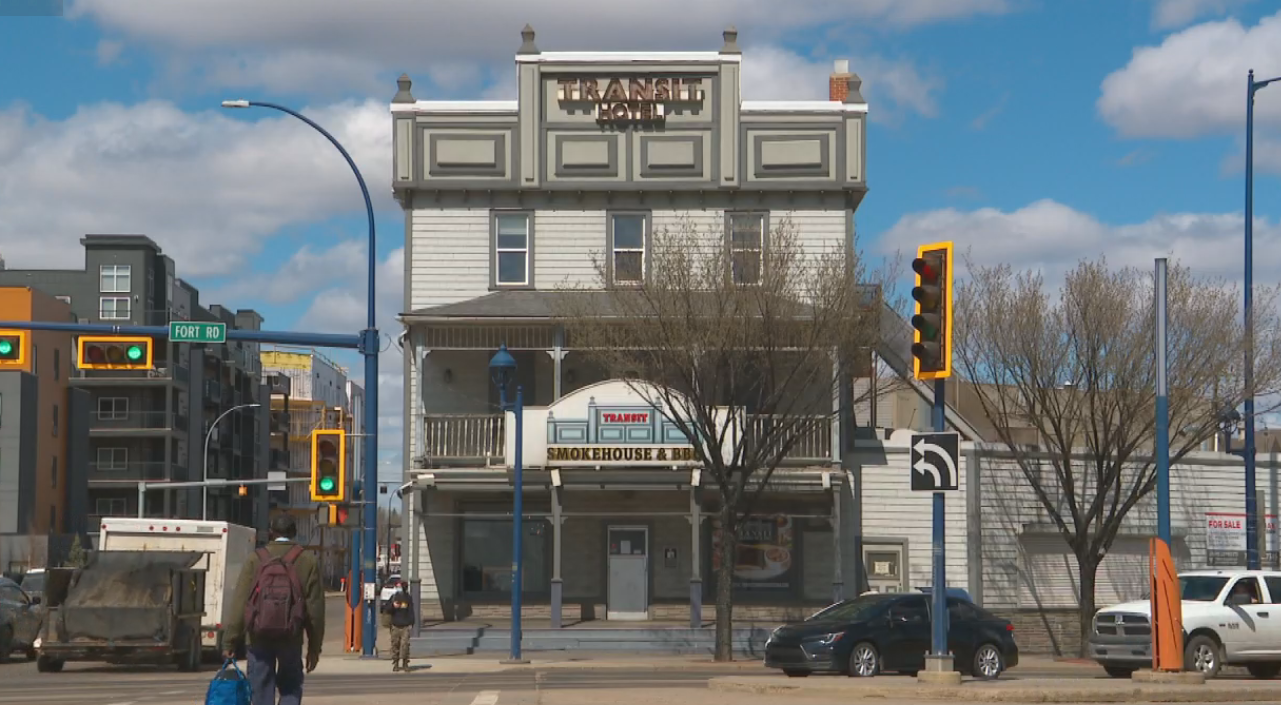
The exodus of Transit Smokehouse & BBQ from the historic Transit Hotel on Fort Road is more than a simple change of address. It is a loud signal that the math of operating a high-traffic business in Edmonton’s neglected northeast corridors no longer adds up. For decades, the Transit Hotel stood as a symbol of the city's blue-collar backbone. Now, the departure of its anchor tenant for the more affluent, predictable pastures of the southside marks a definitive shift in the city’s economic geography.
When a destination restaurant leaves a heritage site, it isn't just taking its brisket and beer; it is stripping away the last vestige of foot traffic from a revitalization zone that has struggled to find its footing for twenty years. The move to a new location near 50th Avenue and 106th Street represents a tactical retreat toward stability. Meanwhile, you can find related developments here: Why Global Trade Imbalances Are Becoming a Problem Again.
The Heritage Trap
Preserving a building that dates back to 1908 sounds noble in a city council meeting. In reality, it is an operational nightmare for a private business owner. The Transit Hotel is a massive, sprawling brick structure that requires constant, expensive maintenance. While the building’s history as a hub for the local meatpacking industry gives it character, that character comes with a steep price tag in the form of utility bills, specialized repairs, and insurance premiums that would make a suburban franchise owner weep.
Small business owners often get lured into these "historic" spaces by the promise of atmosphere. They believe the charm will act as a natural marketing tool. However, the charm eventually hits the ceiling of reality. When the cost of keeping the lights on in an aging shell outpaces the growth of the local customer base, the business has to move or die. Transit Smokehouse chose to move. They are trading the "soul" of Fort Road for the logistical efficiency of a southside layout that doesn't fight them every time a pipe freezes or the HVAC struggles against a hundred-year-old insulation setup. To see the bigger picture, check out the recent report by The Wall Street Journal.
The Fort Road Revitalization Myth
For years, the city has touted the Fort Road Urban Design Initiative as the silver bullet for the northeast. We were promised a vibrant, walkable transit-oriented development. Instead, the area remains a patchwork of vacant lots and industrial remnants. The "Transit-Oriented" part of the plan has largely resulted in people using the nearby LRT station to leave the neighborhood, not to arrive for dinner.
The departure of a marquee tenant like the Smokehouse is a damning indictment of this slow-motion urban renewal. If a business that successfully built a cult following and garnered local acclaim cannot make the location work, what hope is there for the smaller "mom and pop" shops the city hopes to attract? The reality is that the northeast suffers from a perception problem that city planners haven't been able to fix with new sidewalks and streetlights.
Security and the Social Cost
Operating on Fort Road isn't just about the building; it’s about the environment outside the front door. The area has faced significant challenges with social disorder, vandalism, and a general lack of safety that deters evening diners from making the trip. Restaurant staff frequently find themselves acting as amateur security guards. This adds an invisible "stress tax" on the business.
In a southside location, that tax disappears. You aren't worrying about the state of the parking lot at 11:00 PM. You aren't explaining to a family from Sherwood Park why they have to walk past a boarded-up storefront to get to your door. This move is a flight to safety, both financial and physical.
The Business of Barbecue vs. The Business of History
Barbecue is a volume game. To make the margins work on slow-smoked meats, you need a kitchen that operates with surgical precision and a dining room that stays full. The Transit Hotel’s layout was never optimized for modern high-output kitchen operations. It was built for a different era of hospitality, one centered around the tavern and the long-term boarder.
By moving to the south, the Smokehouse can finally build a workflow that makes sense.
- Logistics: Proximity to major arteries like Whitemud Drive and Gateway Boulevard makes supply chain management easier.
- Demographics: The southside boasts a higher density of middle-to-high-income households who view a $30 brisket platter as a weekly staple rather than a monthly luxury.
- Competition: While the southside is crowded, it is crowded because that is where the money is.
The move highlights a brutal truth in the Edmonton hospitality scene: loyalty to a neighborhood doesn't pay the rent. The owners of Transit Smokehouse have been vocal supporters of the northeast, but sentimentality is a poor business strategy. They are following the data, and the data says the south is hungry.
What Happens to the Transit Hotel
The immediate future of the Transit Hotel is now incredibly bleak. Without a flagship restaurant to draw people in, the building risks becoming another "ghost" of the Edmonton heritage scene—a beautiful, empty shell that serves as a reminder of what could have been. The city's heritage tax credits and grant programs are often insufficient to cover the gap left by a missing commercial tenant.
We have seen this play out before with other historic sites across the Prairies. A building gets a second life, the community celebrates, the economic reality sets in, and the building goes dark again. The cycle is predictable because the underlying infrastructure of the neighborhood hasn't changed. You cannot drop a 21st-century business into a 20th-century neighborhood and expect it to fix the systemic poverty and lack of investment surrounding it.
The Role of City Hall
If Edmonton wants to keep its history alive, it needs to stop treating heritage buildings as isolated projects. The Transit Hotel failed to keep its tenant because the area surrounding it failed to provide a viable ecosystem. High property taxes and a lack of real incentives for businesses to stay in "high-risk" zones have created a scenario where the smart move is always to leave.
Officials will likely point to the new residential developments planned for the area as a reason for optimism. But those developments have been "planned" for a decade. Businesses operate on a monthly P&L statement, not a ten-year municipal vision.
The New Frontier
The Southside move isn't just a relocation; it is an evolution. The Smokehouse will likely see an immediate bump in revenue simply due to the sheer volume of traffic in its new neighborhood. They are moving into a space where they can focus entirely on the food, rather than the idiosyncratic problems of an aging landmark.
This is the cold, hard reality of the Edmonton market. The northeast loses a piece of its identity, and the south gains another dining option. It is a consolidation of wealth and activity that leaves the fringes of the city even more hollowed out than before. For the patrons who supported the Smokehouse on Fort Road, the drive just got longer. For the business, the future just got a lot more stable.
The Transit Hotel now stands as a monument to the difficulty of urban revitalization. It is a cautionary tale for any entrepreneur who thinks that "cool" and "historic" are substitutes for a functional local economy. In the end, the smoke cleared, and the business followed the money.
Don't wait for a grand reopening on Fort Road; the neighborhood anchor has already weighed anchor and headed for calmer waters. If you want the brisket, you're going to have to drive to the southside.