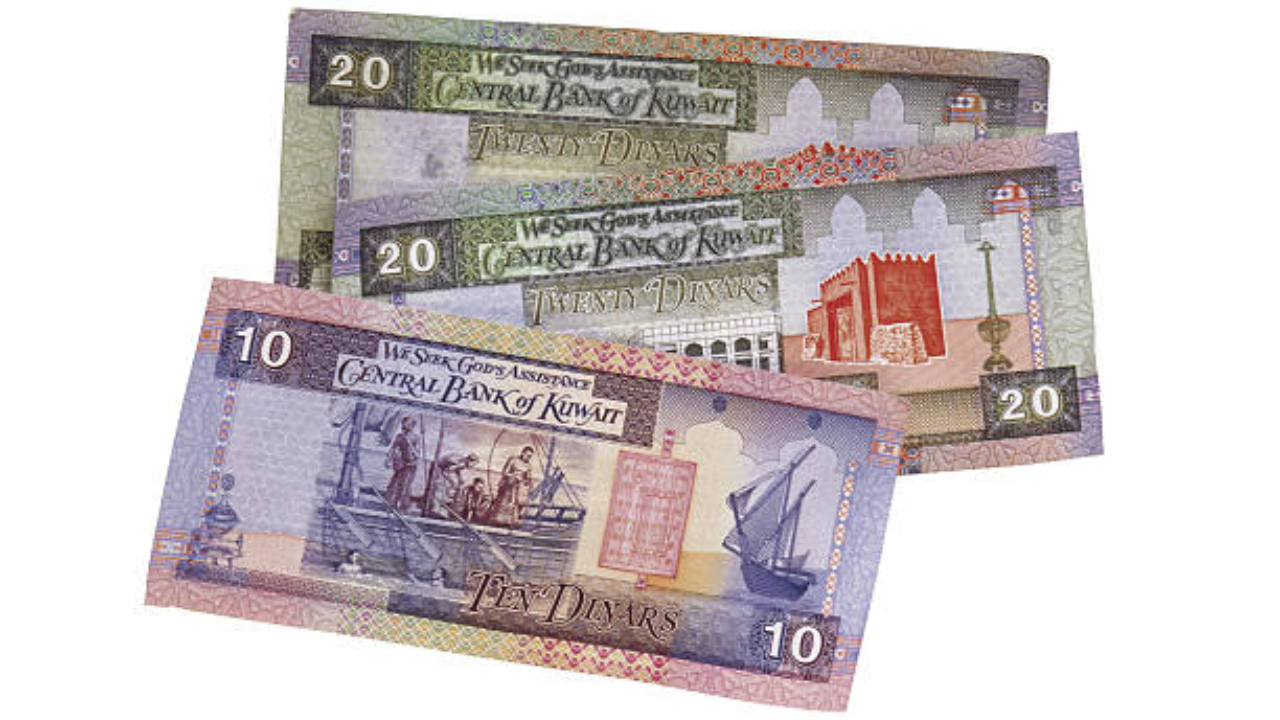
In a small, dimly lit shop in the heart of Shuwaikh, an old man named Ahmed used to count his life in paper. The crinkle of the Kuwaiti Dinar was the soundtrack to his success. For forty years, the physical exchange of a blue note for a length of industrial pipe or a gallon of lubricant was more than a transaction; it was a handshake made tangible. But the world outside his storefront has changed. The air smells of salt and progress, and the government has just drawn a line in the sand—a line worth exactly ten dinars.
Kuwait is undergoing a quiet, digital revolution, one that strips the mystery from the wallet and replaces it with the cold, efficient glow of a screen. The Ministry of Finance and the Ministry of Commerce and Industry have issued a mandate that feels like a whisper but carries the weight of a sledgehammer. Across six critical service sectors, cash is no longer king. It is barely a citizen.
The rule is simple. Draconian, perhaps, to those who still cherish the anonymity of a physical bill. If the bill exceeds 10 KD, the paper must stay in the pocket. The transaction must move through the wires.
The Ten Dinar Threshold
Consider the local mechanic. Under the new regulations, if you walk into a garage for a simple oil change that costs 9 KD, you can still peel a note from your clip. But the moment that bill hits 11 KD—perhaps because you needed a new filter or a spark plug—the cash becomes useless. The law mandates that for automotive services, real estate, jewelry, legal fees, private education, and medical services, anything above that ten-dinar cap must be digital.
This isn't a suggestion. It is a fundamental rewiring of how money moves through the veins of the nation.
Why ten? It is a psychological anchor. It is enough to buy a hearty lunch or a few small household items, but it is too small to facilitate the "grey" economy. By setting the limit so low, the government is effectively shining a high-intensity spotlight on the corners of the marketplace where shadows used to gather. When money is digital, it leaves footprints. When it is paper, it is a ghost.
Ahmed, the man in Shuwaikh, feels this change in his bones. He worries about the loss of the "human" element in trade. To him, a credit card tap is sterile. It lacks the weight of a deal struck. Yet, the invisible stakes are much higher than one man’s nostalgia.
The Ghost in the Machine
The primary driver behind this shift is the fight against money laundering and the financing of illicit activities. In the old world, a stack of bills could move from a buyer to a seller without a single record existing in the sky. You could buy a gold watch, a semester of private tutoring, or a legal defense with a suitcase of cash, and the state would be none the wiser.
Now, the trail is permanent.
Think of the real estate sector. For decades, property deals have been fertile ground for hiding wealth. By mandating that any significant payment—and in the world of Kuwaiti real estate, almost every payment exceeds 10 KD—must be electronic, the government is creating a digital ledger of ownership and value. This isn't just about taxes. It is about transparency. It is about ensuring that the wealth flowing through the country's glass towers and desert villas is legitimate.
The sectors chosen for this initial rollout were not picked at random. They represent the high-traffic, high-value pillars of daily life.
- Education and Health: Private schools and clinics handle massive volumes of transactions. Digital mandates here ensure that every fil is accounted for.
- Jewelry and Luxury: Gold has always been the ultimate "untraceable" asset. No more.
- Legal and Professional Services: Ensuring that the wheels of justice and consultancy are turned by clean, recorded capital.
The Friction of Progress
There is a specific kind of anxiety that comes with this transition. It is the fear of the "glitch."
Imagine a young mother at a private clinic, her child burning with fever. The bill comes to 45 KD. She has the cash in her purse, a gift from a grandfather, but the receptionist shakes her head. The machine is down. The internet is flickering. Under the new law, the receptionist cannot legally take those physical bills. This is the friction of the future. We are trading the reliability of the physical for the speed of the virtual, and in that trade, there are moments of profound vulnerability.
Yet, the logical deduction is hard to argue against. Digital payments reduce the overhead of handling cash. They eliminate the risk of theft from registers. They provide small business owners with instant accounting, showing them exactly where their margins are thinning. For a nation looking to diversify its economy away from oil, becoming a global hub for fintech and transparent commerce is a necessity, not a luxury.
The transition is a mirror of a global trend. From Scandinavia to Singapore, the "cashless society" is moving from a sci-fi concept to a daily reality. Kuwait’s approach is surgical. By targeting specific sectors and a low 10 KD cap, they are forcing a behavioral shift. They are retraining the public to reach for a phone or a card rather than a wallet.
The Invisible Ledger
We often think of money as a thing. A coin. A piece of cotton-paper. But money is actually an idea. It is a shared agreement of value.
When the Kuwaiti government mandates digital payments, they are changing the nature of that agreement. They are bringing the state into the room for every transaction. This level of oversight is a double-edged sword. While it provides security and wipes out systemic corruption, it also erodes the last vestiges of financial privacy.
Ahmed watches a customer enter his shop. The young man doesn't even carry a wallet. He carries a smartphone. He scans a QR code on the counter for a 15 KD repair kit. The transaction is over in three seconds. No words are exchanged about the price. No haggling. No counting of change.
The customer leaves, and Ahmed looks at his empty hands. He knows the money is there, sitting in a digital vault, verified by a server miles away. The 10 KD limit has made his cash drawer a relic, a box for small change and loose ends.
This is the price of the new Kuwait. It is faster. It is cleaner. It is documented. The shadows are receding, replaced by the relentless, unblinking eye of the digital ledger. We are witnessing the end of an era where a man’s wealth was something he could hold. Now, it is something he can only see on a screen, governed by a rule that says if it matters, it must be tracked.
The paper notes still exist, but they are becoming ornaments. They are for the small things—the bread, the tea, the newspaper. For everything else, the air is full of invisible numbers, flying through the heat of the city, building a record that will never be erased.
The crinkle of the dinar is fading. The beep of the terminal is the new heartbeat of the souq.