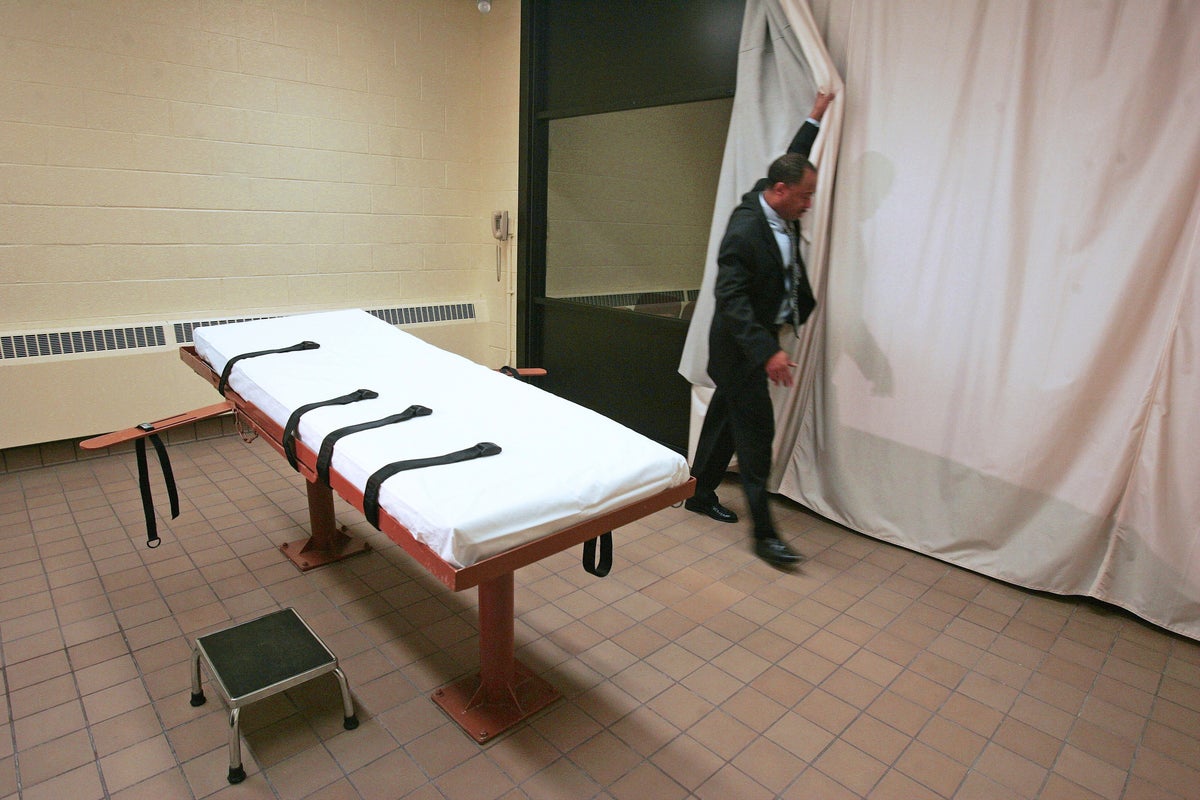
Ohio Republican Governor Mike DeWine, the man who co-wrote the very legislation that reinstated the state's death penalty in 1981, has called for its complete abolition. In a sudden break from decades of conservative orthodoxy, the 79-year-old executive announced that federal and state data has entirely dismantled the core justification for capital punishment. It simply does not deter violent crime.
The policy shift directly challenges the national Republican platform and forces a hard calculation on the massive, hidden fiscal and procedural costs of maintaining an inactive execution chamber. DeWine explicitly declared that the moral imperative under which he operated for 45 years has vanished, leaving Ohio with a system that has ground to a complete structural halt. If you enjoyed this article, you might want to check out: this related article.
This is not a sudden epiphany from a progressive reformer. It is a clinical post-mortem from a veteran prosecutor, former US Senator, and two-term attorney general who has spent his entire professional life enforcing the law.
The Architect Dismantles the Blueprints
Forty-five years ago, a young state senator named Mike DeWine took to the Ohio Statehouse floor to fix what conservatives viewed as a broken justice system. The US Supreme Court had thrown out Ohio's previous capital punishment statute. DeWine helped draft the replacement law designed to withstand constitutional challenges, promising voters that the ultimate punishment would make Ohio streets safer. For another angle on this event, refer to the recent coverage from NPR.
On Tuesday, DeWine stood before charts and graphs to explain why that promise was hollow.
Data compiled over decades reveals no correlation between the presence of the death penalty and lower homicide rates. DeWine acknowledged what criminologists have quietly documented for years: capital sentences do not flash through the minds of impulsive or deeply disturbed individuals before they pull a trigger.
The shift leaves national pro-death penalty groups in an awkward position. They argue that the policy fails to deter only because it is bogged down by excessive appeals. Yet, the data demonstrates that shortcuts in the appellate process dramatically increase the likelihood of executing an innocent person. Ohio has seen 11 death row inmates exonerated since 1981, a ratio of one innocent person freed for every five executed.
The Ghost Machinery of Death Row
Ohio has not executed an inmate since July 18, 2018. When DeWine took office in 2019, he inherited a system choked by legal challenges and an absolute freeze on lethal injection chemicals.
Global pharmaceutical firms refuse to sell their products to state prisons for executions, fearing corporate boycotts and legal liability. Rather than trying to bypass these restrictions with unproven, legally perilous chemical cocktails, DeWine quietly issued reprieve after reprieve.
The result is a ghost machine. Ohio currently has more than 100 men and one woman living on death row, with 30 executions technically scheduled over the next four years. In reality, these dates are fiction. DeWine recently pushed several dates out to 2029, guaranteeing that no executions will occur under his watch before he leaves office at the end of the year.
The gridlock has created an institutional reality that capital punishment advocates rarely discuss. Condemned inmates are far more likely to die of old age, cancer, or suicide than by the hand of the state. In the last decade of Ohio executions, the average time spent on death row was 21 years.
The Quiet Fiscal Hemorrhage
Maintaining this legal fiction is incredibly expensive. Capital trials cost taxpayers significantly more than life-without-parole prosecutions. The specialized defense teams, mandatory state appeals, federal habeas corpus petitions, and high-security housing units require millions of dollars annually from county and state budgets.
A comprehensive look at the numbers shows where the money goes:
| Stage of Process | Standard Murder Trial | Capital Punishment Trial |
|---|---|---|
| Jury Selection | 1 to 3 days | 2 to 4 weeks |
| Legal Counsel | Public defender or single attorney | Dual death-certified counsel |
| Appellate Requirements | Standard state appellate courts | Mandatory direct supreme court review |
| Housing Costs | General population facilities | Segregated, maximum-security units |
Taxpayers are paying a massive premium to maintain a system that delivers nothing but decades of delays. This economic reality has quietly mobilized a small but growing faction of fiscal conservatives inside the Ohio Statehouse who see the death penalty as an inefficient, bloated government program that fails to deliver on its stated objective.
The Collision with the New MAGA Judiciary
DeWine's public defection comes at a moment of intense national polarization over criminal justice policy. President Donald Trump has actively pushed to expand federal capital punishment, suggesting its use for drug offenses and fast-tracking federal executions.
Earlier this year, the White House directed the Justice Department to assist states in overcoming the pharmaceutical bottleneck. Ohio's staunchly conservative Attorney General, Dave Yost, actively sought that federal help, arguing that the stall in executions makes a mockery of the court system.
DeWine's announcement creates an unbridgeable rift with his state's top cop. Yost and Republican House Speaker Matt Huffman have already signaled that they will vigorously oppose any legislative attempt to abolish the statute. Huffman holds a tight grip on the legislative calendar, meaning a repeal bill is unlikely to ever reach the house floor for a vote.
The Brutal Truth of the End Game
DeWine is fully aware that his legislative colleagues will likely ignore his plea. By putting his immense institutional weight behind abolition, he has shifted the goalposts for the next generation of Midwestern Republicans. He noted that if the legislature refuses to act, the question should eventually be put directly to Ohio voters on a statewide ballot.
The governor also cited a frequently overlooked human cost: the severe psychological toll inflicted on the state prison employees tasked with maintaining the execution equipment and preparing inmates for deaths that never come. Decades of false alarms, rescheduled dates, and intense legal scrutiny have turned the state's correction department into an administrative graveyard.
By exposing the operational failure of his own 1981 law, DeWine has reframed the capital punishment debate. It is no longer an abstract philosophical argument about justice and morality. It is a pragmatic calculation about an expensive, malfunctioning bureaucratic system that costs millions to run, fails to protect the public, and is kept alive only by politicians who lack the courage to admit it is broken.