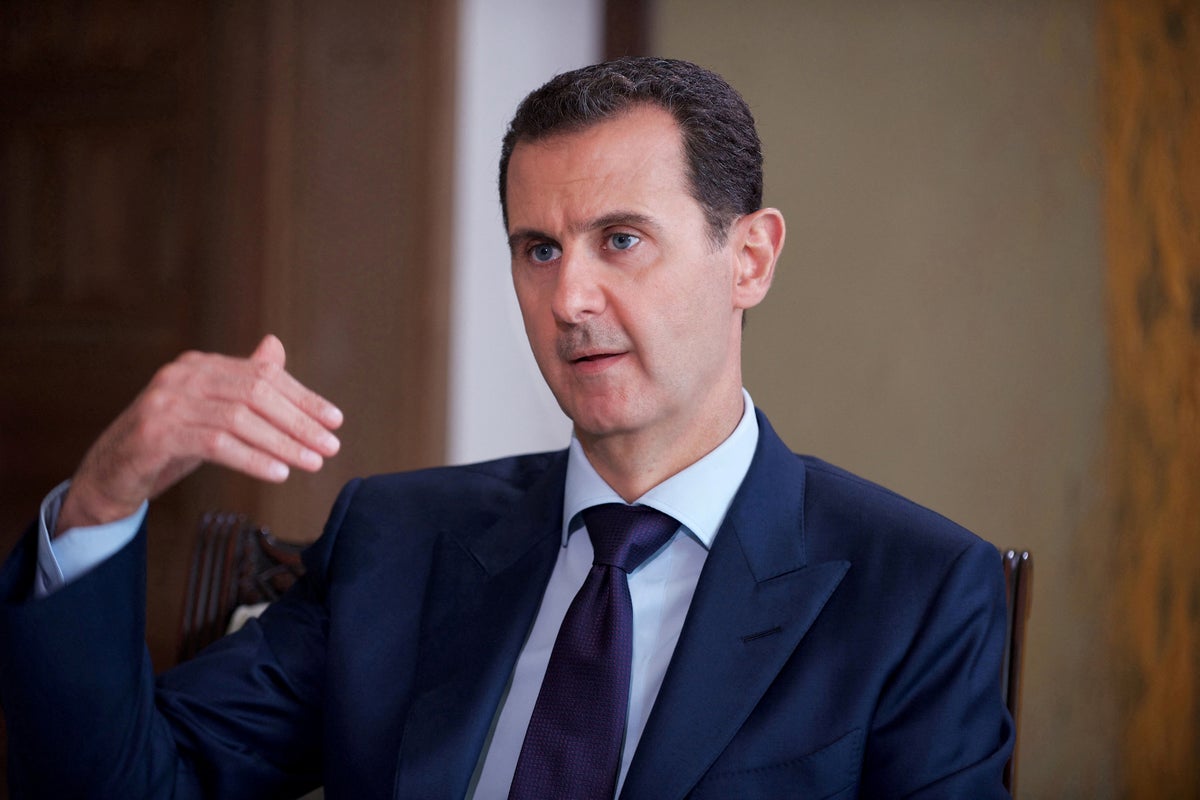
Bashar al-Assad is now a condemned man in the eyes of a Damascus court.
The Fourth Criminal Court in Damascus handed down a death sentence in absentia against Syria's ousted ruler. The charges cover war crimes and crimes against humanity tied to a 14-year civil war that left roughly half a million people dead. For millions of Syrians who survived barrel bombs, chemical attacks, and systematic torture, the ruling marks an unprecedented legal milestone. But it also exposes the raw, messy reality of pursuing justice when the primary architect of the violence sits safely thousands of miles away.
The Verdict That Echoes Through Damascus
On a Tuesday morning that drew massive crowds outside the Palace of Justice, judge Fakhareddine al-Aryan read out the verdict. The court convicted not just Bashar al-Assad, but his younger brother Maher al-Assad and their maternal cousin Atef Najib.
State television broadcasted the proceedings live. The message from the transitional authorities was loud and clear. State agencies under Assad operated as machinery for mass murder, arbitrary detention, and torture.
Bashar and Maher managed to flee to Russia in December 2024 as opposition forces swept into Damascus during a lightning offensive. Moscow granted them political asylum, meaning neither man heard the judge pronounce their fate in person. They remain out of reach, protected by foreign borders, while Syria’s new leadership demands their extradition.
Who Was in the Defendant Cage
While the inner circle watched from exile, accountability caught up with Atef Najib.
Najib served as the head of the Political Security Branch in Daraa back in 2011. When a group of teenagers scrawled anti-government graffiti on a school wall, Najib's security forces arrested, detained, and tortured them. That single crackdown acted as the spark that turned local protests into a full-scale national uprising.
Unlike his famous cousins, Najib didn't escape to Moscow. He was captured, detained, and forced to stand inside a metal defendant's cage during the trial. Wearing a standard prisoner's uniform under tight security, Najib listened as the court found him guilty of premeditated murder, the intentional killing of children under fifteen, and torture leading to death.
For survivors like Mouawiya Sayasneh and Nayef Abazeid—who were just teenagers when they were arrested and tortured in 2011—seeing Najib face a judge brought a grim sense of validation. The blood wasn't entirely forgotten.
The Trouble With Trials in Absentia
Legal experts and human rights organizations are already pointing out the massive hurdles facing this new judicial system.
Groups like Human Rights Watch have voiced opposition to the death penalty across the board, arguing that it remains cruel and irreversible. More practically, trials conducted in absentia lack the defendant's active legal defense, making international recognition complicated. When top-tier offenders live under foreign protection, courtroom sentences function largely as symbolic declarations rather than physical punishments.
Yet, dismissing these trials as mere theater misses the psychological weight they carry for ordinary citizens. For a society built on decades of absolute impunity under the Assad family dynasty—which spanned nearly fifty years between Bashar and his father Hafez—seeing an official court strip the ruling family of their legitimacy matters.
What Happens Next on the Ground
The transition government faces an uphill battle. Asking Russia to hand over men granted state asylum rarely yields quick results. Diplomatic channels are strained, and geopolitical rivalries complicate any formal extradition request.
At the same time, domestic courts must prove they can handle lower-level perpetrators with strict adherence to fair trial standards. Najib has the legal right to appeal his sentence. How the judicial system handles that appeal will test whether Syria's new institutions can separate themselves from the corrupt, rigged courts of the past.
The death sentences handed down in Damascus won't bring back the dead or rebuild flattened neighborhoods overnight. But they draw a definitive legal line under five decades of authoritarian rule, shifting the narrative from endless silence to documented accountability.


