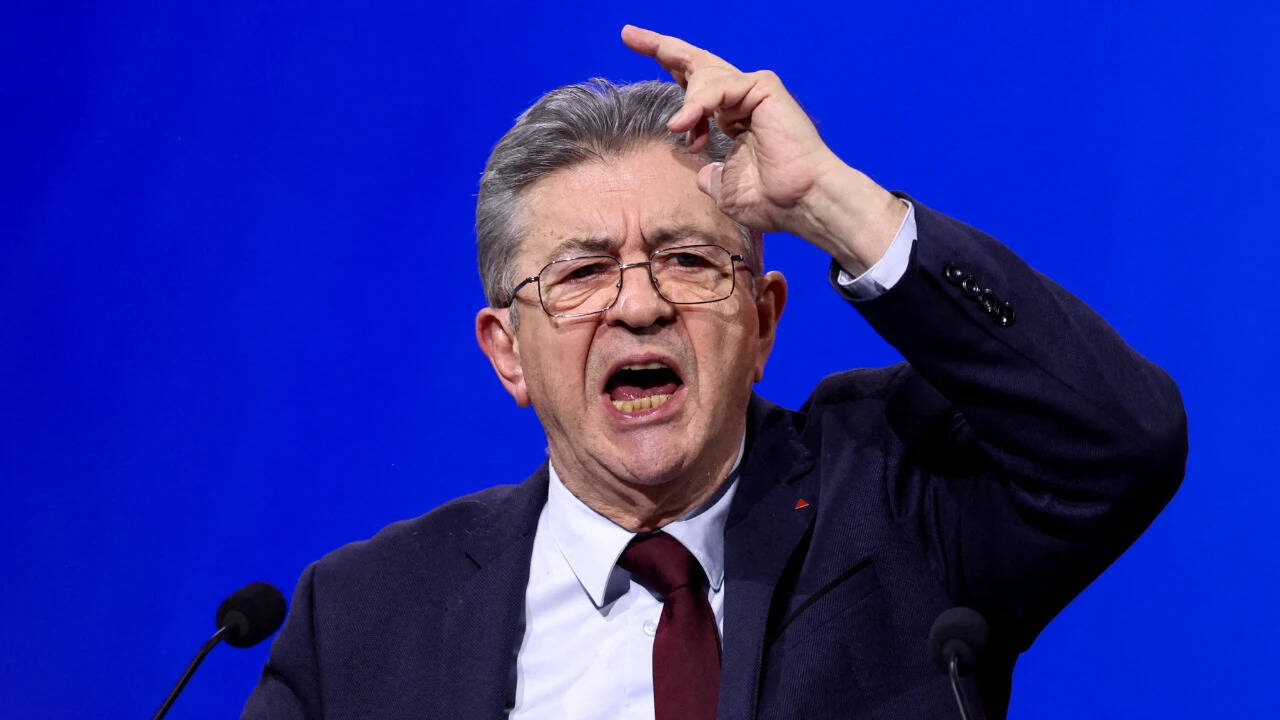
The political conversation surrounding French foreign policy often centers on a binary choice between total alignment with Washington or a complete withdrawal from the North Atlantic Treaty Organization. Whenever prominent French political figures such as Jean-Luc Mélenchon propose pulling France out of the alliance, mainstream commentators typically frame the move as either a reckless abandonment of Western solidarity or a bold reclamation of national independence. Both perspectives rely on an outdated understanding of how European security actually functions.
To understand the debate over France and NATO, it is necessary to look past the surface-level rhetoric of membership versus exit. The real friction lies in the tension between integrated military command, European strategic autonomy, and the shifting realities of global deterrence. Meanwhile, you can read other stories here: Inside the Banking Collapse That Took Down Paraguay’s Impeached President.
The Historical Context of French Exceptionalism
France has never had a conventional relationship with NATO. While it was a founding member of the alliance in 1949, President Charles de Gaulle made the consequential decision in 1966 to withdraw France from NATO's integrated military command structure and expel allied headquarters from French soil.
De Gaulle’s rationale was rooted in a specific geopolitical philosophy: To see the bigger picture, we recommend the recent article by Al Jazeera.
- Sovereign Decision-Making: De Gaulle argued that a nation cannot delegate the ultimate decision of war and peace to a foreign-led command structure, particularly one dominated by the United States.
- Independent Deterrence: Through the development of the Force de Frappe—France’s independent nuclear triad—Paris ensured that its existential security did not rely exclusively on the American nuclear umbrella.
- Diplomatic Flexibility: By remaining a political signatory to the North Atlantic Treaty while staying outside the integrated military command, France retained the ability to engage with rival powers, including the Soviet Union, without being perceived purely as a subordinate to Washington.
For over four decades, this dual-track approach defined French defense posture. It was not until 2009, under President Nicolas Sarkozy, that France fully rejoined the integrated military command. Sarkozy argued that France was already contributing significant troops and funding to NATO operations without having a proportional say in the strategic planning that governed those missions.
Analyzing the Case for Withdrawal
Proposals to exit NATO, championed consistently by Jean-Luc Mélenchon and the La France Insoumise movement, draw heavily on this Gaullist lineage, though they extend it further by advocating a departure from the alliance altogether rather than just its military command.
Proponents of withdrawal advance several core arguments:
- Avoidance of Entanglement: Critics of NATO contend that membership pulls France into conflicts driven by American geopolitical interests rather than French national security. They point to the 2003 invasion of Iraq—which France famously opposed—and the prolonged intervention in Afghanistan as evidence that alliance politics can pressure European states into costly, destabilizing engagements.
- De-escalation with Global Rivals: Advocates of a non-aligned posture argue that NATO’s eastward expansion and military posture unnecessarily antagonize Russia and create a Cold War-style bloc mentality. From this perspective, an independent France could act as a credible mediator in global disputes, leveraging its permanent seat on the United Nations Security Council to promote diplomatic settlements.
- Rejection of Subordination: Critics assert that within NATO, European defense priorities are structurally subordinated to American strategic goals and defense industry interests. They argue that reliance on U.S. command, intelligence, and weaponry stifles the development of a genuinely sovereign European defense architecture.
The Counterarguments for Remaining Integrated
Conversely, French defense officials, Atlanticist policymakers, and several European allies maintain that leaving NATO—or even reverting to the 1966 model—would severely diminish French influence and weaken European security.
Supporters of continued membership emphasize the following realities:
- Influence Over European Security Architecture: Since the Russian invasion of Ukraine in 2022, NATO has cemented its role as the primary coordinator of European territorial defense. For Eastern and Central European nations—such as Poland and the Baltic states—Article 5 collective defense guarantees backed by American military power are viewed as non-negotiable. Analysts point out that if France were to leave NATO, it would instantly forfeit its seat at the table where critical decisions about European security are made, leaving those decisions entirely to the United States, the United Kingdom, and Germany.
- Operational Interoperability: Modern warfare relies on seamless communication, shared intelligence, and standardized logistics. Participating in NATO’s integrated command allows French forces to train alongside allies, share high-level intelligence, and coordinate complex multinational operations. Stepping outside this framework would create technical and operational friction during joint crises.
- The Illusion of Immediate European Replacement: Proponents of the alliance argue that while "European strategic autonomy" is a worthy long-term goal, the European Union currently lacks the industrial capacity, unified political will, and command infrastructure to replace NATO. Withdrawing from the alliance before a viable alternative exists would leave a dangerous security vacuum.
What Both Sides Overlook
The binary debate between staying in NATO as it currently operates and leaving the alliance entirely obscures the more nuanced structural shifts occurring within transatlantic relations.
First, critics who advocate leaving NATO often overestimate the degree to which withdrawal insulates a country from global conflict. In an interconnected economic and security environment, major instability in Eastern Europe, the Middle East, or the Indo-Pacific directly affects French trade, energy supplies, and domestic security, regardless of treaty obligations. Furthermore, France remains bound by Article 42.7 of the Treaty on European Union, which contains a mutual defense clause requiring EU member states to aid one another in the event of armed aggression—a commitment that overlaps heavily with NATO’s membership.
Second, staunch defenders of the status quo often downplay the vulnerabilities created by over-reliance on the United States. Shifts in American domestic politics have repeatedly raised questions about the long-term predictability of U.S. commitments to European defense. Relying indefinitely on American logistical enablers—such as heavy airlift, aerial refueling, and satellite intelligence—leaves European nations exposed if Washington shifts its primary military focus toward the Indo-Pacific.
Moving Beyond the Binary
Rather than treating NATO membership as an all-or-nothing proposition, defense strategists increasingly focus on how France can reshape the alliance from within while building autonomous capabilities alongside European partners.
This approach involves:
- Building a European Pillar: Increasing European defense industrial production and joint procurement so that European nations can handle regional crises without requiring American intervention.
- Clarifying Nuclear Deterrence: Engaging in structured dialogues with European neighbors about how France’s independent nuclear deterrent contributes to the broader security of the continent, without relinquishing national control over the nuclear button.
- Selective Engagement: Utilizing France’s diplomatic weight within NATO to push for clear boundaries on the alliance’s geographic scope, ensuring that European security commitments are not automatically stretched into unrelated global theaters.
The debate sparked by figures like Jean-Luc Mélenchon highlights genuine anxieties about sovereignty, war, and the future of Western alliances. However, framing the issue strictly as a choice between submission to Washington or total isolation ignores the complex reality of modern deterrence. France’s strategic challenge is not merely deciding whether to stay in or leave NATO, but determining how to exercise sovereign power within a deeply interdependent security landscape.