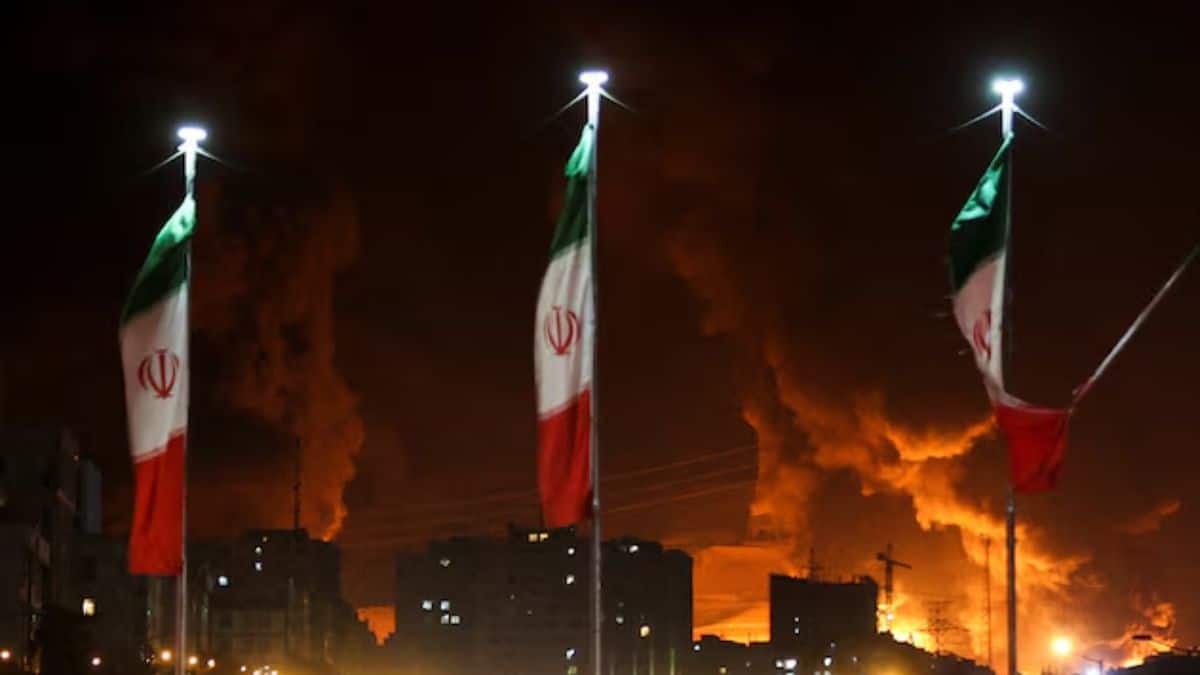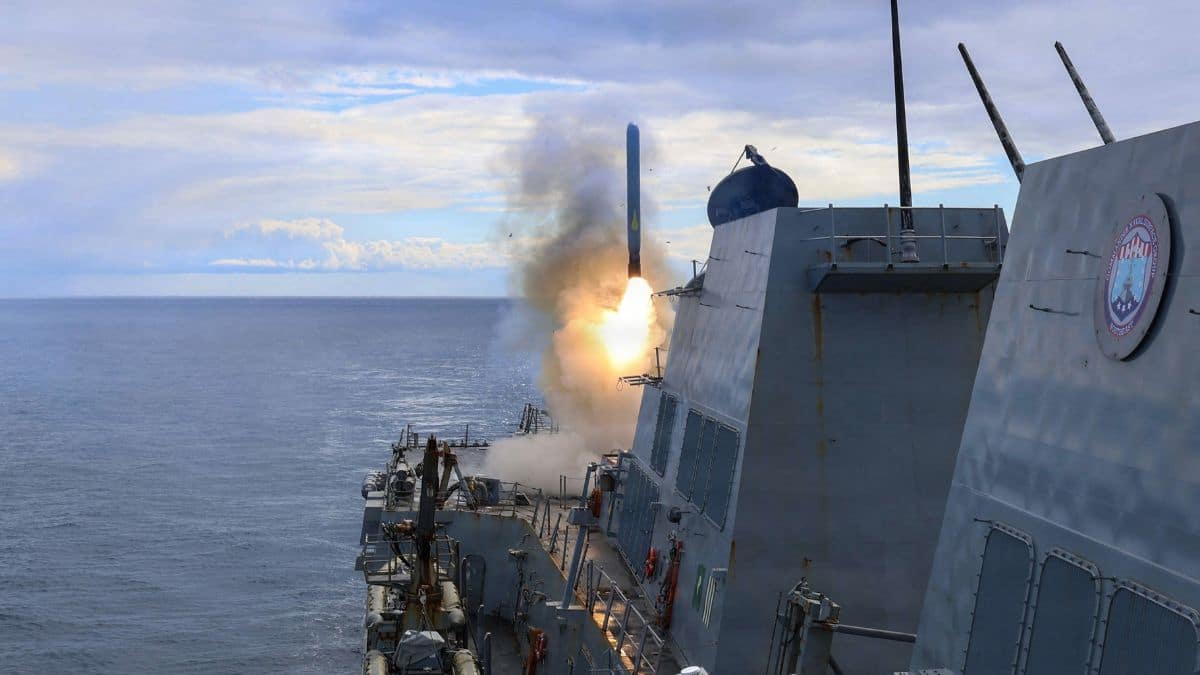
The headlines are predictable. They scream about "48 leaders" neutralized in a single strike. They paint a picture of a hydra finally losing its heads. Donald Trump’s claim that nearly fifty top Iranian officials were wiped out in a single American operation is being treated by the media as either a miraculous feat of arms or a terrifying escalation. Both sides are wrong.
If you think killing 48 middle-managers and a few figureheads changes the trajectory of a four-decade-old revolutionary state, you don't understand how modern bureaucracies work. We are obsessed with the "Great Man" theory of history, even when applied to our enemies. We want to believe that if you remove the architect, the building collapses. In reality, modern Iranian power isn't a house of cards; it’s a decentralized franchise model. If you enjoyed this article, you might want to read: this related article.
The Cult of the Kill Chain
The Pentagon loves a good slide deck. They love "high-value targets" (HVTs) because you can put a red "X" over a face and tell a subcommittee that progress is being made. But I’ve spent enough time analyzing kinetic operations to know that a high body count is often a mask for a lack of a real plan.
When you kill 48 "leaders," you aren't destroying an organization. You are conducting an unconsented corporate restructuring. You are clearing the path for the younger, more radical, and more tech-savvy lieutenants who have been waiting for their predecessors to get out of the way. For another look on this development, check out the latest coverage from Al Jazeera.
The "lazy consensus" in Washington and mainstream media is that Iran is a fragile entity held together by a few key players. This is a fundamental misunderstanding of the Islamic Revolutionary Guard Corps (IRGC). The IRGC is a sprawling conglomerate with its hands in everything from telecommunications to dam construction. It is designed to survive the loss of its leadership. When Qasem Soleimani was killed in 2020, the world waited for the collapse. It never came. The machine kept grinding.
Why Decentralization is the Ultimate Defense
The Iranian security apparatus has spent forty years preparing for this exact scenario. They watched the U.S. dismantle the Iraqi military in weeks because it was a top-heavy, Saddam-centric mess. They learned.
Instead of a traditional command-and-control structure, the IRGC operates via mission-type tactics. Local commanders have the autonomy to execute broad strategic goals without waiting for a phone call from Tehran. If 48 leaders are "gone in one shot," the 48 people standing behind them just got a promotion.
- Redundancy: Every major role has two or three shadows.
- Institutional Memory: Their strategies are codified in ideology, not just individual brilliance.
- Asymmetric Response: They don't need a general to tell them to activate a proxy cell in Lebanon or Yemen. That's already on the "if-then" menu.
The obsession with the number 48 is a distraction. It's "body count" logic—the same flawed metric that led the U.S. to believe it was winning in Vietnam. If you're counting bodies, you've already lost the argument on influence.
The Myth of the "Clean" Strike
Trump’s rhetoric suggests a surgical precision that solves a problem. But in the world of intelligence, a "clean strike" is an oxymoron. Every action has a second and third-order effect that usually outweighs the initial benefit.
Imagine a scenario where these 48 individuals were the primary negotiators or the "pragmatic" hardliners—people who, while hostile, were at least known quantities. By removing them, you create an information vacuum. You lose the backchannels. You lose the ability to predict the next move because the new players haven't built a track record yet.
We are replacing predictable enemies with unpredictable ones. That isn't a win; it’s a gamble.
The Intelligence Trap
People often ask: "Doesn't this show we have incredible intelligence on the ground?"
Not necessarily. In fact, being able to track 48 people might be an intentional leak. In the world of high-stakes espionage, states often "sacrifice" certain elements to protect others or to goad an opponent into a premature celebration.
I’ve seen intelligence agencies celebrate a "massive bust" only to realize six months later that they were fed the coordinates of the guys the regime wanted to be purged anyway. We are potentially doing Iran’s internal housekeeping for them, thinning out the old guard and making room for a leaner, meaner generation of IRGC operatives.
The Technology Gap
We talk about drones and Hellfire missiles as if they are the ultimate arbiters of power. They are great for killing people, but they are useless at killing ideas or institutional momentum.
Iran has spent the last decade pivoting to cyber warfare and drone proliferation. These are tools that don't require a charismatic general to oversee. A kid in a basement in Mashhad can do more damage to American interests with a keyboard than a general can with a division of tanks.
By focusing on the "48 leaders," we are fighting a 20th-century war against a 21st-century threat. We are focused on the hardware (the people) while the software (the network) is already being updated.
The Cost of Tactical Arrogance
The danger of the "one shot" narrative is that it breeds a false sense of security. It suggests that complex geopolitical problems can be solved with a single trigger pull. This is tactical arrogance.
True power in the Middle East isn't about who has the best satellite imagery; it's about who has the most enduring presence. The U.S. tends to operate in "news cycles." Iran operates in "centuries." They are willing to lose 48 leaders, 480 leaders, or 4,800 leaders if it means they eventually achieve their regional goals.
Stop Asking if We Can Kill Them
The question shouldn't be "Can we kill 48 Iranian leaders?" The answer is obviously yes. We have the tech, the reach, and the firepower.
The real question—the one the competitor article won't touch—is: "What happens on day 49?"
When the smoke clears and the funerals are over, the underlying reasons for the conflict haven't moved an inch. The proxy networks are still funded. The nuclear centrifuges are still spinning. The resentment is deeper.
We are addicted to the "kinetic solution" because it’s easy to measure. It looks good on a campaign poster. It feels like "doing something." But decapitation strikes are the junk food of foreign policy: a quick rush followed by a long, painful crash.
If we keep measuring success by how many funerals we cause in Tehran, we are going to be very surprised when we realize the regime we thought we were dismantling has actually just evolved.
You don't win a game of chess by capturing 48 pawns if your own king is in a perpetual state of check.
Stop counting the "X"s on the map and start looking at the lines connecting them.
Identify the replacement candidates for the 48 eliminated leaders and tell me how their strategic outlook differs from their predecessors.