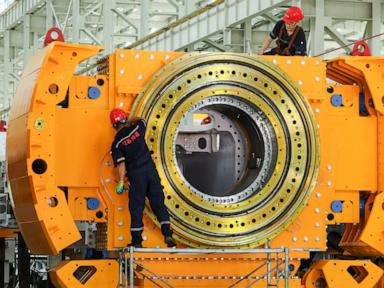
Headline manufacturing indicators present a persistent paradox when macroeconomic aggregates diverge from sector-specific micro-realities. The official manufacturing purchasing managers index for August registered at 49.8. While this reflects a marginal numerical compression beneath the critical threshold of expansion, isolating the headline figure obscures the underlying mechanics of structural bifurcation within the industrial economy. A complete analytical deconstruction requires examining why external trade channels continue to accelerate while domestic demand vectors remain structurally impaired.
The Dual Mechanics of Sub-Index Divergence
Aggregate indices obscure component volatility. In August, the headline reading improved from July's 49.2 print, driven primarily by discrete sub-indices crossing back into expansionary territory. Production climbed to 50.4, total new orders reached 50.6, and new export orders ticked upward to 50.1.
This internal composition reveals a distinct operational reality:
- The External Vent: Foreign purchasing power is actively absorbing surplus domestic capacity. High-tech manufacturing sectors, specifically equipment manufacturing and semiconductor-adjacent output, printed respective indices of 51.4 and 52.9.
- The Domestic Drag: Non-manufacturing indices, including services lingering at 49.0, demonstrate that local purchasing power remains constrained by balance sheet contractions in property and secondary wealth effects.
When production and new orders metrics clear the 50-mark while the overarching headline index remains trapped in contraction, it points to weighted averaging drag from smaller enterprises or localized inventory adjustments. Large manufacturing enterprises recorded a PMI of 50.6, confirming that state-backed and large-scale industrial units are expanding, whereas micro and small enterprises continue to experience credit and liquidity frictions.
The Export Transmission Channel and Input Cost Pressures
External resilience is concentrated within specific high-value green technology and artificial intelligence supply chains. Demand for electric vehicles, solar infrastructure, and advanced semiconductors has maintained high velocity despite intensifying tariff walls and bilateral trade frictions. Exporters have successfully redirected trade flows toward secondary markets in Europe and Southeast Asia to offset trade shifts originating from Washington.
Simultaneously, cost-push dynamics are re-entering the manufacturing equation. The purchasing price index for major raw materials surged alongside ex-factory price adjustments driven by shifts in global commodity pricing, including crude oil and non-ferrous metals.
This dynamic creates a compressed margin environment:
$$\text{Net Margin} = \text{Ex-Factory Pricing Power} (\approx 50.4) - \text{Raw Material Input Costs} (\approx 56.6)$$
Because input costs are expanding faster than downstream output pricing power, industrial profitability remains vulnerable. Enterprises cannot fully pass raw material inflation down the value chain due to stagnant domestic consumption appetite.
Structural Constraints of Domestic Balance Sheet Deleveraging
The primary constraint on a sustained industrial expansion is the multi-year contraction of the property sector. Real estate development historically acted as a primary multiplier for heavy industrial materials, from structural steel to architectural glass. As property developers continue to manage liability restructuring rather than land acquisition and new starts, localized demand for heavy industrial inputs remains structurally depressed.
Households, facing diminished property wealth and cautious income expectations, have curtailed discretionary spending. This contraction prevents the transmission of industrial output into domestic retail consumption. Consequently, factories must export their way out of local overcapacity. This reliance exposes the broader industrial base to exogenous trade policy shifts and currency fluctuations.
Allocate capital toward export-oriented supply chains specializing in advanced industrial hardware and energy-transition technologies, while systematically underweighting assets exposed to domestic consumer discretionary spending and tier-three real estate construction until inventory clearance cycles conclude.



