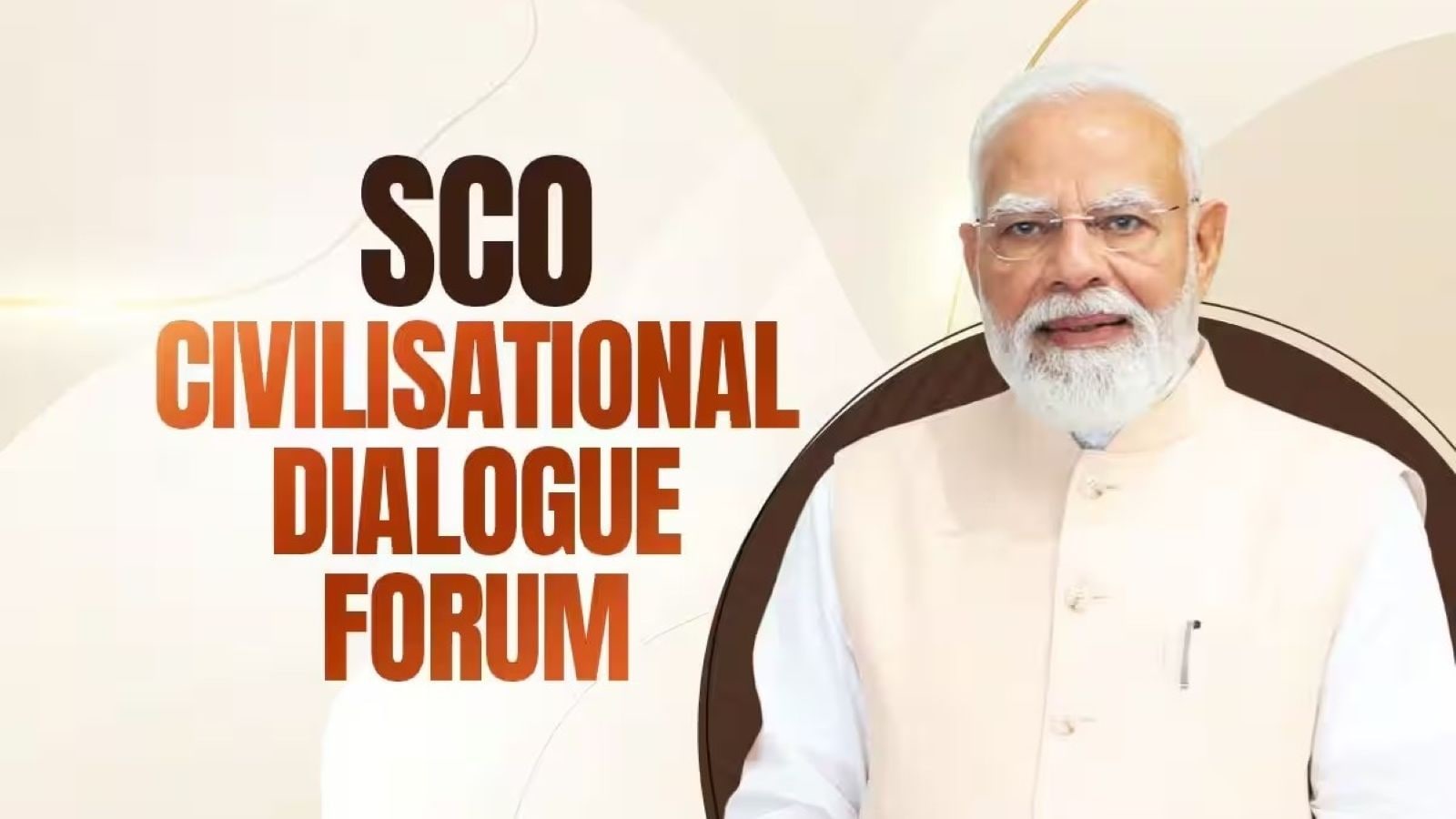
Mainstream foreign policy outlets love a good multilateral photo-op. When news broke of the first Shanghai Cooperation Organisation (SCO) Civilisational Dialogue Forum in New Delhi, the standard coverage immediately defaulted to the lazy consensus: that cultural exchange builds trust, softens border tensions, and proves India is effortlessly balancing rival global blocs.
That reading is naive. Worse, it confuses polite conference catering with actual geopolitical power.
If you look closely at the guest lists, the agenda items, and the geopolitical timing, the SCO Civilisational Dialogue Forum isn't an exercise in regional harmony. It is a calculated piece of diplomatic friction management—a low-cost pressure valve designed to keep a fractured, distrustful security bloc from visibly imploding while its core members actively undermine each other on trade, territory, and global alignment.
The Soft Power Delusion in Eurasian Diplomacy
Standard diplomatic reporting treats "civilisational dialogue" as a tangible asset. The assumption goes like this: put scholars, heritage ministers, and think-tank directors from India, China, Russia, Central Asia, and Iran in a room in New Delhi, let them discuss ancient Silk Road connections and shared Buddhist or Persianate history, and somehow that goodwill trickles up into smoother border negotiations or better trade terms.
Anyone who has actually worked inside international policy circles or advised cross-border enterprises knows better. I have watched state-backed cultural initiatives and bilateral Track-II dialogues burn through millions of dollars in diplomatic capital without moving a single customs tariff or resolving one square kilometer of disputed territory.
Soft power does not create strategic alignment; it merely decorates alignment that already exists.
Consider the hard realities sitting directly outside the conference doors in Delhi:
- Unresolved Border Militarization: Indian and Chinese troops remain locked in forward deployments along the Line of Actual Control (LAC), despite rounds of corps-commander talks and incremental disengagement agreements. No panel on ancient maritime trade changes the arithmetic of high-altitude artillery.
- Sanctions and Payment Paralysis: Russia, a founding pillar of the SCO, remains isolated from Western financial architecture. Bilateral trade between Moscow and New Delhi has surged due to discounted crude, yet both sides remain stuck on how to settle tens of billions of rupees trapped in Indian vostro accounts.
- Competing Connectivity Corridors: China’s Belt and Road Initiative (BRI) runs directly through Pakistan-occupied Kashmir via the China-Pakistan Economic Corridor (CPEC)—a red line for Indian sovereignty. Meanwhile, New Delhi pushes the International North-South Transport Corridor (INSTC) and Chabahar Port precisely to bypass Pakistani and Chinese chokepoints.
Calling a cultural forum a breakthrough amid these structural collisions is like praising the upholstery on a car with a cracked engine block.
What Is Actually on the Agenda—And Why It Matters
To understand why New Delhi hosted this forum, you have to stop reading the press releases and start reading the subtext. The agenda focuses heavily on shared cultural heritage, traditional medicine, academic exchanges, and civilisational history.
Why those specific topics? Because they are the only subjects left where SCO members do not have violently opposing national interests.
In multilateral diplomacy, when high-stakes consensus becomes impossible, bureaucrats retreat to low-stakes consensus. You cannot get India and Pakistan to agree on cross-border counterterrorism definitions. You cannot get India to endorse China’s flagship infrastructure model. You cannot get Central Asian republics to fully align with Moscow’s geopolitical isolation without risking secondary Western sanctions.
So, you talk about ancient manuscripts, yoga, and historical trade routes.
Defining "Civilisational State" Politics
There is a sharper ideological angle here that conventional coverage completely misses. Over the past decade, political theorists—most notably Christopher Coker in The Rise of the Civilizational State—have documented how major non-Western powers increasingly frame themselves not merely as nation-states, but as distinct civilisations with their own moral and political rules.
Both Beijing and Moscow aggressively deploy this framing to reject Western liberal universalism. New Delhi, too, increasingly leans into civilisational identity—framing Bharat not just as a post-1947 republic, but as an unbroken cultural continuum.
By hosting the SCO Civilisational Dialogue Forum, India is playing a sophisticated game of narrative judo:
- Reclaiming Historical Agency: For years, Beijing dominated Eurasian cultural diplomacy by branding everything under the "Silk Road" umbrella—a narrative that subtly places China at the historical center of Asian commerce and culture. New Delhi’s emphasis on civilisational dialogue reframes the region's history around Indian philosophical, linguistic, and maritime networks—from Buddhism in Central Asia to Sanskrit influence across Eurasia.
- Signaling Strategic Autonomy to Washington: Hosting Russian, Chinese, and Iranian delegates in Delhi sends an unmistakable message to Western capitals. India will not be drafted into an ideological crusade that forces it to sever ties with its Eurasian neighbors.
- Managing the SCO Chairmanship Legacy: Having held the SCO presidency and navigated the awkwardness of virtual summits to avoid diplomatic landmines, New Delhi uses institutional follow-ups like this forum to show it remains an indispensable convener, even as it deepens defense and tech ties with the United States, Japan, and Australia through the Quad.
Dismantling the Common Questions Around the SCO Forum
When readers search for information on the SCO Civilisational Dialogue Forum, they are usually fed sanitized summaries. Let's look at the real questions behind the search queries and give honest answers.
Does the SCO actually function as a unified bloc?
No. The SCO is not an Asian NATO, nor is it an Eurasian European Union. It is a loose, consensus-driven forum where the two largest members—India and China—view each other as primary strategic competitors, and two other members—India and Pakistan—have fought multiple wars. Its primary utility is preventing Eurasian powers from turning Central Asia into a proxy battleground while giving non-Western states a platform where Washington has no seat at the table.
Why does India stay in the SCO while building ties with the West?
Because geography is permanent. India shares borders with China and Pakistan, relies on Russia for legacy military hardware and discounted energy, and needs stable access to Central Asia to counter Islamist extremism and secure critical minerals. Leaving the SCO would hand Beijing uncontested influence over India's immediate continental neighborhood. Staying inside allows New Delhi to veto initiatives that threaten its sovereignty—which is why India remains the sole SCO member refusing to endorse China's Belt and Road Initiative.
Who really benefits from cultural and academic exchanges in the SCO?
In the short term, state-affiliated think tanks, cultural ministries, and academic institutions get funding, visibility, and institutional validation. In the long term, these forums build human intelligence networks. Diplomats and intelligence services pay close attention to which scholars travel, which narratives get state backing, and where ideological fault lines emerge among Central Asian elites torn between Russian linguistic heritage, Chinese economic capital, and Indian cultural familiarity.
The Strategic Risks of Playing Both Sides
A contrarian analysis loses credibility if it pretends its own thesis has no blind spots. There is a genuine risk in dismissing civilisational diplomacy entirely—and an equally real risk in overplaying it.
First, optics carry material consequences in global capital markets. While New Delhi views the SCO forum as harmless cultural outreach and smart hedging, multinational corporations and Western defense contractors watching from New York, London, and Washington see photos of Indian officials smiling alongside sanctioned Russian and Iranian counterparts. As global supply chains split along geopolitical lines, India is aggressively courting semiconductor fabs, defense co-production, and sovereign wealth funds from the West. Too much visible warmth inside Eurasian forums creates friction with lawmakers in Washington who already question how reliable a partner India truly is.
Second, cultural narratives can box diplomats into corners. Once a government frames foreign policy around "civilisational pride," compromises become harder to sell at home. When every border dispute or trade imbalance is viewed through the lens of civilisational dignity rather than pragmatic statecraft, technical solutions get bogged down by nationalist outrage.
Imagine a scenario where a minor maritime or border protocol needs quiet technical adjustment between two SCO members. If both domestic audiences have been primed by state-sponsored forums to view every interaction as a clash or triumph of ancient civilisations, neither side can afford to look like it blinked. Pragmatism dies when pride becomes policy.
How Businesses and Analysts Should Actually Read Eurasian Summits
If you run cross-border operations, manage emerging-market risk, or analyze Asian geopolitics, stop reading summit communiqués at face value. Use a sharper filter to separate diplomatic noise from actionable signal:
- Follow the Ministry of Finance, not the Ministry of Culture. Cultural forums tell you what governments want you to talk about; central bank settlement mechanisms, bilateral investment treaties, and customs protocols tell you what they are actually doing. Until SCO members solve local-currency trade imbalances without triggering secondary sanctions, talk of "deepening integration" remains aspirational.
- Watch the middle powers, not just the giants. The real story in Delhi isn't the tense choreography between Indian and Chinese delegates. It is how Uzbekistan, Kazakhstan, and Kyrgyzstan maneuver between Moscow, Beijing, and New Delhi. Central Asian republics are desperate to diversify away from Russian security dependence and Chinese debt traps. Watch which connectivity projects and technical training programs they actually sign onto after the cameras leave.
- Track absences and downgrades. In multilateral diplomacy, who doesn't show up—or which country sends a mid-level bureaucrat instead of a cabinet minister—reveals far more about alliance health than the keynote speeches.
The SCO Civilisational Dialogue Forum in New Delhi is not the dawn of a harmonious Eurasian century, nor is it a waste of taxpayer money. It is a holding pattern. In a fractured world where major powers can neither trust each other nor afford an outright rupture, polite conversation about the distant past is simply the safest way to buy time in the present.