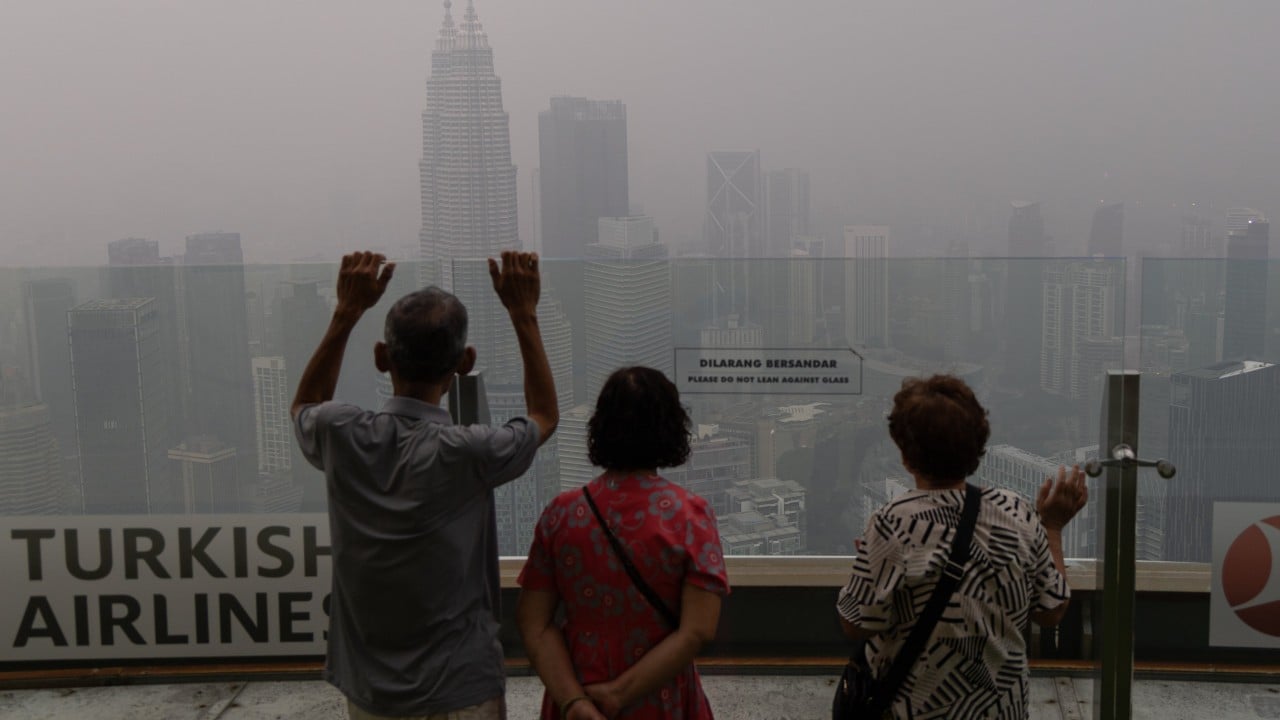
Every few years, the sky over Kuala Lumpur turns a sickly shade of yellow, schools slam their doors shut, and everyone starts pointing fingers across the Malacca Strait. Recently, a former Malaysian minister reignited this decades-old diplomatic firestorm by demanding that Indonesia pay US$3 billion in compensation for transboundary haze losses.
It makes for a great headline. Honestly, if you've ever had to tape up your window frames in Petaling Jaya just to breathe indoors without coughing, paying up feels like basic justice. In other updates, read about: Why Takaichi's Quiet Shenzhen Arrival Terrifies Beijing More Than Any Red Carpet.
Here's the problem. Demanding three billion dollars from Jakarta isn't a serious environmental strategy, and it's definitely not going to clear the air anytime soon. While the political theater plays well to frustrated voters at home, the reality of cross-border pollution, regional diplomacy, and corporate ownership in Southeast Asia makes a cash payout almost impossible to enforce.
Where the 3 Billion Dollar Figure Actually Comes From
People throw around massive numbers during environmental crises, so let's look at why this specific price tag keeps popping up. The demand isn't just pulled out of thin air, even if the politics behind it feel opportunistic. Al Jazeera has analyzed this fascinating topic in great detail.
Back in 2015, Southeast Asia suffered one of the worst transboundary haze episodes in recorded history. Peatland fires tore through Sumatra and Kalimantan for months, blanketing neighboring countries in toxic smoke. According to World Bank estimates, the 2015 fires cost Indonesia's own economy roughly US$16.1 billion in direct damages and lost productivity.
Malaysia took a massive financial hit during those severe haze waves too. When the Air Pollutant Index spikes into hazardous territory, the economic bleed happens fast across several sectors:
- Tourism collapses overnight. International travelers cancel flights to Penang, Langkawi, and Kuala Lumpur the second photos of smog-choked skylines hit global news feeds.
- Healthcare costs skyrocket. Public clinics and private hospitals get flooded with patients suffering from acute asthma attacks, respiratory infections, and eye irritation.
- Productivity grinds to a halt. Outdoor construction stops, flights get delayed or diverted due to poor visibility, and businesses lose billions of ringgit when workers stay home sick.
When former Malaysian officials—including former environment minister Yeo Bee Yin and former primary industries minister Teresa Kok, who have both weighed in heavily on haze accountability over the years—talk about billions in losses, they're aggregating years of cumulative economic damage. Estimates from severe haze years like 1997, 2015, and 2019 routinely put Malaysia's single-season losses anywhere from hundreds of millions to over a billion US dollars. Tally up a few bad seasons, and you easily hit that US$3 billion mark.
The Corporate Ownership Elephant in the Room
If you want to understand why Jakarta bristles every time Kuala Lumpur demands cash, you have to follow the money. And the money leads straight back to Malaysia and Singapore.
Indonesia has spent years pointing out an uncomfortable truth that Malaysian politicians hate talking about. Many of the massive palm oil and pulpwood plantations operating on fire-prone peatlands in Sumatra and Kalimantan aren't purely Indonesian-owned. A huge chunk of them are owned by Malaysian and Singaporean conglomerates, or funded by banks headquartered in Kuala Lumpur and Singapore.
Think about how absurd that looks from Jakarta's perspective. A Malaysian-linked plantation company clears land using cheap slash-and-burn methods in Riau, the smoke drifts east across the strait, and then a Malaysian politician demands that Indonesian taxpayers write a three-billion-dollar check to cover the damages.
Jakarta's response has always been blunt. If Malaysia wants accountability, Kuala Lumpur should prosecute the Malaysian-listed companies operating those concessions.
Singapore actually tried to tackle this exact loophole back in 2014 when it passed the Transboundary Haze Pollution Act. That law allows Singaporean authorities to fine or sue any local or foreign company causing haze in Singapore, regardless of where the fires are burning. Malaysia has talked about passing a similar law for nearly a decade. Yet every time the smoke clears and the monsoon rains return, the proposed legislation gets quietly shelved in Putrajaya. Why? Because holding domestic corporate giants legally liable for overseas fires is politically messy at home.
Why ASEAN Diplomacy Blocks Any Real Payout
Even if Malaysia took Indonesia to an international court tomorrow, the legal framework in Southeast Asia is built to prevent exactly this kind of confrontation.
The Association of Southeast Asian Nations operates on a strict principle of non-interference and consensus, often called the "ASEAN Way." Nobody sues nobody. Nobody forces a neighbor to pay reparations. Everything happens through closed-door dialogue and voluntary cooperation.
In 2002, member states signed the ASEAN Agreement on Transboundary Haze Pollution. On paper, it looks great. Countries agreed to monitor fires, share data, and prevent smoke from crossing borders. Indonesia was the very last country to ratify the agreement, finally signing off in 2014 after twelve years of stalling.
Here is the catch. The agreement has zero enforcement teeth. There are no financial penalties for non-compliance, no dispute resolution tribunal that can force a country to pay damages, and no mechanism to seize assets if a neighbor refuses to cooperate.
When a former minister calls for US$3 billion in compensation, they know full well that no international body can compel Jakarta to hand over a single cent. International environmental law requires proving direct causation—meaning Malaysia would have to prove in court that specific fires on specific Indonesian land caused specific financial losses in Malaysia, rather than local industrial emissions or vehicle exhaust. In a court of law, untangling smoke particles over a 500-kilometer stretch of ocean is a nightmare.
What Indonesia Has Actually Done Right
It's easy to paint Indonesia as the villain when your kids can't go outside for recess, but ignoring the progress Jakarta has made over the last decade misses the bigger picture.
After the catastrophic 2015 fires, President Joko Widodo's administration actually took drastic steps that western media and neighboring politicians rarely give them credit for. Indonesia established the Peatland Restoration Agency (BRG), tasked with rewetting millions of hectares of drained peatlands. Peat is basically ancient, partially decayed vegetation—when it dries out, it burns underground for months and resists normal firefighting tactics. Keep it wet, and it won't burn.
Jakarta also issued a permanent moratorium on new permits to clear primary forests and peatlands, slapped massive fines on several rogue plantation companies, and revoked operating licenses for businesses caught burning land. Satellite monitoring from Global Forest Watch shows that fire alerts in Indonesia dropped dramatically between 2016 and 2022 compared to the devastating peaks of the late 1990s and 2015.
El Niño weather patterns still trigger spikes—like the flare-ups seen in late 2023—because prolonged drought turns even well-managed peatlands into tinderboxes. The problem isn't solved. Not by a long shot. Still, treating Jakarta like it's doing nothing while demanding an arbitrary cash settlement only alienates the exact officials in Indonesia who are trying to enforce forestry laws against powerful local cartels.
The Real Solutions That Actually Clear the Air
Political grandstanding doesn't filter PM2.5 particles out of your lungs. If Malaysia genuinely wants to stop the haze instead of just scoring cheap points in the press, the focus has to shift from empty compensation demands to hard domestic action and joint enforcement.
First, Malaysia needs to finally pass its own Transboundary Haze Pollution Act. You can't lecture Jakarta about enforcing the law in Sumatra if Kuala Lumpur refuses to hold Malaysian-registered parent companies accountable for how their subsidiaries manage land overseas. Give Malaysian courts the power to fine executives and freeze local assets when satellite data links their concessions to hotspot clusters.
Second, follow the supply chain money. Major consumer brands and global banks have way more leverage over rogue palm oil producers than a diplomatic protest note ever will. If Malaysian and Singaporean financial institutions cut off credit lines to plantations that refuse to adopt zero-burning policies and transparent concession maps, those companies will change their practices overnight.
Third, stop relying solely on government warnings during haze season and treat air quality as a permanent public health issue. Keep N95 masks stocked before the dry southwest monsoon hits between June and October, invest in HEPA air purifiers for bedrooms and classrooms, and track real-time independent air quality sensors like IQAir rather than waiting for slow-moving 24-hour government averages.
Demanding three billion dollars from Indonesia might make frustrated citizens feel heard for a news cycle. It won't extinguish a single peat fire, and it won't stop the next cloud of smoke from rolling across the strait. Real change starts when Kuala Lumpur stops asking Jakarta for a check and starts policing the money trail sitting right in its own backyard.