Media pundits love an empty podium. Whenever a national crisis hits—whether it is a grid failure, a cyberattack, or a sudden Federal Aviation Administration ground stop—cable news producers immediately check the White House schedule. If the President is not standing behind a seal within twenty minutes, the headlines write themselves.
"Trump Kept Out of Sight as F.A.A. Issued Flight Ground Stop." Discover more on a related subject: this related article.
That framing relies on a lazy consensus that equates executive competence with television airtime. Critics and political commentators routinely treat a president’s physical absence from the briefing room during an infrastructure disruption as dereliction of duty, panic, or poor optics. Aviation safety experts, crisis management veterans, and former federal regulators view the exact same silence very differently. When the National Airspace System locks up, the worst thing a commander-in-chief can do is step in front of a microphone before the engineers have finished diagnosing the failure.
The Myth of the Briefing Room Savior
The modern political press corps operates on a simple rule: visibility equals leadership. In an era of 24-hour news cycles, silence creates a vacuum, and journalists fill vacuums with speculation about chaos behind closed doors. When the FAA halts departures across the country, stranded passengers want someone to blame, and reporters want a soundbite to anchor the broadcast. Further journalism by The Guardian highlights comparable perspectives on this issue.
Yet operational crisis management follows the opposite logic. In aviation, public relations is not a parallel track to technical resolution; premature public messaging actively interferes with it.
When a president walks to a podium during an active, unresolved aviation stop, several predictable disruptions cascade down the chain of command:
- The Briefing Drain: To prepare a president for cameras, senior officials at the Department of Transportation (DOT) and the FAA must pull their top technical leads off the operational bridge to write talking points, verify preliminary guesses, and prep for hypothetical press questions.
- Premature Certainty: Presidents speak in absolutes to project calm. If a president states on live television that a system outage is "strictly technical and not a cyberattack" before forensic teams have cleared the servers, that statement becomes an institutional anchor. Investigators then face immense political pressure not to contradict the White House if new evidence emerges two hours later.
- Market and Traveler Panic: Presidential addresses carry the weight of national emergencies. A routine software patch failure or localized radar outage—events that air traffic controllers manage through standard protocols—suddenly feels like a national security crisis the moment the Resolute Desk or the Rose Garden enters the frame.
I have sat in corporate and regulatory war rooms where executives demanded an immediate press conference to "show they were in control." Every single time, the communications team hijacked the engineers' bandwidth, forced leaders to repeat half-baked theories to the public, and spent the next seventy-two hours issuing embarrassing corrections. Good crisis governance looks boring from the outside because the people in charge are staying out of the way of the operators.
How an FAA Ground Stop Actually Works
To understand why presidential invisibility is often a feature rather than a bug, you have to strip away the dramatic language surrounding the phrase "ground stop."
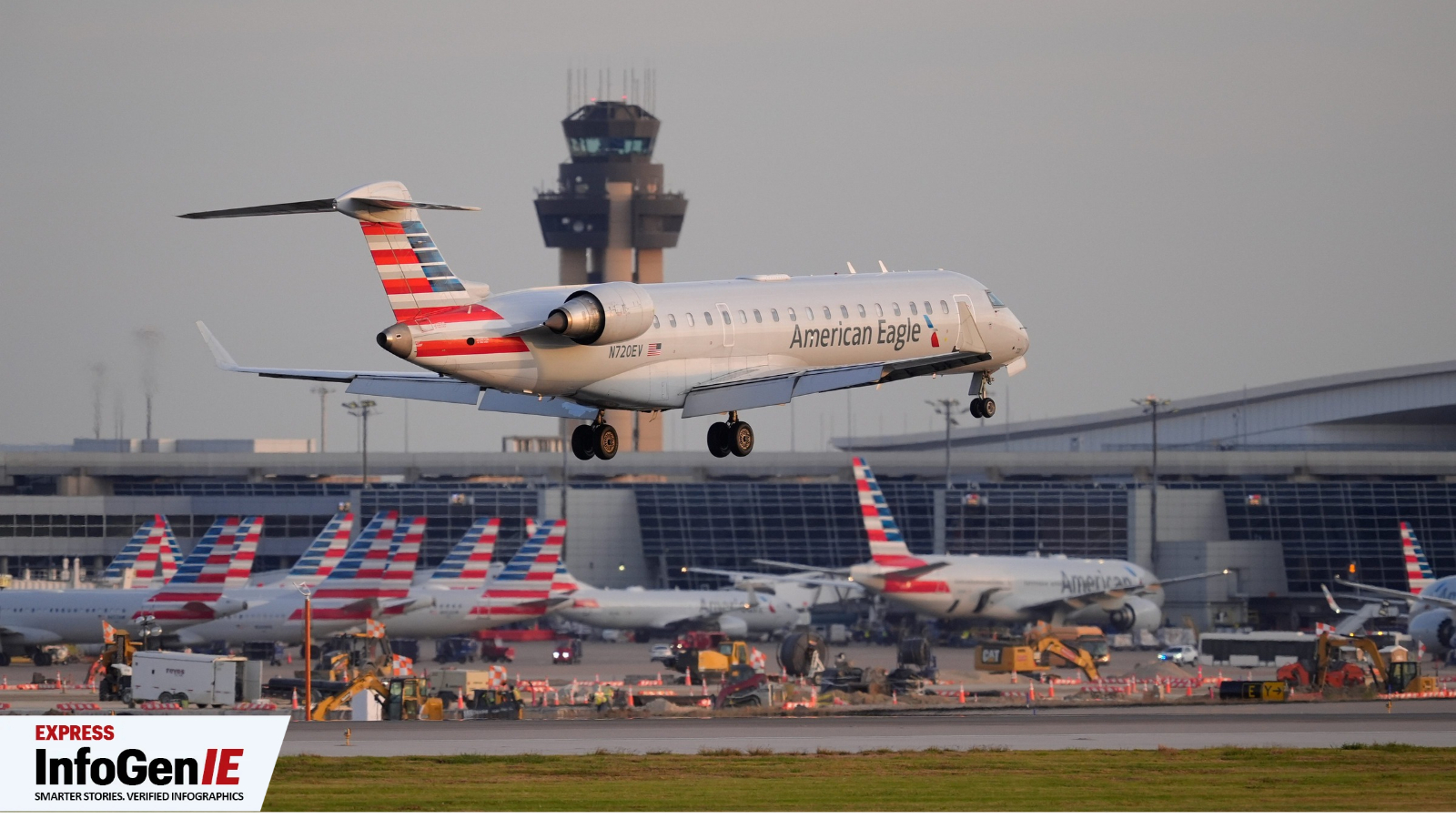
To the average flyer, a ground stop sounds like the sky is falling. In reality, it is a standard, conservative air traffic management tool used thousands of times a year at local levels and occasionally at a national scale. Under FAA Air Traffic Control System Command Center (ATCSCC) protocols, a ground stop simply requires aircraft that meet specific criteria to remain on the ground at their departure airports.
It is a pause button, not a crash.
Planes already in the air remain under positive radar control, separated by miles of sky and guided by redundant communication networks. Ground stops exist precisely because aviation safety is built on a fail-safe philosophy: when data integrity, communications, or weather conditions drop below strict thresholds, you stop adding new variables to the airspace until the system returns to 100% reliability.
Consider the historical precedent. In January 2023, during the Biden administration, the FAA issued the first nationwide ground stop since September 11, 2001, after the Notice to Air Missions (NOTAM) database suffered a corrupted file failure. President Joe Biden did not immediately sprint to the briefing room to narrate the server reboot. Instead, Transportation Secretary Pete Buttigieg and FAA technical teams managed the public updates while engineers restored the backup system. Even then, White House reporters pressed the administration on why the President wasn't personally addressing the cameras faster, illustrating how bipartisan this media reflex truly is.
Whether the occupant of the Oval Office is Donald Trump, Joe Biden, or anyone else, the mechanics of the National Airspace System do not respond to presidential charisma. A commander-in-chief cannot order a corrupted database to re-index, nor can a press conference clear a backlog of delayed departures at O'Hare or Hartsfield-Jackson.
What Critics Get Wrong About Executive Delegation
The sharpest criticism leveled against Trump—and any president who maintains a low profile during domestic infrastructure hiccups—is that absence signals indifference. Political opponents argue that a leader owes the public immediate reassurance when tens of thousands of travelers are sleeping on terminal floors.
That argument confuses empathetic performance with functional governance.
In a properly structured executive branch, chain-of-command discipline is the primary metric of competence. The U.S. government employs specialized agencies precisely so the President does not have to act as the nation's chief air traffic controller. When an aviation disruption occurs, the operational hierarchy is clear:
- Tier 1 (Technical Execution): FAA Air Traffic Organization engineers, cybersecurity specialists, and regional air route traffic control centers isolate the fault and execute contingency routing.
- Tier 2 (Agency Accountability): The FAA Administrator and the Secretary of Transportation communicate verified operational timelines to airlines, airports, and the flying public.
- Tier 3 (Executive Oversight): The President receives classified briefings via the White House Situation Room to determine whether the event crosses the threshold from an agency infrastructure failure into a national security threat requiring military, intelligence, or emergency declaration powers.
If a president steps into Tier 2 prematurely, they collapse the hierarchy. Worse, they politicize an operational event. The moment a polarizing political figure—and few figures in modern history polarize a room faster than Donald Trump—becomes the face of an FAA delay, partisan tribalism infects the public response. Half the country defends the agency blindly; the other half accuses the administration of sabotage or incompetence before a single root-cause report has been filed.
By staying out of sight while DOT and FAA officials handle the technical messaging, the White House preserves the boundary between engineering reality and partisan theater.
The Real Questions Journalists Should Be Asking
When media outlets focus on where the President was standing during a ground stop, they let the government off the hook for the issues that actually matter. If you want to hold an administration accountable for aviation disruptions, stop tracking the President's motorcade and start auditing the infrastructure beneath the agency's hood.
Was the Outage Caused by Deferred Modernization?
For decades, across multiple Republican and Democratic administrations, the FAA has struggled to transition from legacy mainframe systems to modern, cloud-resilient architecture. The agency's NextGen air traffic control modernization program has faced years of cost overruns, contractor delays, and congressional budget uncertainty. Asking why the President wasn't on TV distracts from asking why critical aviation databases still rely on aging hardware vulnerable to single-point failures.
Did the Chain of Command Function Without Political Interference?
In aviation safety, independence is sacred. The National Transportation Safety Board (NTSB) and FAA safety inspectors must be able to ground fleets, halt departures, and issue airworthiness directives without worrying about how those decisions affect a president's approval rating or stock market numbers. A president who stays silent during a ground stop may actually be demonstrating restraint—allowing safety regulators to prioritize caution over political optics.
How Transparent Was the Post-Mortem?
Silence during the first two hours of an outage is smart discipline. Silence two weeks later is a cover-up. The true test of executive leadership happens after the planes are back in the air. Does the administration release an unvarnished technical root-cause analysis? Do they hold contractors or agency leadership accountable for preventable failures?
The Uncomfortable Downside of Strategic Silence
Advocating for presidential restraint during domestic crises comes with a real political cost, and pretending otherwise would be dishonest.
Strategic silence only works if the underlying agency apparatus is credible, staffed, and communicative. If the FAA or the Department of Transportation fails to provide timely, accurate updates while the President stays off-camera, the administration looks leaderless rather than disciplined. In an information vacuum, conspiracy theories flourish—especially in aviation, where the public immediately jumps to worst-case scenarios involving terrorism or foreign cyberwarfare.
Furthermore, modern politics punishes leaders who refuse to perform empathy on cue. Voters often judge presidents less on administrative mechanics and more on whether they appear visibly engaged in the struggles of ordinary citizens. A president who stays behind closed doors while millions of travelers miss weddings, funerals, and business meetings risks looking detached from everyday reality, even if staying out of the way was the technically superior decision.
Stop Grading Presidents Like Cable News Anchors
The obsession with presidential visibility during routine infrastructure disruptions reveals more about media incentives than it does about executive competence. Television networks need a central character to anchor a split-screen broadcast; complex federal bureaucracies do not make for compelling visuals.
But governing a superpower is not a reality show, and managing the world's busiest airspace is not a communications exercise. When the FAA pulls the emergency brake on national air traffic, the smartest move a president can make is to lock the Situation Room door, let the engineers work uninterrupted, and keep the cameras off until there are actual facts to report.
If your standard for presidential leadership requires a politician to stand at a podium narrating a software reboot in real time, you aren't asking for accountability—you're asking for a distraction.